
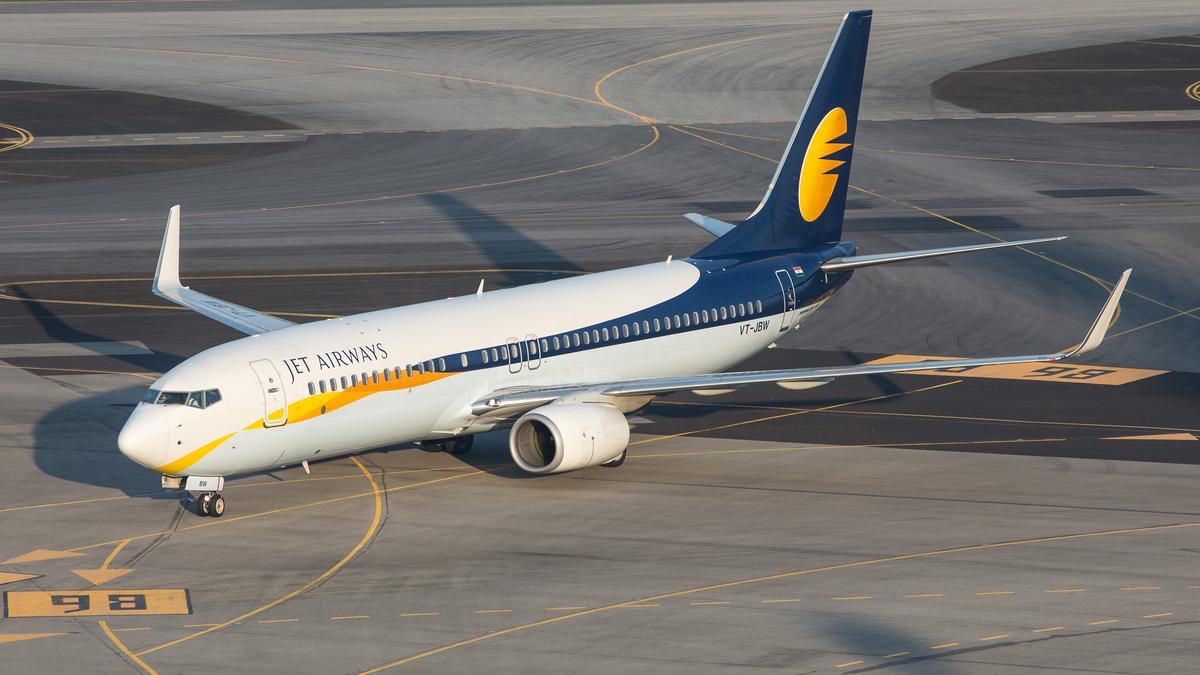
In a victory for former Jet Airways employees after a seven-year legal battle, the National Company Law Appellate Tribunal (NCLAT) has approved the release of gratuity with interest and provident fund (PF) dues totalling ₹480 crore within two weeks, The Hindu reported on 26 November 2026. Gratuity is to be paid directly into the employees' bank accounts, while PF contributions will be deposited into their respective accounts through the PF office. A final copy of the order is still awaited, so the exact wording of the directions is not yet public. But the headline is clear: money that has been tied up since the airline stopped flying in 2019 now has a strict 14-day deadline attached to it.
The latest order is the end point of a long chain of rulings. On 30 June 2026, the NCLAT upheld an order of the National Company Law Tribunal (NCLT) directing the airline's liquidator to pay PF and gratuity dues to workmen and employees in full. According to Business Today, the judgment was delivered by a bench of chairperson Justice Ashok Bhushan and technical member Barun Mitra, and it dismissed appeals filed by State Bank of India (SBI) and seven other financial creditors. Those lenders had wanted PF, gratuity and pension dues to be counted in the liquidation estate, where they would compete with other creditors' claims under the distribution mechanism of the Insolvency and Bankruptcy Code (IBC). The NCLAT said no. SBI then went to the Supreme Court, which dismissed its plea on 31 August. With the money still unpaid despite those rulings, the tribunal's 26 November order was needed to enforce a strict deadline and to specify how the payments would be made.
The legal argument that the lenders lost is worth understanding, because it affects every insolvency in which workers are owed retirement benefits. SBI and the other banks argued that PF and gratuity dues could be kept out of the liquidation estate only if dedicated PF and gratuity funds existed at the start of liquidation, which they said was not the case at Jet Airways. According to Business Today, the NCLAT rejected this reading as contrary to the text and purpose of the IBC. It described the relevant provisions as "due-centric" and not "asset-centric", holding that the exclusion of sums due to workmen and employees from provident fund, pension fund and gratuity fund from the liquidation estate does not depend on whether such funds existed on the liquidation commencement date. The tribunal added that accepting SBI's argument would deprive workmen of a right and entitlement they had earned through continuous service.
Two technical points in the earlier orders also shaped the outcome. The Free Press Journal reported that the NCLAT affirmed the NCLT's 4 February order, which designated 20 May 2020 as the cut-off date for calculating the 24 months of workmen's dues that receive priority under the IBC. The banks had also sought to include the time spent in litigation in that window, which would have reduced the employees' priority entitlement. According to Business Today, the NCLAT held that the 1,656 days spent in litigation during the airline's long corporate insolvency resolution process must be excluded while computing the 24 months preceding the liquidation commencement date of 26 November 2024, and directed the liquidator to recompute workmen's dues for that protected period, saying they could not be treated as nil.
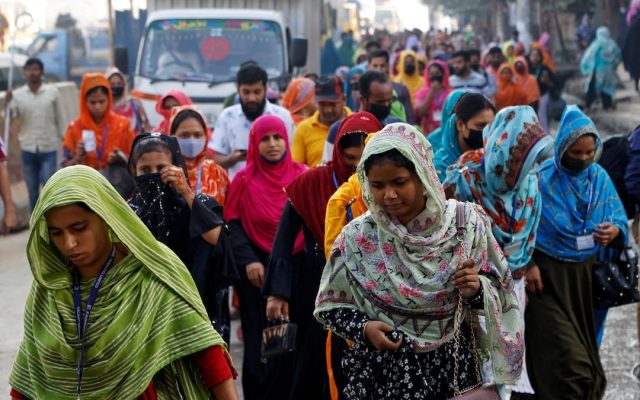
How many people are affected, and how much money is involved? The Hindu says Jet Airways has around 11,800 workmen, in addition to other employees, whose claims form part of the liquidation proceedings. The figure of ₹480 crore reported on 26 November is notably higher than earlier estimates. The Free Press Journal, reporting the June judgment, said outstanding PF and gratuity liabilities were estimated at about ₹265 crore for around 11,800 former employees, and Business Today, citing CNBC-TV18, reported employees' claims that total dues exceeded ₹275 crore. The Hindu's description of ₹480 crore as gratuity "with interest" plus PF dues may explain part of the difference, but none of the reports reconciles the numbers, and the final order should clarify the breakdown. This article therefore treats ₹480 crore as the figure reported by The Hindu rather than an independently confirmed total.
Why did it take seven years? Jet Airways operated its last commercial flight on 17 April 2019 and then entered the Corporate Insolvency Resolution Process. A resolution plan led by the Jalan-Kalrock Consortium was approved, but in November 2024 the Supreme Court ordered the airline's liquidation after finding that the successful applicant had failed to implement the plan. That order triggered the liquidation date that now anchors the 24-month calculation. For employees, the sequence meant years without their retirement payouts while lenders, the resolution applicant and the liquidator argued over priorities. Dr Narayan Hariharan, a former senior vice president of the airline, called the June ruling a "landmark decision" that brought long-awaited relief after more than seven years of legal proceedings, and criticised the prolonged litigation initiated by lenders, according to the Free Press Journal.
There is a case for the lenders' position, and it should be stated fairly. Banks that lent to Jet Airways have themselves lost enormous sums, and their argument was that the IBC's waterfall must be applied consistently: if retirement funds were never separately maintained, they said, the dues should rank alongside other workmen's claims rather than outside the estate. A ruling that exempts such dues from the pool leaves less for secured creditors. The tribunal heard that argument at length and rejected it, and the Supreme Court declined to disturb the result. Still, the episode shows how sharply the interests of employees and lenders can diverge in an insolvency, and why legislators and courts keep returning to the question of whose claim comes first.
The case for the employees is simpler and, in the end, prevailed. Provident fund and gratuity are not discretionary payments; they are deferred earnings that workers set aside through years of service. The tribunal's reasoning, that the law protects what is due, not only what happens to be sitting in a separate fund, means that employers cannot escape the obligation simply because they failed to ring-fence the money. That principle could matter well beyond aviation, and Hariharan urged that insolvency cases involving employee social security rights be handled more efficiently in future.
What happens next? The two-week clock is the key test. Payment depends on the liquidator, the banks that hold the airline's accounts and the PF office acting quickly, and employees will be watching for the written order that spells out how the interest has been calculated and who is entitled to what. If the money moves on schedule, it will close one chapter of a very long saga, although the wider liquidation of the airline, including claims by other creditors, will continue. If it does not, the NCLAT has shown that it is willing to enforce its own directions. For thousands of former pilots, cabin crew and ground staff who have waited since 2019, the next fortnight matters more than any legal principle: it will show whether a hard-won judgment turns into money in the bank.


Leave a Reply