
The IndiaAI Mission is the government’s five-year programme to build AI capacity, and its largest part is access to computing power. The mission was approved in March 2024 with an outlay of Rs 10,372 crore, about $1.25 billion, over five years, according to an explainer by Kapyn. It says the mission has deployed more than 38,000 GPUs, which are the processors used to train and run AI models.
The government does not own most of the hardware. The explainer says that the mission subsidises per-hour rates for GPUs offered by private operators, including Jio, Tata, Yotta Data Services, NxtGen Cloud and CtrlS, so that start-ups, researchers and government agencies can rent them at lower prices. Search summaries give the subsidised price as about Rs 65 a GPU-hour, though another gives Rs 150, so the price depends on the source and on the type of chip.
The GPU count differs between sources. Several search summaries say about 34,000 GPUs had been deployed by mid-2026 and that the target was 1 lakh public-access GPUs by December 2026, while the Kapyn explainer and the Wikipedia article on the India AI Impact Summit say 38,000-plus. The summit article adds that the government plans to add more than 20,000 GPUs to the existing 38,000, which would make about 58,000 and not 1 lakh, so the target figure should be treated with caution.
The money is divided into pillars. According to the explainer, compute capacity gets the largest share at Rs 4,563.36 crore, foundation models Rs 1,971.37 crore and start-up financing Rs 1,942.5 crore, with the rest going to datasets, applications, skilling and safety. Together the three named pillars come to about Rs 8,477 crore, or 82% of the total on IndiaX24’s arithmetic.
The mission has supported many projects. The explainer says that 190 AI projects have been approved across sectors, and that 11 companies were first empanelled to build foundation models, later expanded to 19, including Tech Mahindra, Fractal Analytics and the BharatGen consortium led by IIT Bombay. Sarvam AI is named as having trained its models entirely on mission compute, and a separate IndiaX24 article covers it.
One important caveat is the pace of spending. The explainer says that actual disbursement as of April 2026 was about Rs 400 crore, and that less than half of the FY26 allocation was spent, which it calls a lag between the announcements and the actual payments. The reasons are not explained in the material reviewed, and the amount that was disbursed does not show how much of the subsidised compute was used.
The mission fits into a larger push. At the India AI Impact Summit in February 2026, the government said it planned to add more than 20,000 GPUs, and the summit also saw the launch of models by Sarvam and by BharatGen, whose Param2 model has 17 billion parameters and supports 22 Indian languages. Those are covered in another IndiaX24 report on the summit.
Why does compute matter? Training a large AI model needs thousands of GPUs for weeks, which is out of reach for most start-ups and universities, and it is the largest cost. By offering subsidised access, the mission aims to let Indian developers build models, especially for Indian languages, without paying full market rates. The sources reviewed do not say how many users have taken up the offer.
For readers, the main points are that the mission has built a large pool of rented compute, that the exact number of GPUs differs between sources, and that the spending so far has been well below the plans. Whether the mission achieves its aims will depend on how well the compute is used and on the models that come out of it.
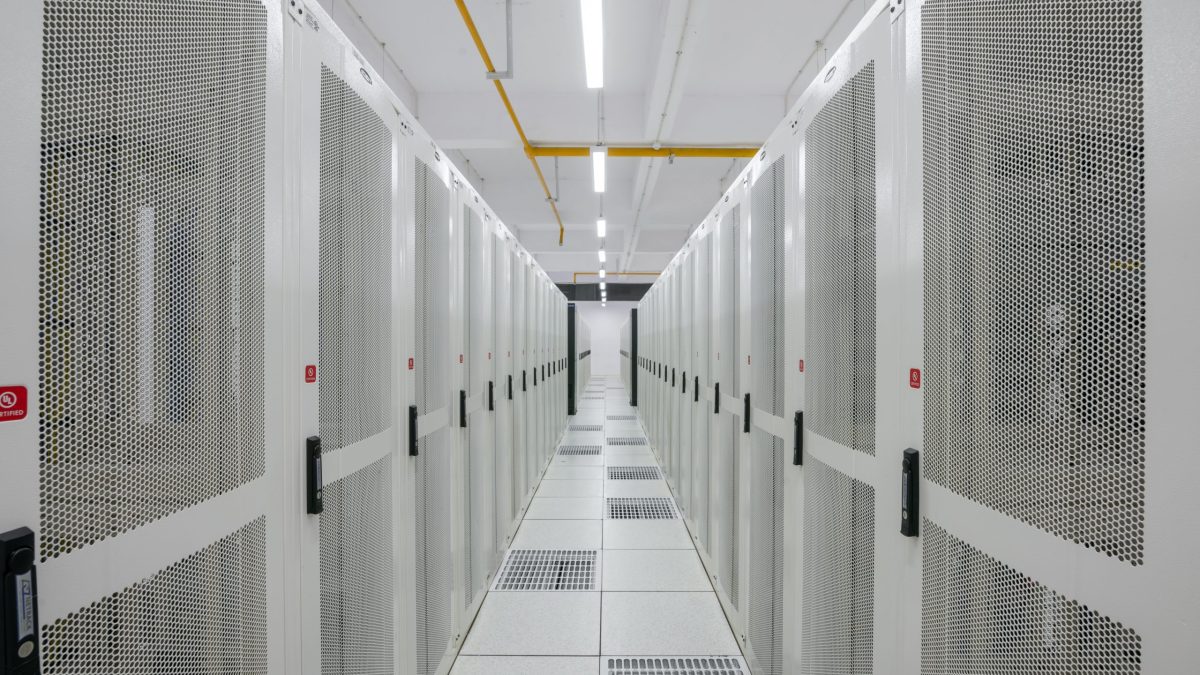
Featured image: Server racks in a data centre in Amravati, Andhra Pradesh (file photo; a stand-in image for AI compute). Photo by PiDatacenters, licensed under CC BY-SA 4.0, via Wikimedia Commons.


Leave a Reply