
Newer technology sectors took the largest share of Indian start-up funding in the third quarter of 2026, while older consumer sectors lost ground, according to Inc42’s report on the quarter. Artificial intelligence led with $438 million across 35 deals, cleantech raised $433 million, and deeptech raised $290 million.
A search summary of Inc42’s coverage says that funding for advanced hardware and technology start-ups, including robotics, semiconductors and aerial vehicles, rose 176 per cent to $290 million in the quarter. That would put deeptech’s funding a year earlier at about $105 million, which is IndiaX24’s own calculation from the growth rate. The Inc42 report that IndiaX24 opened gives the $290 million but not the growth rate, so the 176 per cent figure is treated as unconfirmed.
Traditional sectors did worse. Fintech funding fell 11 per cent to $249 million, and e-commerce fell 31 per cent to $245 million, according to Inc42. Fintech was the stronger of the two, and the e-commerce fall is nearly three times the fintech fall. A fall of 31 per cent to $245 million means that e-commerce raised about $355 million in the same quarter a year earlier, a calculation by IndiaX24.
The ranking is easy to state. The top three sectors, AI, cleantech and deeptech, raised $1.16 billion between them, about 53 per cent of the quarter’s $2.2 billion, which are sums and shares calculated by IndiaX24. The fintech and e-commerce figures together were $494 million, about 22 per cent of the total.
The mega-rounds shape the sector totals. Emergent’s $130 million round was the largest of the quarter, according to Inc42, and IndiaX24 covers the four rounds of $100 million or more in a separate article. Because a few large deals can move a sector’s total, one quarter’s ranking should not be read as a permanent change.
The funding also reflects public policy. IndiaX24 has reported on the government’s semiconductor mission, the IndiaAI compute programme and the space sector’s opening to private companies, including Skyroot’s launch contract with a US customer. The reports reviewed do not link the sector totals to any specific policy, and the connection is IndiaX24’s observation from its own reporting.
Cleantech’s $433 million is almost as large as AI’s $438 million, and the difference between them is $5 million. The reports reviewed do not give the number of cleantech deals or the largest cleantech rounds, so it is not known how concentrated the sector’s funding was. IndiaX24’s report on Simple Energy’s Rs 1,750 crore round, which is about $182 million, covers one electric vehicle round, but the reports do not say whether it was counted in the third quarter or in cleantech.
Cleantech and deeptech are broad labels and the reports reviewed do not define what Inc42 includes in them. Electric vehicles, solar, batteries and energy storage are usually grouped under cleantech, and robotics, semiconductors and aerial vehicles under deeptech, according to the search summary, but IndiaX24 has not seen Inc42’s classification rules.
Geography matters as well. Bengaluru took $1.4 billion, 64 per cent of the total, while Delhi NCR took $301 million and Mumbai $223 million, according to Inc42, and the reports reviewed do not give a sector breakdown by city.
IndiaX24 will report the fourth-quarter sector data when Inc42 publishes it.
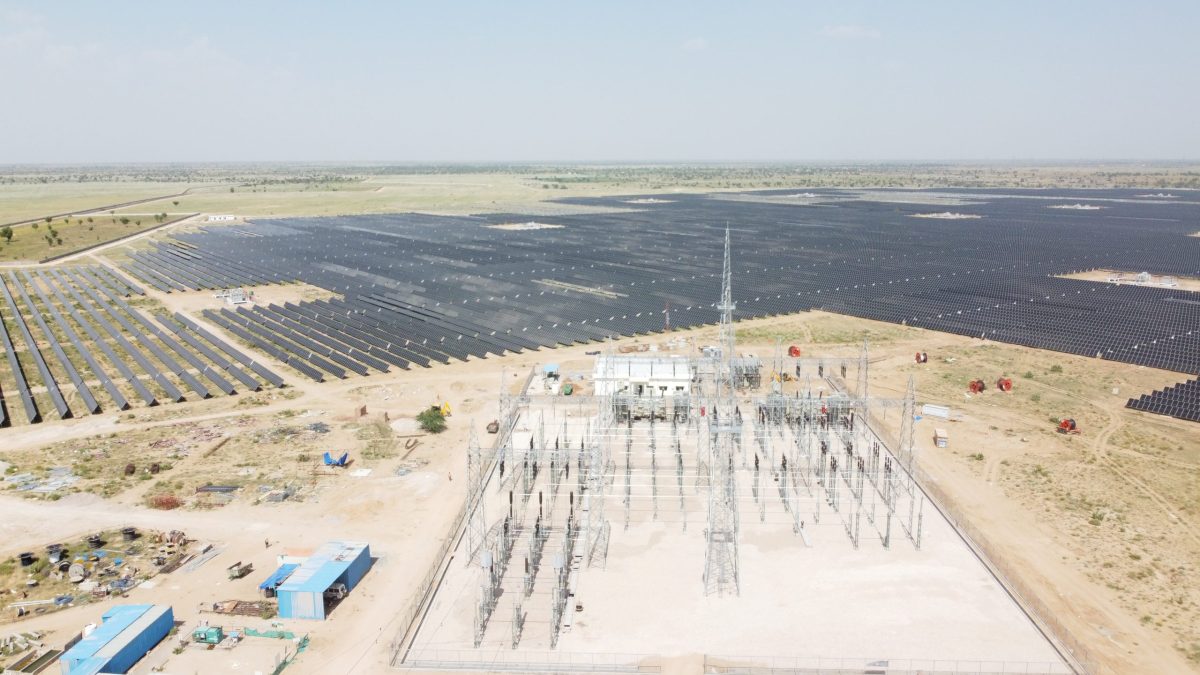
Image: The Bhadla solar power plant in Rajasthan (file photo; a stand-in image for cleantech). Photo by Sarvajanik Puralekh, licensed under CC BY-SA 2.0, via Wikimedia Commons.




Leave a Reply