
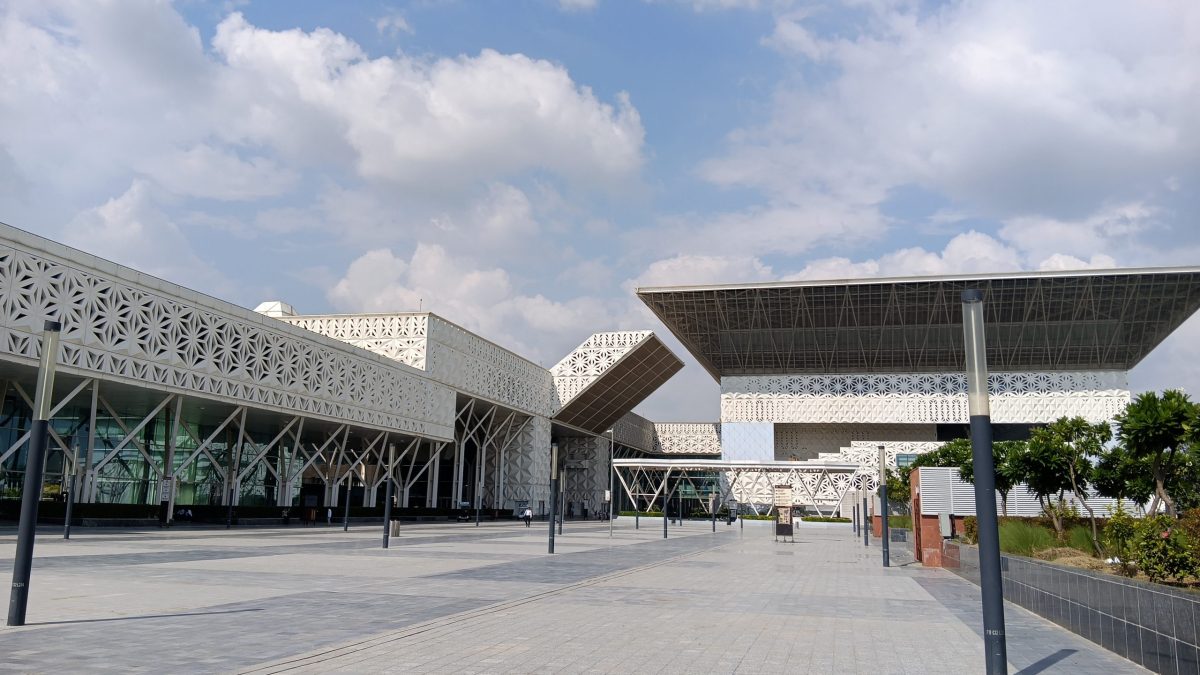
The 10th edition of the India Mobile Congress was held from 7 to 10 October 2026 at Yashobhoomi, the convention centre in New Delhi, under the theme ‘Scale Without Boundaries’, according to Business Standard, KPMG and the GSMA. The event is jointly organised by the Department of Telecommunications and the Cellular Operators Association of India.
The focus areas listed by the organisers and by Business Standard were 6G, artificial intelligence, AI-native telecom networks, the monetisation of 5G, satellite communications, semiconductors, quantum communications, cybersecurity, robotics and digital infrastructure. That list shows how far the meeting has moved from its origin as a mobile-phone showcase to a broader forum on digital infrastructure.
Telecom operators and equipment suppliers outlined plans spanning 5G, early 6G research, AI-driven network operations, enterprise cloud and satellite connectivity, according to a telecom-industry summary of the event. Among the announcements, Reliance Jio showed indigenous radio technology and pre-6G work, according to the same summary. IndiaX24 has not seen the technical details and reports only that these were showcased.
The tenth edition falls at a time when the government is also moving on consumer-facing telecom rules. IndiaX24 has reported that the Department of Telecommunications has ordered caller-name display on phones from 1 November. The Congress is a venue where such directions and industry plans are discussed, although the reports reviewed do not link the two.
The reports reviewed do not give the number of exhibitors, visitors or speakers, or the value of any agreements signed during the four days. Previous editions have been inaugurated by the Prime Minister, according to the Prasar Bharati item about the 2025 edition that appeared in the search results, but IndiaX24 did not find a report on who inaugurated the 2026 edition, so it does not say.
Several themes deserve a plain explanation. 6G is the planned successor to 5G and is still at the research stage, which is general background. ‘AI-native networks’ refers to networks designed to use machine-learning for tasks such as routing and fault detection. Satellite communications covers broadband delivered directly from space, which is relevant to areas that mobile towers do not reach. The reports reviewed describe these as areas of focus but do not give deployment dates for India.
The connection with chips and AI is notable. NVIDIA, which IndiaX24 covers in a separate article on a new Indic training corpus, has also said that it works with Indian cloud providers on AI compute, as reported by NVIDIA in February. Telecom networks, data centres and AI models are increasingly planned together, according to the general direction of the topics at the Congress, though the reports do not make that argument explicitly.
The event is a showcase and not a policy-making body. Announcements at the Congress are often statements of intent, and the reports reviewed do not describe any binding decisions. Readers should therefore treat the plans as company claims until products and services are launched.
One limit of this report is its sourcing. IndiaX24 relied on organiser pages and summaries and not on first-hand coverage of the sessions, so it does not describe individual speeches. It will report on specific announcements if the companies publish details.
IndiaX24 will follow the 6G and satellite plans as they are put into practice.
Image: Yashobhoomi, the venue of India Mobile Congress, in Delhi (file photo). Photo by VartamanVarta, licensed under CC BY-SA 4.0, via Wikimedia Commons.


Leave a Reply