
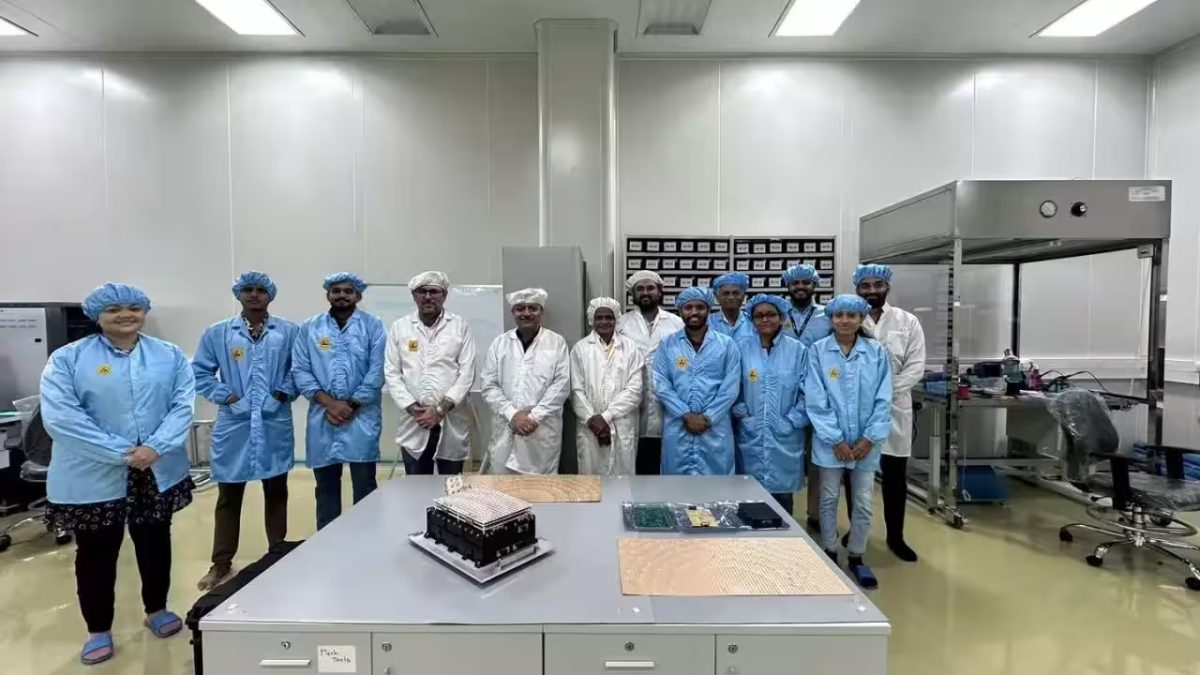
Hyderabad-based startup Cosmoserve Space on Thursday, 5 November, unveiled Base 1, which it describes as India's first private facility, and only the sixth in the world, equipped with space-vision systems and microgravity simulation for satellite servicing and space debris recovery. The facility was inaugurated by Union Minister of State for Science and Technology Jitendra Singh and Telangana minister D. Sridhar Babu. It brings satellite integration, space robotics, mission simulation and orbital capture technologies under one roof. The company's founder and chief executive, Chiranjeevi Phanindra, said the aim is to tackle one of the biggest problems facing the global space industry, which is orbital debris.
The case that this is a real step forward starts with the size of the problem and the quality of the facility. Of the nearly 28,000 satellites currently in orbit, about 10,000 are no longer working, and millions of debris fragments threaten active satellites and missions. Base 1 houses an Orbital Rendezvous and Capture Lab, a Space Robotics Innovation Lab, an ISO Class 8 clean room and a Mission Simulation and Control Centre. Cosmoserve estimates that its two-spacecraft design, which pairs a larger service station with a smaller autonomous vehicle, could cut satellite servicing costs from around $10 million to under $1 million per satellite. It has raised a $6 million seed round that takes its total funding past $9 million, and Sridhar Babu said more than 30 Hyderabad companies already work on launch vehicles, space data centres and debris removal.
The case for caution is that the facility is a laboratory, and removing debris from orbit is still unproven. The full-scale capture demonstration is planned only by 2027, and the company will first test its robotic systems in microgravity flights and re-fly its Mission Embrace payload. That payload had an earlier test on Skyroot's Vikram-1 rocket, where, according to Inc42, the soft robotic petals did not fully deploy, though the company said it still collected useful data. The cost estimate of less than $1 million per satellite is the company's own projection and has not been shown in orbit. Total funding of about $9 million is also small next to the cost of space missions, and cleaning up thousands of dead satellites will need far more money and many more companies than one startup.
The development matters because satellites support phones, navigation, weather forecasts, banking and defence, and every new fragment adds to the risk of a collision that creates more debris. For India, a private facility of this kind shows that the space sector opened to private firms is starting to produce hardware, and it adds to the Hyderabad spacetech cluster that Telangana wants to grow. If the technology works, it could become an export service, since every country with satellites faces the same problem. Satellite operators will watch closely, because the company's own estimate puts the cost of servicing a satellite today near $10 million.
Base 1 is a credible beginning and an unfinished promise. The real verdict will come in 2027, when Cosmoserve is due to attempt a full-scale capture, and until then the claims about cost and capability remain targets, and the company still has to show that it can capture an object in orbit safely and at an affordable price.

Leave a Reply