
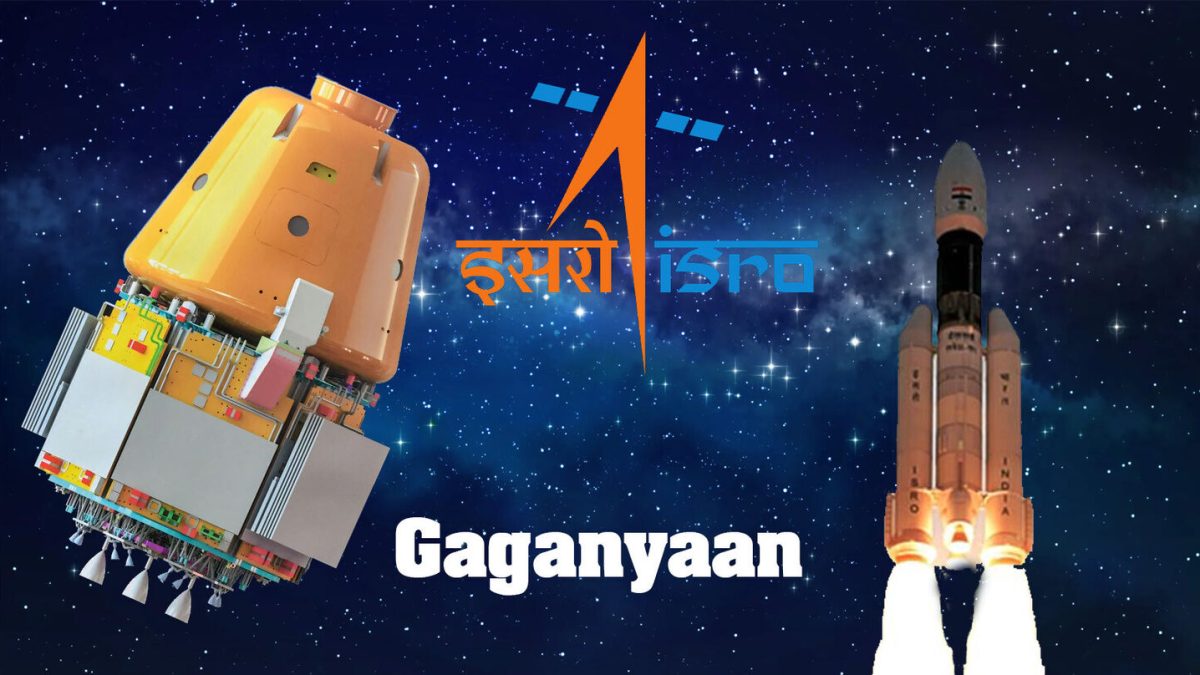
ISRO’s Gaganyaan human spaceflight programme is still working toward its first uncrewed orbital flight, which the agency’s chairman, V. Narayanan, has said is targeted for the end of 2026. The first crewed flight, Gaganyaan-3, is listed as to be decided for 2028, after three uncrewed orbital demonstrations. The programme’s budget is Rs 20,193 crore, after Rs 11,170 crore was added in September 2024 to cover the expanded programme, including the first module of a planned space station. Reports differ on the naming and sequence of the uncrewed flights, and no launch date has been confirmed.
The argument that the programme is advancing is supported by the number of tests completed. The service module’s propulsion system was reported complete in July 2025, parachute airdrop tests succeeded in November 2025 and July 2026, and the integrated air drop tests, IADT-01 in August 2025 and IADT-02 in April 2026, both succeeded. Crew egress trials were completed at INS Garuda on 20 February 2026, and more than 8,000 ground tests had been reported complete by early 2026. The first human-rated L110 Vikas engine was delivered on 13 November 2025, and the CE-20 cryogenic engine was approved for human spaceflight in February 2024. The launch vehicle is the human-rated LVM3, and the abort test vehicle flight TV-D1 took place on 21 October 2023, with TV-D2 scheduled for the fourth quarter of 2026.
The counter-argument is that the schedule has slipped repeatedly. The original target for the first crewed flight was December 2021, and a November 2024 estimate put it no earlier than 2027, while the current listing is 2028, so the programme is running about seven years behind its first plan. A government reply in February 2025 cited the Covid-19 pandemic, avionics supply-chain disruptions, a global shortage of space-grade components, redesign work to fit the mass limit of the launch vehicle and the development of indigenous life-support systems. Additional validation and crew-safety testing also took time. Sources disagree about which uncrewed flight comes first: one report puts the uncrewed Gaganyaan-1 in November or December 2026, with Gaganyaan-2 in 2027, while another lists Gaganyaan-2 as the uncrewed flight with a 2026 target. The target of the end of 2026 is therefore a plan and not a confirmed date.
For India the programme matters because it would make the country the fourth to send humans to space on its own rocket, after the Soviet Union and Russia, the United States and China. The testing programme has also developed technologies, such as parachutes, life support and crew modules, that have uses beyond a single mission. A delay, on the other hand, raises costs and affects the timetable for the planned space station. The programme’s safety-first approach, with several uncrewed flights before a crewed one, reflects the high stakes of a mission with astronauts on board.
Gaganyaan has made steady technical progress and is close to its first orbital test, but the final schedule remains uncertain. The abort test in the fourth quarter and the first uncrewed flight will show whether the end-of-2026 target holds.


Leave a Reply