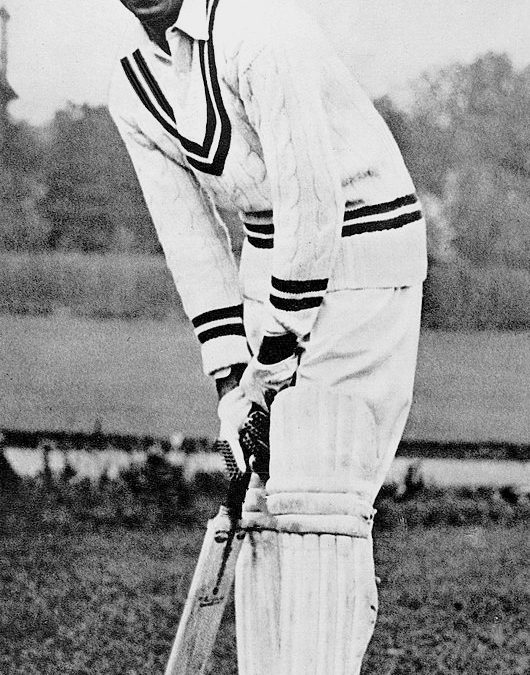
Cottari Kanakaiya Nayudu (31 October 1895 – 14 November 1967), known as C. K., was an Indian cricketer, the captain of India in its first Test match and the first great hero of the game in the country. A tall, upright batsman who hit the ball enormous distances, he played first-class cricket from 1916 to 1963, one of the longest careers on record. An innings he played in 1926 is credited with winning India its place in Test cricket.
Quick Facts
| Full name | Cottari Kanakaiya Nayudu |
| Born | 31 October 1895, Nagpur |
| Died | 14 November 1967, Indore (aged 72) |
| Sport | Cricket |
| Role | Right-handed batsman; slow-medium bowler |
| Tests | 7 (1932–1936); captain in 4 |
| First-class career | 1916–1963; more than 11,000 runs and 400 wickets |
| Teams | Hindus, Holkar, Central India, Andhra, Uttar Pradesh |
| Awards | Wisden Cricketer of the Year (1933), Padma Bhushan (1956) |
Early Life
He was born in Nagpur into a Telugu-speaking family from the Andhra coast. His grandfather had made a fortune as a lawyer and landowner; his father, who had been at Cambridge, was an advocate and a friend of princes. The boy was brought up to games and to a soldierly discipline. He captained his school and college teams and excelled at hockey and football as well.
A Start with a Six
He made his first-class debut in 1916, for the Hindus against the Europeans in the Bombay Quadrangular, the great annual tournament of the time. He blocked his first three balls and hit the fourth for six. He was to play in the tournament for more than twenty years and to become its chief attraction.
In 1923 the Maharaja of Holkar invited him to Indore, gave him a commission in the state’s army, in which he rose to colonel, and put him in charge of its cricket.
1926
In December 1926 a team from the Marylebone Cricket Club, led by the former England captain Arthur Gilligan, toured India. At the Bombay Gymkhana, playing for the Hindus, Nayudu made 153 in under two hours. He hit eleven sixes, then a world record for a first-class innings, and thirteen fours; one six landed on the roof of the pavilion. A crowd that grew as the news spread through the city watched from every tree and rooftop.
Gilligan went home convinced that India was ready for Test cricket and said so. A board of control was formed, and India was admitted to the Imperial Cricket Conference.
Test Captain
India’s first tour of England as a Test nation was in 1932. Two princes were named captain and deputy; both stood down before the Test, and on 25 June 1932, at Lord’s, Nayudu led India on to the field. He was thirty-six. India lost, after reducing England to 19 for 3 on the first morning. He scored 40 with a badly injured hand, and on the tour as a whole made more than 1,600 runs and hit more than thirty sixes. Wisden named him one of its five cricketers of the year.
He captained India in the three Tests of England’s visit in 1933–34 and played his last Tests on the unhappy tour of 1936. He played seven in all, the first when he was already past the age at which most players retire.
Holkar
Under his leadership the Holkar team was the strongest in India in the 1940s, winning the Ranji Trophy four times and reaching the final on many other occasions. He made a double century in the tournament at the age of fifty.
He was a stern captain who demanded fitness and obedience, forbade his players to show pain, and once, struck in the mouth by a ball, is said to have brushed the broken teeth off the pitch and batted on.
A Long Career
He went on playing first-class cricket into his sixties, for Andhra and Uttar Pradesh after Holkar, and appeared in a charity match in 1963 at sixty-eight. He was also a national selector and vice-president of the board.
Honours
He was the first cricketer to receive the Padma Bhushan, in 1956. He is said to have been the first Indian cricketer to advertise a commercial product. The Indian board’s lifetime achievement award and a national under-23 tournament carry his name.
Family
His younger brother, C. S. Nayudu, played Tests for India as a leg-spinner. His daughter Chandra Nayudu was among India’s first women cricket commentators.
Death
He died at Indore on 14 November 1967. He was followed as an Indian captain and public idol by Lala Amarnath.
Featured image: C. K. Nayudu in the 1930s. Photo by an unknown photographer, in the public domain, via Wikimedia Commons.