
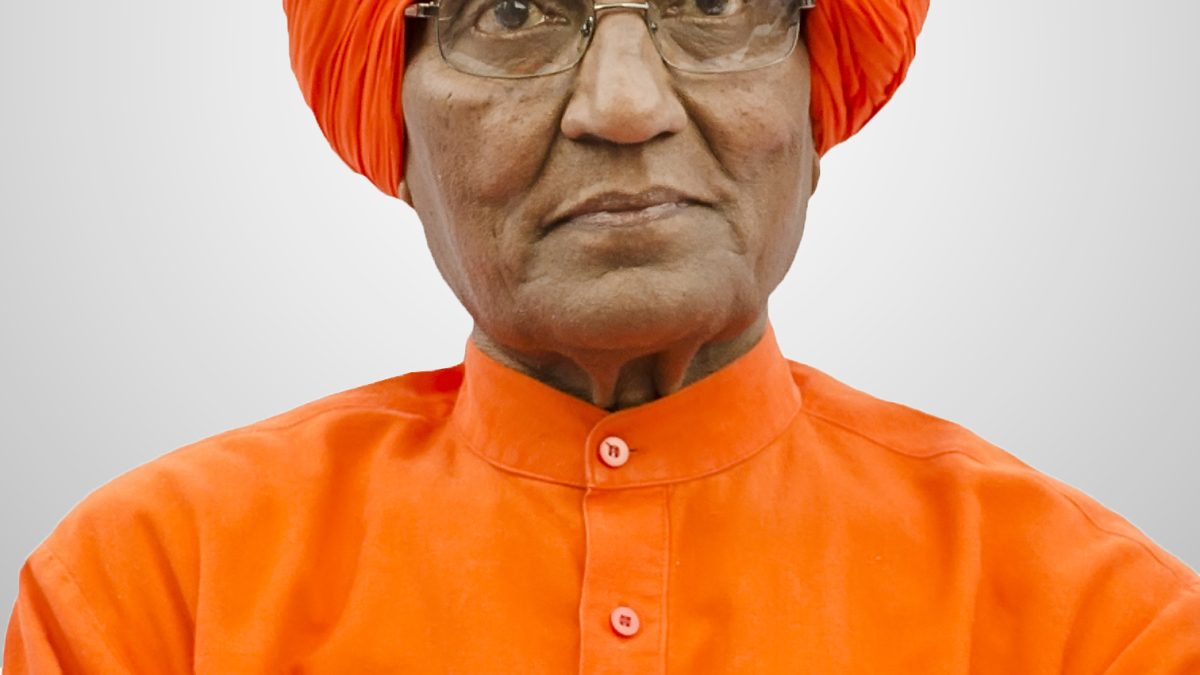
Swami Agnivesh (21 September 1939 – 11 September 2020) was an Indian social activist, Arya Samaj monk and former Haryana minister. Recognisable by his saffron robes and turban, he founded the Bandhua Mukti Morcha, or Bonded Labour Liberation Front, in 1981 and campaigned for four decades against bonded and child labour, sati, female foeticide and religious intolerance. He received the Right Livelihood Award in 2004.
Quick Facts
| Birth name | Vepa Shyam Rao |
| Born | 21 September 1939, Srikakulam, Andhra Pradesh, India |
| Died | 11 September 2020 (aged 80), New Delhi, India |
| Occupation | Social activist, monk, politician |
| Known for | Bandhua Mukti Morcha (Bonded Labour Liberation Front) |
| Education | University of Calcutta (commerce and law) |
| Office | Education Minister of Haryana (1979) |
| Awards | Right Livelihood Award (2004); Rajiv Gandhi National Sadbhavana Award (2004) |
Early Life
He was born into an orthodox Brahmin family in Srikakulam. His father died when he was four, and he was brought up by his maternal grandfather, the chief minister of a small princely state in present-day Chhattisgarh. He took degrees in commerce and law in Calcutta, lectured in management at St. Xavier’s College there and practised briefly as a junior to a lawyer who later became Chief Justice of India.
Monk and Politician
Drawn to the reformist teachings of the Arya Samaj, he left Calcutta for Haryana in 1968, and in 1970 took the vows of a renunciate and the name Agnivesh. With Swami Indravesh he founded a political party, the Arya Sabha, in the belief that religion should be an instrument of social change. He was jailed during the Emergency. Elected to the Haryana Assembly in 1977, he became Education Minister in 1979 and resigned within months in protest when his own government failed to act against police who had fired on workers.
Bonded Labour Liberation Front
In the stone quarries and brick kilns around Delhi he found families held in debt bondage for generations. He founded the Bandhua Mukti Morcha in 1981. Its petition led to a landmark Supreme Court judgment in 1984 that laid down the state’s duty to identify, release and rehabilitate bonded workers. The organisation says it has freed well over a lakh and a half of labourers, among them many children from carpet looms, and it helped push for the 1986 law on child labour. From 1994 to 2004 he chaired the United Nations trust fund on contemporary forms of slavery.
Other Campaigns
After a young widow was burned on her husband’s pyre at Deorala in Rajasthan in 1987 he led a march there, and the agitation contributed to a stricter law against sati. He led Dalits to the Nathdwara temple to assert their right of entry, campaigned against the killing of unborn girls, and opposed liquor. He worked for dialogue between religions and spoke against both Hindu and Muslim extremism, which made him enemies in several camps; he also had a long dispute with sections of the Arya Samaj.
He mediated between the government and Maoist rebels in Chhattisgarh in 2010–11, and was part of the anti-corruption movement of Anna Hazare in 2011 before falling out with its leaders. In July 2018 he was beaten by a mob in Pakur in Jharkhand, and he was attacked again in Delhi a month later.
Death
He died in a Delhi hospital on 11 September 2020 of liver failure, ten days before his eighty-first birthday.
Frequently Asked Questions
When and where was Swami Agnivesh born?
Swami Agnivesh was born on 21 September 1939 in Srikakulam, Andhra Pradesh, India.
When did Swami Agnivesh die?
Died: 11 September 2020 (aged 80), New Delhi, India.
What is Swami Agnivesh known for?
Known for: Bandhua Mukti Morcha (Bonded Labour Liberation Front).
What honours has Swami Agnivesh received?
Right Livelihood Award (2004); Rajiv Gandhi National Sadbhavana Award (2004).
Featured image: Swami Agnivesh in January 2019. Photo by Augustus Binu, licensed under CC BY-SA 3.0, via Wikimedia Commons.



