
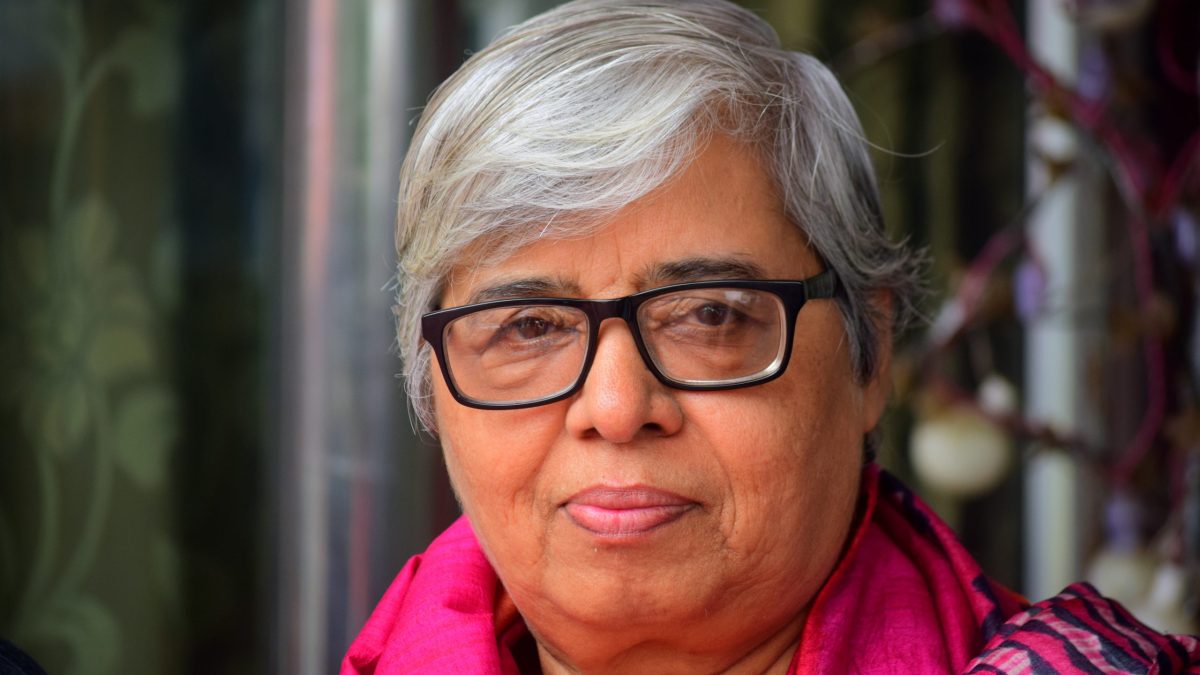
Shabnam Hashmi (born 1957) is an Indian social activist and human rights campaigner. She began in adult literacy in the early 1980s, was a founder of the cultural collective SAHMAT after the murder of her brother, the theatre activist Safdar Hashmi, and in 2003 set up ANHAD (Act Now for Harmony and Democracy), which works against communal violence and for the rights of women in Gujarat, Kashmir, Haryana and elsewhere.
Quick Facts
| Full name | Shabnam Hashmi |
| Born | 1957, India |
| Occupation | Social activist |
| Known for | ANHAD; SAHMAT |
| Relatives | Safdar Hashmi (brother), Sohail Hashmi (brother) |
| Spouse | Gauhar Raza |
| Children | 2 |
| Awards | National Minority Rights Award (2008) |
Early Life
Hashmi grew up in Delhi and Aligarh in a family of freedom fighters with left-wing convictions and little money. Her elder brother Safdar founded the street theatre group Jana Natya Manch; another brother, Sohail, became a writer and historian of Delhi.
Work
In 1981 she started teaching women and girls to read in the Nizamuddin settlement in Delhi, and she spent most of the decade in adult education programmes among Muslim women from poor families.
On 1 January 1989 Safdar Hashmi was attacked while performing a street play at Sahibabad, near Delhi, and died the next day. Artists, writers and academics formed the Safdar Hashmi Memorial Trust, known as SAHMAT, and Shabnam worked with it for about fifteen years, organising exhibitions, concerts and publications in defence of secular culture, including the response to the demolition of the Babri Masjid in 1992.
After the violence in Gujarat in 2002 she spent months in the state. In March 2003, with the historian K. N. Panikkar and the former civil servant Harsh Mander, she founded ANHAD. It documented the riots and their aftermath, ran workshops for young people and trained activists across the country. It later opened centres for women in the Kashmir valley and in Mewat in Haryana offering literacy, computer and tailoring classes, organised relief after floods and earthquakes, and held large youth conventions and cultural programmes. She was among the Indian women named in the collective nomination of a thousand women for the Nobel Peace Prize in 2005.
She has served on the National Integration Council and other advisory bodies. In 2017 she returned the National Minority Rights Award she had received in 2008, in protest against attacks on members of minority communities. The government cancelled ANHAD’s licence to receive foreign donations in 2016; the organisation has continued on a reduced scale with local support. She remains a frequent speaker and writer against hate speech and on the rights of women.
Personal Life
She is married to Gauhar Raza, a scientist, Urdu poet and documentary film-maker. They have a son and a daughter and live in Delhi.
Frequently Asked Questions
When was Shabnam Hashmi born?
Shabnam Hashmi was born in 1957, India.
What is Shabnam Hashmi known for?
Known for: ANHAD; SAHMAT.
What honours has Shabnam Hashmi received?
National Minority Rights Award (2008).
Featured image: Shabnam Hashmi in July 2018. Photo by Mullookkaaran, licensed under CC BY-SA 4.0, via Wikimedia Commons.



