
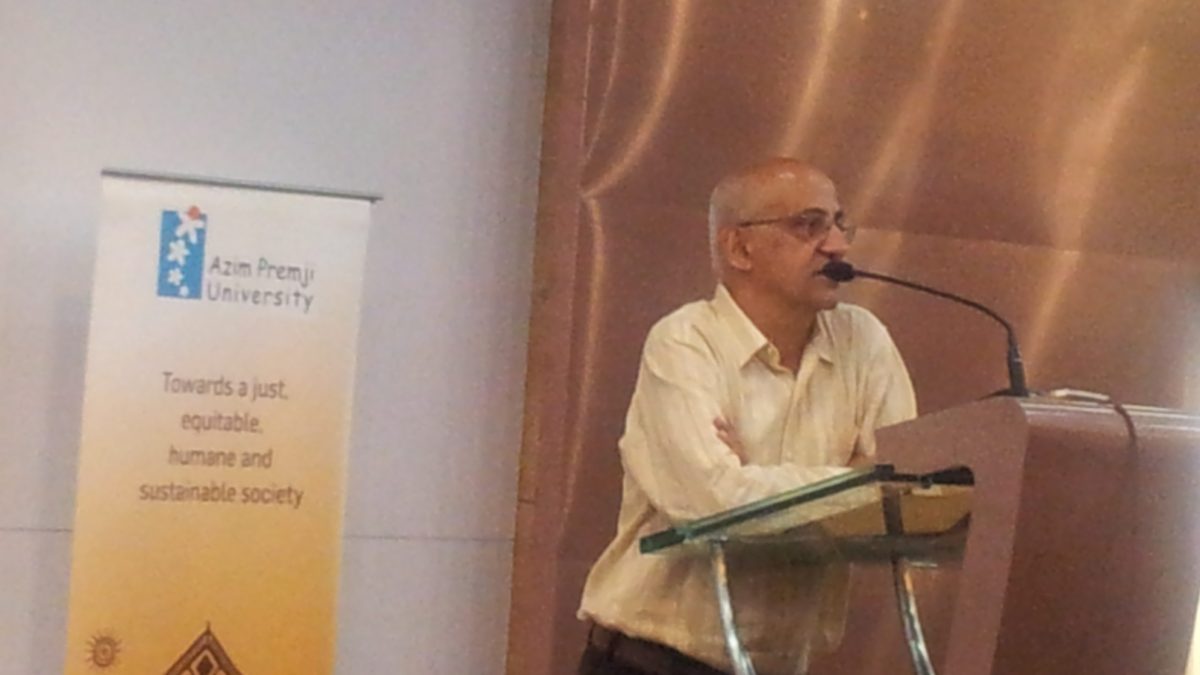
Harsh Mander (born 17 April 1955) is an Indian writer, peace worker and former civil servant. He spent about two decades in the Indian Administrative Service, mostly in the tribal districts of Madhya Pradesh and Chhattisgarh, and left it after the Gujarat riots of 2002. Since then he has worked with survivors of communal violence, homeless people and street children, was the Supreme Court’s special commissioner in the right-to-food case and founded the Karwan-e-Mohabbat, a campaign of solidarity with victims of hate crimes.
Quick Facts
| Full name | Harsh Mander |
| Born | 17 April 1955, Shillong, Meghalaya, India |
| Age | 71 |
| Occupation | Writer, human rights worker, former IAS officer |
| Known for | Karwan-e-Mohabbat; Aman Biradari; Right to Food campaign |
| Education | St. Stephen’s College, Delhi |
| Organisation | Centre for Equity Studies, New Delhi |
| Awards | Rajiv Gandhi National Sadbhavana Award (2002) |
Early Life
Mander was born in Shillong, where his father was a civil servant, into a Sikh family that had come from Rawalpindi at Partition. He studied at St. Stephen’s College in Delhi and joined the Indian Administrative Service in 1980.
Career
He served as collector in several districts of Madhya Pradesh and Chhattisgarh and became known for acting firmly against riots, notably during the anti-Sikh violence of 1984 and the tension after the demolition of the Babri Masjid in 1992. He also taught at the national academy for administrators in Mussoorie and, on deputation, headed the charity ActionAid in India.
In March 2002 he visited the relief camps in Ahmedabad and wrote an essay, “Cry, the Beloved Country”, describing what he had seen and the failure of officials to stop it. He left the service soon afterwards. With volunteers from many faiths he set up Aman Biradari to work for reconciliation and a legal aid effort, Nyayagraha, which helped riot survivors pursue hundreds of cases.
From 2005 to 2017 he was special commissioner to the Supreme Court in the right-to-food case, monitoring school meals, ration shops and schemes for the destitute. As a member of the National Advisory Council from 2010 to 2012 he worked on the food security law and other social legislation. Through the Centre for Equity Studies he has run shelters and health services for homeless people in Delhi and residential homes for street children in several cities.
In 2017, after a series of lynchings, he began the Karwan-e-Mohabbat, or “caravan of love”, travelling with volunteers to the families of people killed in hate attacks to offer support and record their accounts. The campaign has continued with films, legal aid and help for families.
His criticism of the Citizenship Amendment Act in 2019–20 and of government policy more generally has made him a target. The Enforcement Directorate searched his home and offices in 2021, and the Central Bureau of Investigation later registered a case over foreign funding of his organisation. He denies wrongdoing and calls the cases an attempt to silence dissent.
Books
Personal Life
Mander lives in Delhi with his family. He teaches courses on poverty and governance at universities in India and abroad and writes regular newspaper columns.
Frequently Asked Questions
When and where was Harsh Mander born?
Harsh Mander was born on 17 April 1955 in Shillong, Meghalaya, India and is 71 years old.
What is Harsh Mander known for?
Known for: Karwan-e-Mohabbat; Aman Biradari; Right to Food campaign.
What honours has Harsh Mander received?
Rajiv Gandhi National Sadbhavana Award (2002).
Featured image: Harsh Mander delivers a talk on unequal India hosted by Azim Premji University in Bengaluru, January 2013. Photo by Rameshng, licensed under CC BY-SA 3.0, via Wikimedia Commons.



