
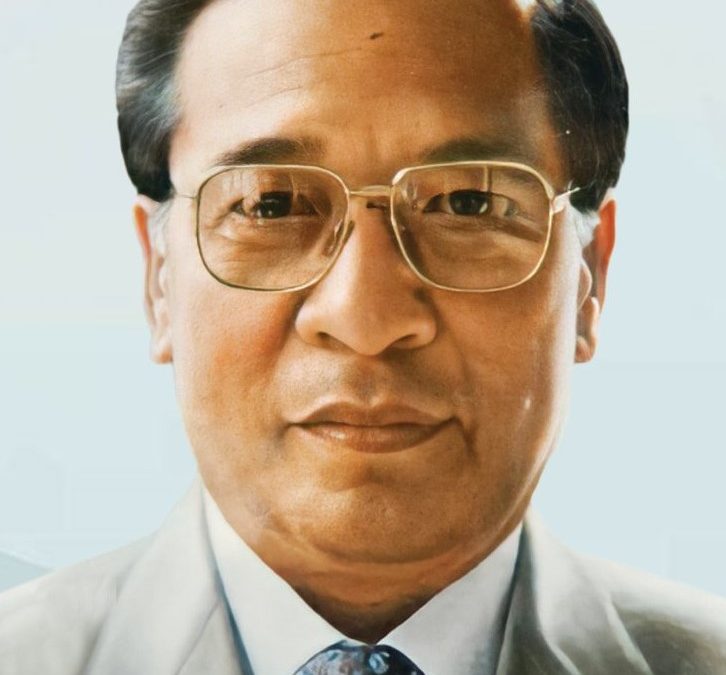
Laldenga (11 June 1927 – 7 July 1990) was a Mizo political leader who founded the Mizo National Front, led an armed rebellion for independence from India for twenty years, and then made peace. The Mizoram Peace Accord that he signed with Prime Minister Rajiv Gandhi in 1986 is regarded as the most successful settlement of an insurgency in India. He became the first Chief Minister of the new state of Mizoram.
Quick Facts
| Full name | Laldenga |
| Born | 11 June 1927, Pukpui, Lushai Hills (now Mizoram) |
| Died | 7 July 1990, London (aged 63) |
| State | Mizoram |
| Occupation | Soldier, clerk, insurgent leader, politician |
| Founded | Mizo National Front (1961) |
| Known for | The 1966 Mizo uprising; the Mizoram Peace Accord (1986) |
| Office | Chief Minister of Mizoram (1986–1988) |
| Spouse | Lalbiakdiki |
Early Life
He was born in the village of Pukpui in the Lushai Hills, then a district of Assam, into a farming family. Like most Mizos he was a Christian. He joined the British Indian Army and rose to the rank of havildar. After leaving the Army he worked as an accounts clerk for the district council at Aizawl.
The Famine
Every forty-eight years or so the bamboo forests of the Mizo hills flower all at once. The seed feeds an explosion of rats, which then devour the crops. The Mizos call the event Mautam. It came in 1959 and brought famine.
The district had warned the Assam government, which dismissed the forecast as superstition and was slow to send relief. Laldenga helped found the Mizo National Famine Front to distribute food. The anger of those months, and the feeling that the Mizos had been abandoned, never left the hills.
The Mizo National Front
On 22 October 1961 the relief organisation dropped the word “Famine” and became a political party, the Mizo National Front, with Laldenga as its president. Its aim was a sovereign Mizo state. It recruited volunteers, many of them former soldiers, and obtained arms and training from East Pakistan.
The Uprising
On the night of 28 February 1966 the Front’s volunteers attacked the government treasury, the telephone exchange and the posts of the Assam Rifles in Aizawl and other towns, in an operation it called Jericho. The next day Laldenga declared independence.
The Government of India sent in the Army. On 5 March 1966 Air Force jets attacked Aizawl, the only time India has used air power against a town on its own territory. The rebels were driven into the forests and across the border. In the years that followed, the Army moved most of the rural population out of their villages into guarded settlements along the roads, a policy that caused lasting bitterness.
Exile
Laldenga directed the insurgency from East Pakistan and, after 1971, from Pakistan, Burma and Europe. The Lushai Hills became the Union Territory of Mizoram in 1972. Contacts with the government began in the mid-1970s. An agreement signed in 1976 broke down, and talks begun under Indira Gandhi were cut short by her death.
The Accord
On 30 June 1986, in New Delhi, Laldenga and the Government of India, under Rajiv Gandhi, signed the Mizoram Peace Accord. The Front gave up the demand for independence and laid down its arms. In return Mizoram became a full state, with protection for Mizo customary law and land, and the rebels were rehabilitated. The Congress Chief Minister stepped down to make way for him.
Chief Minister
He took office as head of an interim government in August 1986. Mizoram became a state on 20 February 1987, and the Front won the election held that month. His government fell in September 1988 when some of his legislators defected.
Death
He was found to have lung cancer and went abroad for treatment. He died in London on 7 July 1990. His body was brought back and buried in the centre of Aizawl.
Legacy
The peace has held for forty years, and Mizoram is among the most peaceful states in the country. The party he founded has governed it several times. Its present Chief Minister is Lalduhoma, a former police officer.
Featured image: Laldenga in 1988. Photo by an unknown photographer, licensed under Government Open Data License – India, via Wikimedia Commons.



