
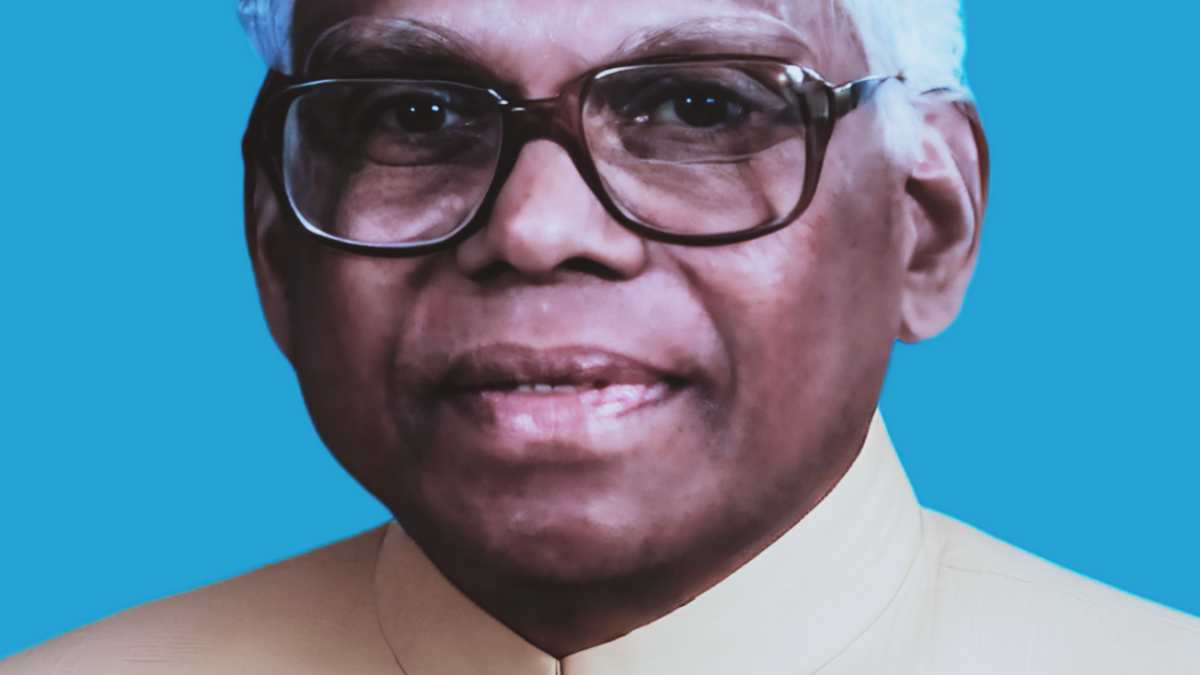
Kocheril Raman Narayanan (27 October 1920 – 9 November 2005) was the tenth President of India, serving from 1997 to 2002. Born into a poor Dalit family in a village of Travancore, he won his way to the London School of Economics, had a distinguished career in the Indian Foreign Service and was Vice President before being elected head of state, the first Dalit to hold the office. He described himself as a “working President” and used the powers of the post with unusual independence.
Quick Facts
| Full name | Kocheril Raman Narayanan |
| Born | 27 October 1920, Uzhavoor, Kottayam district, Kerala |
| Died | 9 November 2005 (aged 85), New Delhi |
| Offices | President of India (25 July 1997 – 25 July 2002); Vice President of India (1992–1997) |
| Earlier career | Indian Foreign Service; Ambassador to China and the United States |
| Education | University of Travancore (M.A.); London School of Economics (B.Sc. Econ.) |
| Spouse | Usha Narayanan (m. 1951) |
| Children | 2 daughters |
Early Life
Narayanan was the fourth of seven children of Kocheril Raman Vaidyar, a practitioner of traditional medicine. The family belonged to the Paravan community, treated as untouchable, and lived in a thatched hut. He walked about fifteen kilometres a day to school through paddy fields and was sometimes made to stand outside the classroom because his fees had not been paid. He studied on scholarships at Kottayam and took a first-class master’s degree in English literature at the University of Travancore, standing first in the university. He was refused the lecturer’s post he was entitled to and in protest declined to collect his degree.
He worked as a journalist in Delhi and Bombay, and in 1945, with a scholarship from the Tata trusts, went to the London School of Economics, where he studied political science under Harold Laski.
Diplomat
He returned in 1948 carrying a letter from Laski to Jawaharlal Nehru, who had him appointed to the Indian Foreign Service. He served in Rangoon, Tokyo, London, Canberra and Hanoi, and was ambassador to Thailand and Turkey. In Rangoon he met Ma Tint Tint, a Burmese student, whom he married in 1951; she took the name Usha. In 1976 he became ambassador to China, the first after the war of 1962. After retiring he was Vice-Chancellor of Jawaharlal Nehru University, and from 1980 to 1984 ambassador to the United States, where he prepared Indira Gandhi‘s visit of 1982.
Politics
He was elected to the Lok Sabha from Ottapalam in Kerala in 1984, 1989 and 1991 as a Congress candidate, and was a minister of state for planning, external affairs and science and technology under Rajiv Gandhi. In 1992 he was elected Vice President without a contest.
President
On 14 July 1997 he was elected President with about 95 per cent of the votes of the electoral college. He set new precedents. He explained to the public, through communiqués, the reasons for his decisions on forming governments after the inconclusive elections of 1998 and 1999. He twice sent back the Cabinet’s advice to impose President’s rule on a state, in Uttar Pradesh in 1997 and Bihar in 1998. In 1998 he became the first serving President to vote in a general election.
At the golden jubilee of the Republic in 2000 he asked whether it was the Constitution that had failed the people or the people who had failed the Constitution, a rebuke to proposals for rewriting it. He spoke often about the unfinished struggle against caste discrimination, and expressed anguish over the killing of a Christian missionary in Orissa and over the violence in Gujarat in 2002.
Death and Legacy
He died in New Delhi on 9 November 2005. His rise from Uzhavoor to Rashtrapati Bhavan remains the most striking personal journey in the history of the Indian presidency, and he is counted among those who enlarged the moral authority of the office.
Frequently Asked Questions
When and where was K. R. Narayanan born?
K. R. Narayanan was born on 27 October 1920 in Uzhavoor, Kottayam district, Kerala.
When did K. R. Narayanan die?
Died: 9 November 2005 (aged 85), New Delhi.
Featured image: Official portrait of K. R. Narayanan as President of India. Photo by Government of India, licensed under Government Open Data License – India, via Wikimedia Commons.



