
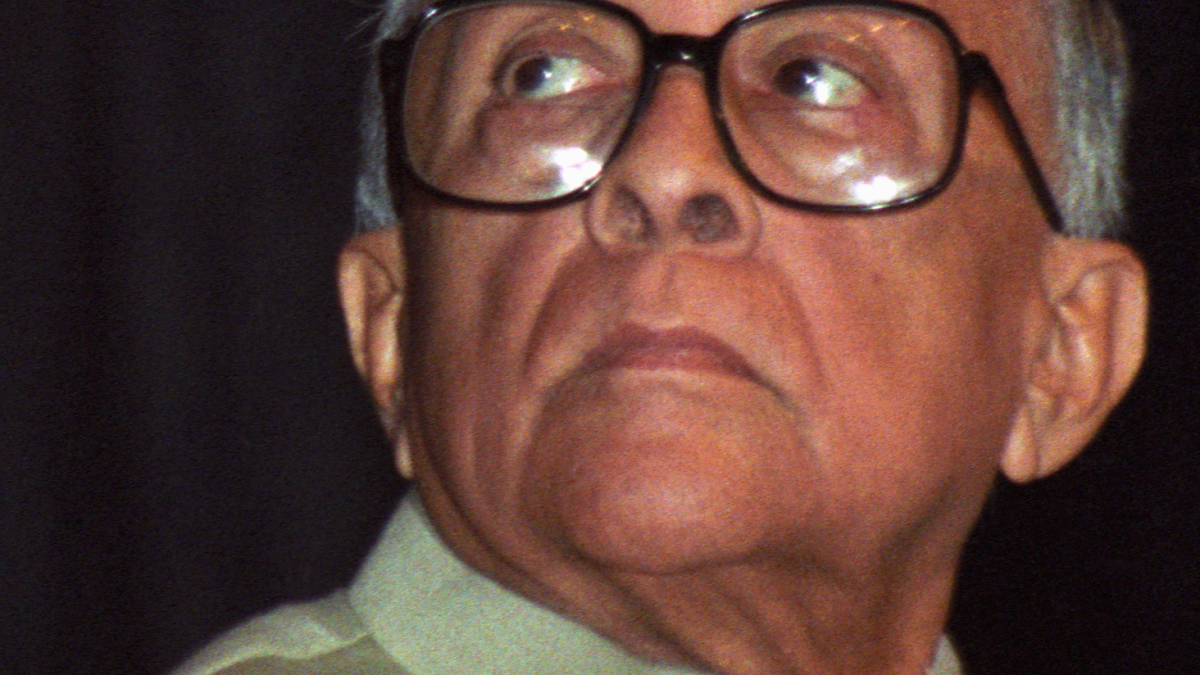
Jyoti Basu (8 July 1914 – 17 January 2010) was an Indian communist politician who was Chief Minister of West Bengal from 1977 to 2000, at the time the longest tenure of any chief minister in India. A founder member of the Communist Party of India (Marxist), he led the Left Front government that carried out land reform and established elected village councils. In 1996 he was offered the post of Prime Minister, which his party would not let him accept.
Quick Facts
| Full name | Jyotirindra Basu |
| Born | 8 July 1914, Calcutta, Bengal |
| Died | 17 January 2010 (aged 95), Kolkata, West Bengal |
| Party | Communist Party of India (Marxist) |
| Office | Chief Minister of West Bengal (21 June 1977 – 6 November 2000) |
| Earlier office | Deputy Chief Minister of West Bengal (1967, 1969–1970) |
| Education | St. Xavier’s College and Presidency College, Calcutta; Middle Temple, London |
| Spouse | Kamal Basu |
| Children | 1 son |
Early Life
Basu was born in Calcutta into a well-to-do family from the Dhaka region; his father was a doctor. He went to Loreto and St. Xavier’s schools and took an honours degree in English at Presidency College. In 1935 he went to London to read law. There he was drawn into the India League and the circle of British communists, and helped organise Indian students. He was called to the bar at the Middle Temple and returned in 1940, but never practised: he joined the Communist Party of India as a full-time worker.
Political Career
He was put to work among railwaymen, and in 1946 was elected to the Bengal Legislative Assembly from a railway workers’ constituency. After independence he represented Baranagar for two decades and became leader of the opposition, known for cool, sarcastic speeches. He was imprisoned several times when the party was banned. When the communist movement split in 1964 he was one of the nine founding members of the politburo of the CPI(M).
He was Deputy Chief Minister in the two short-lived United Front governments of 1967 and 1969, holding the home portfolio during years of land seizures, strikes and the Naxalite uprising. In 1970 he survived an attempt on his life at Patna railway station. The party boycotted the assembly after the election of 1972, which it said had been rigged.
The Left Front won the election of 1977 and he took office on 21 June. His government registered sharecroppers under Operation Barga, giving more than a million tenant farmers security against eviction, distributed surplus land and in 1978 held elections to a three-tier system of panchayats, shifting power in the countryside. Agricultural output rose, and the Front was re-elected four times under him.
His record in the cities was less happy. Industry declined amid militant trade unionism and power shortages, capital left the state, and the withdrawal of English from primary schools was widely criticised and later reversed. The eviction of refugees from Marichjhapi in the Sundarbans in 1979, in which a number died, remains a stain. In the 1990s he began to seek private and foreign investment.
After the general election of 1996 the parties of the United Front asked him to become Prime Minister. The central committee of his party voted against joining a government it would not control. He obeyed, and later called the decision a “historic blunder”.
Later Years
He stepped down in November 2000 because of age and was succeeded by Buddhadeb Bhattacharjee. He played a part in the 1996 agreement with Bangladesh on sharing the waters of the Ganga. He died in Kolkata on 17 January 2010, and in accordance with his wishes his body was donated for medical research.
Legacy
Admirers remember a disciplined, incorruptible leader who gave Bengal stability and the rural poor a voice; critics, a long stagnation. Both agree that no one else shaped the state so much in the half-century after independence.
Frequently Asked Questions
When and where was Jyoti Basu born?
Jyoti Basu was born on 8 July 1914 in Calcutta, Bengal.
When did Jyoti Basu die?
Died: 17 January 2010 (aged 95), Kolkata, West Bengal.
Featured image: Jyoti Basu in Calcutta, December 1996. Photo by Biswarup Ganguly, licensed under CC BY 3.0, via Wikimedia Commons.



