
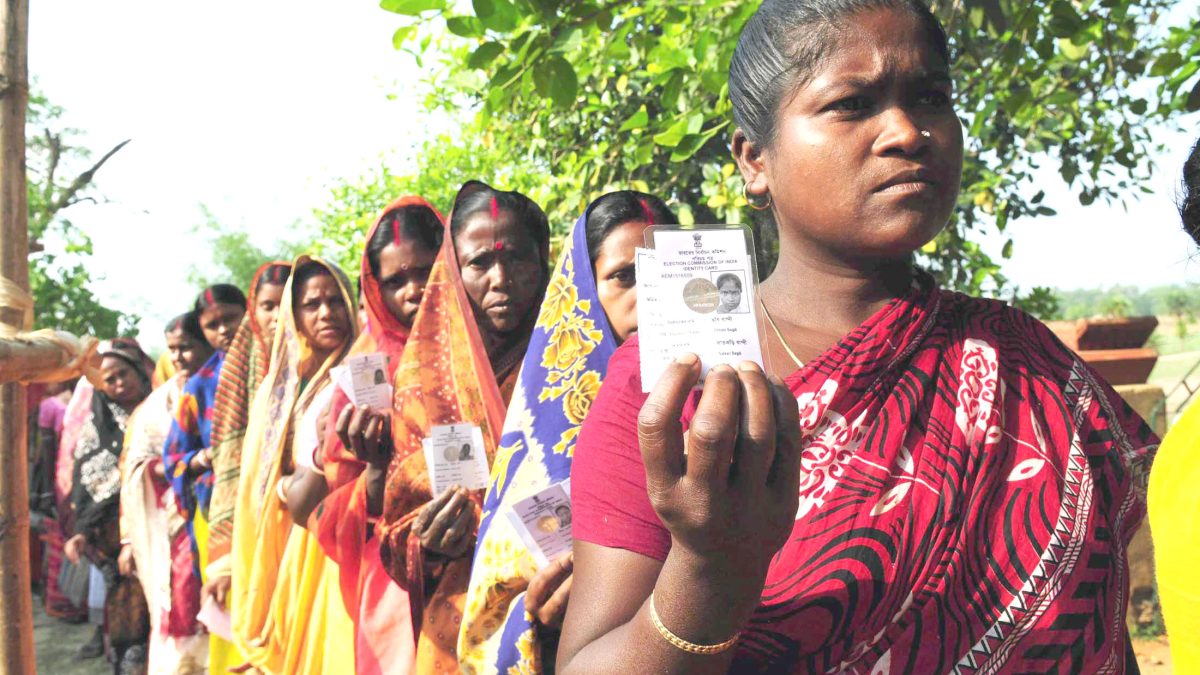
Between October 1951 and February 1952 independent India held its first general election. About 17.3 crore people were entitled to vote, most of whom could not read. Nothing on this scale had been attempted anywhere, and many observers abroad expected it to fail.
The decision
The Constitution gave every adult the vote, with no test of property, education or sex. Western democracies had taken generations to reach that point. India began there.
The man in charge
Sukumar Sen, a civil servant and mathematician, became the first Chief Election Commissioner in 1950. He had to build the system from nothing.
- Voter lists: Officials went house to house to register electors. Many women in the north gave their names only as someone’s wife or mother; Sen ordered such entries removed, and about 28 lakh women were left off the rolls.
- Symbols: Since most voters could not read, each party was given a picture symbol. The Congress had a pair of bullocks with a yoke.
- Ballot boxes: Each candidate had a separate box bearing the symbol, and voters dropped the ballot paper into the box of their choice. About 20 lakh steel boxes were made.
- Polling stations: nearly 2 lakh were set up, some reached only on foot, by boat or by mule.
The voting
- First votes: cast on 25 October 1951 in Chini tehsil of Himachal Pradesh, before snow closed the passes. Shyam Saran Negi, a schoolteacher there, is remembered as independent India’s first voter.
- Main polling: January and February 1952
- Seats: 489 in the Lok Sabha, along with elections to the state assemblies
- Turnout: about 45 per cent
- Parties: more than fifty contested
Jawaharlal Nehru campaigned across the country by plane, train, car and on foot.
The results
- Indian National Congress: 364 seats, with about 45 per cent of the vote
- Communist Party of India: 16 seats, the largest opposition group
- Socialist Party: 12 seats
- Bharatiya Jana Sangh: 3 seats
Nehru became the first elected Prime Minister. Among those defeated was Dr B. R. Ambedkar, who lost in Bombay.
Why it mattered
The election showed that poverty and illiteracy were no bar to democracy. The transfer of power through the ballot became routine in India, while many countries that became independent in the same years turned to military or one-party rule.
Sukumar Sen also ran the second general election in 1957, and was later invited to organise Sudan’s first election.
Then and now
India’s electorate has since grown to more than 96 crore. Separate boxes gave way to a single ballot paper and then, from the late 1990s, to electronic voting machines. Shyam Saran Negi voted in every election until his death in 2022, at the age of 106.



