
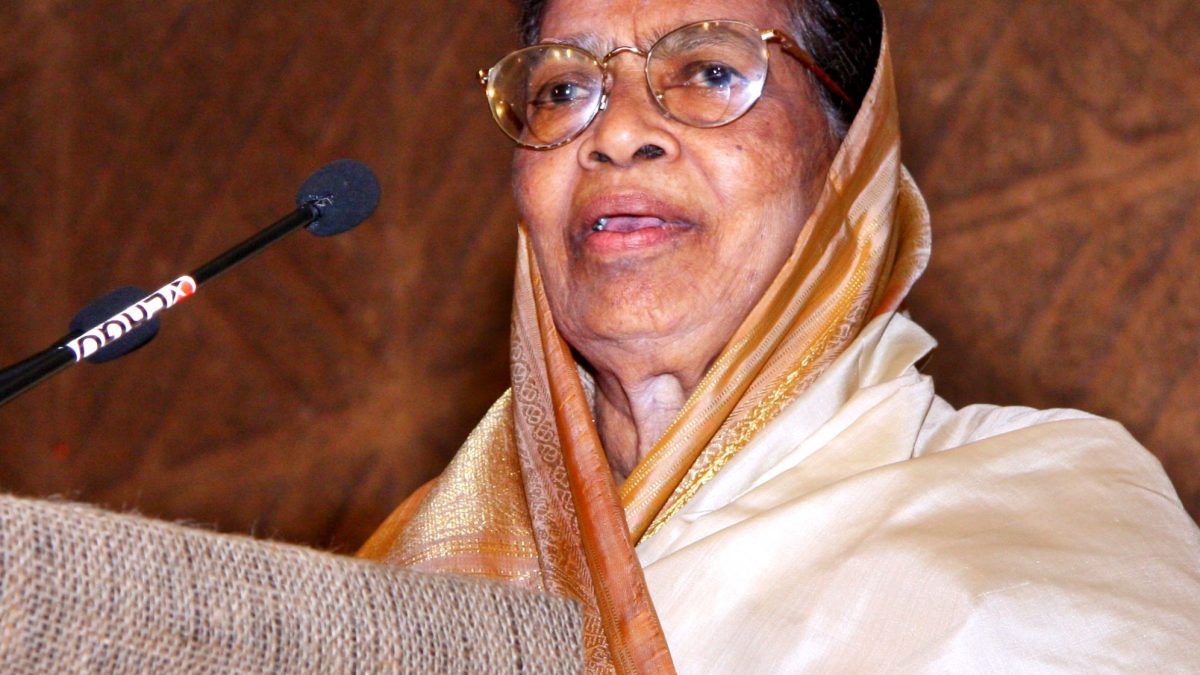
Justice M. Fathima Beevi (30 April 1927 – 23 November 2023) was an Indian judge who in 1989 became the first woman appointed to the Supreme Court of India, and the first Muslim woman to sit in the higher judiciary of the country. She rose through every level of the court system in Kerala, starting as a junior magistrate. After retiring she was a member of the National Human Rights Commission and Governor of Tamil Nadu from 1997 to 2001.
Quick Facts
| Full name | Meera Sahib Fathima Beevi |
| Born | 30 April 1927, Pathanamthitta, Travancore (now Kerala) |
| Died | 23 November 2023 (aged 96), Kollam, Kerala |
| Occupation | Judge |
| Offices | Judge, Kerala High Court (1983–1989); Judge, Supreme Court of India (1989–1992); Governor of Tamil Nadu (1997–2001) |
| Known for | First woman judge of the Supreme Court of India |
| Education | University College, Thiruvananthapuram (B.Sc.); Government Law College, Thiruvananthapuram |
| Honours | Padma Bhushan (2024, posthumous) |
Early Life
She was born at Pathanamthitta, the eldest of eight children of Annaveetil Meera Sahib, a government employee, and Khadeeja Beevi. She went to the Catholicate High School in the town and took a degree in chemistry at University College in Thiruvananthapuram. She meant to continue in science; it was her father, an admirer of Anna Chandy, the first woman judge in the region, who persuaded her to study law. She was one of only a handful of women in her class at the Government Law College. In 1950 she stood first in the Bar Council’s examination, the first woman to win its gold medal.
Judicial Career
She enrolled as an advocate on 14 November 1950 and began practice in the lower courts of Kollam, where a woman lawyer in a headscarf was an object of curiosity. In 1958 she passed the competitive examination and was appointed a munsiff, the lowest rung of the judicial service. She was promoted step by step: subordinate judge in 1968, chief judicial magistrate in 1972, district and sessions judge in 1974. In 1980 she became a judicial member of the Income Tax Appellate Tribunal.
She was appointed a judge of the Kerala High Court in August 1983 and retired from it on 29 April 1989. Less than six months later, on 6 October 1989, she was elevated to the Supreme Court. No woman had sat on the court in the thirty-nine years since it was established. She served until 29 April 1992. She said afterwards that she had opened a closed door, and also that the judiciary remained a patriarchal institution in which women were too few.
Later Career
From 1993 she was a member of the newly formed National Human Rights Commission. She was appointed Governor of Tamil Nadu on 25 January 1997. In that office she rejected the mercy petitions of four people sentenced to death in the Rajiv Gandhi assassination case.
In May 2001, after the state election, she invited J. Jayalalithaa to form the government and swore her in as Chief Minister, although Jayalalithaa had been disqualified from contesting because of a conviction for corruption. The Union government held that the Governor had not acted in accordance with the Constitution. After a midnight police raid in Chennai in which the former chief minister M. Karunanidhi was arrested, the Centre moved to recall her, and she resigned at the beginning of July 2001. The Supreme Court later set aside Jayalalithaa’s appointment.
Last Years and Legacy
She returned to her family home at Pathanamthitta, where she lived quietly; she never married. She died in hospital at Kollam on 23 November 2023, at ninety-six. The Padma Bhushan was conferred on her posthumously in 2024. Every woman who has since sat on the Supreme Court has followed the path she opened.
Frequently Asked Questions
When and where was Fathima Beevi born?
Fathima Beevi was born on 30 April 1927 in Pathanamthitta, Travancore (now Kerala).
When did Fathima Beevi die?
Died: 23 November 2023 (aged 96), Kollam, Kerala.
What is Fathima Beevi known for?
Known for: First woman judge of the Supreme Court of India.
What honours has Fathima Beevi received?
Padma Bhushan (2024, posthumous).
Featured image: Justice M. Fathima Beevi speaking in December 2009. Photo by Augustus Binu, licensed under CC BY-SA 3.0, via Wikimedia Commons.



