
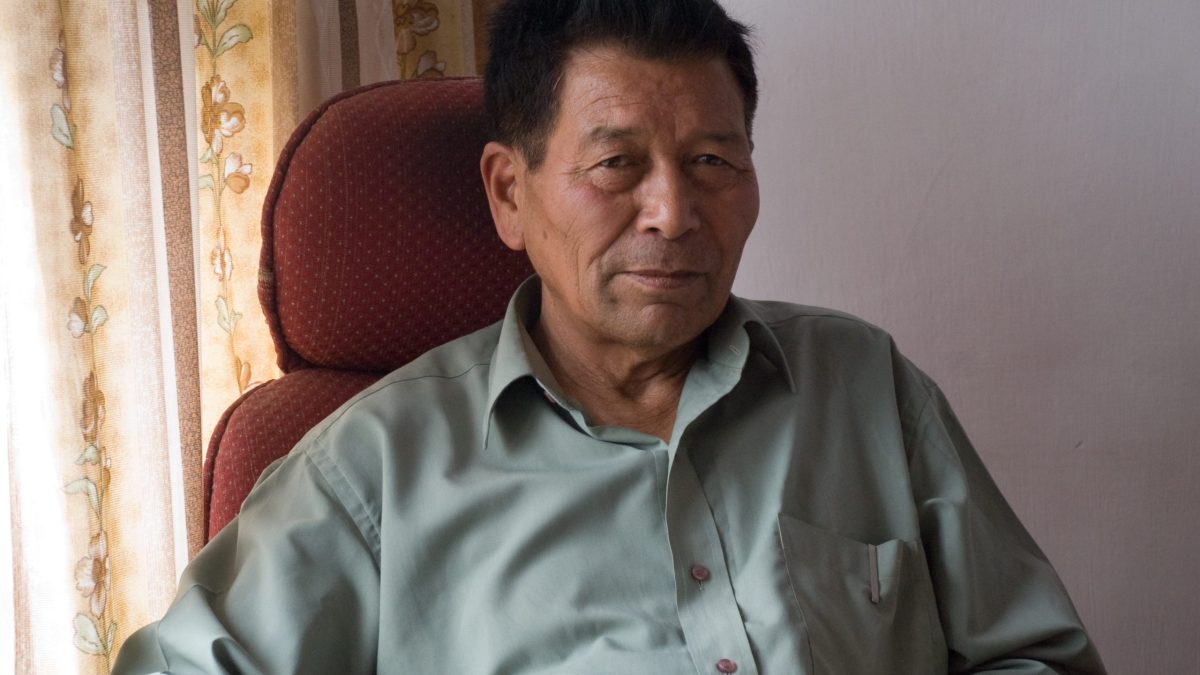
Chewang Norphel (born 1935) is an Indian civil engineer from Ladakh who devised a simple way of making artificial glaciers to supply water to the villages of that cold desert. He has built more than a dozen of them since 1987 and is widely known as the “Ice Man of India”. He was awarded the Padma Shri in 2015.
Quick Facts
| Full name | Chewang Norphel |
| Born | 1935, Leh, Ladakh, India |
| Occupation | Civil engineer |
| Known for | Artificial glaciers |
| Nickname | Ice Man of India |
| Education | Amar Singh College, Srinagar; diploma in civil engineering, Lucknow |
| Awards | Jamnalal Bajaj Award (2010); Padma Shri (2015) |
Early Life
Norphel was born into a farming family in Leh. As a boy he herded animals and helped in the fields, and he saw how completely Ladakhi farming depends on meltwater. He studied science at Amar Singh College in Srinagar and took a diploma in civil engineering at Lucknow in 1960.
Career
He joined the rural development department of Jammu and Kashmir and worked in Ladakh for about thirty-five years. He has said there is hardly a village in the region where he did not build a road, a culvert, a bridge, a school or an irrigation channel, often with local stone and village labour because nothing else could be brought in.
Ladakh receives very little rain or snow. Its barley, wheat and vegetables are watered by streams fed by glaciers high above the villages. Those glaciers begin to melt in earnest only in June, but sowing must be done in April and May if the crop is to ripen in the short summer. Through the winter, meanwhile, water runs to waste down the valleys. As the natural glaciers shrank, the spring shortage worsened.
Norphel noticed that a thin stream left running from a tap near his home froze into a sheet of ice in the shade of trees, while the fast main stream did not freeze. If water could be slowed and spread out in the shade, it would freeze where it lay.
In 1987 he built his first artificial glacier above the village of Phuktsey. In late autumn the stream is diverted through a channel to a shaded north-facing slope not far above the fields. Low stone walls built across the slope slow the water to a trickle, and it freezes in steps through the winter. Because the ice lies thousands of feet lower than a natural glacier, it melts weeks earlier, just when farmers need to sow. The largest is about a thousand feet long and supplies several hundred families. Each costs far less than a dam or reservoir.
He retired in the mid-1990s and continued the work through a local voluntary organisation, the Leh Nutrition Project, building some fifteen glaciers in all, along with reservoirs and channels. His method inspired later variations, among them the conical “ice stupas” of Sonam Wangchuk.
Recognition
He received the Jamnalal Bajaj Award for the application of science and technology to rural development in 2010 and the Padma Shri in 2015, and his work has been the subject of documentary films.
Personal Life
Norphel lives in Leh, where he keeps a garden watered by his own methods. He has warned repeatedly that artificial glaciers are a way of adapting to a warming climate and no substitute for slowing it.
Frequently Asked Questions
When was Chewang Norphel born?
Chewang Norphel was born in 1935, Leh, Ladakh, India.
What is Chewang Norphel known for?
Known for: Artificial glaciers.
What honours has Chewang Norphel received?
Jamnalal Bajaj Award (2010); Padma Shri (2015).
Featured image: Chewang Norphel in Leh, July 2009. Photo by Kiran Jonnalagadda, licensed under CC BY-SA 2.0, via Wikimedia Commons.



