
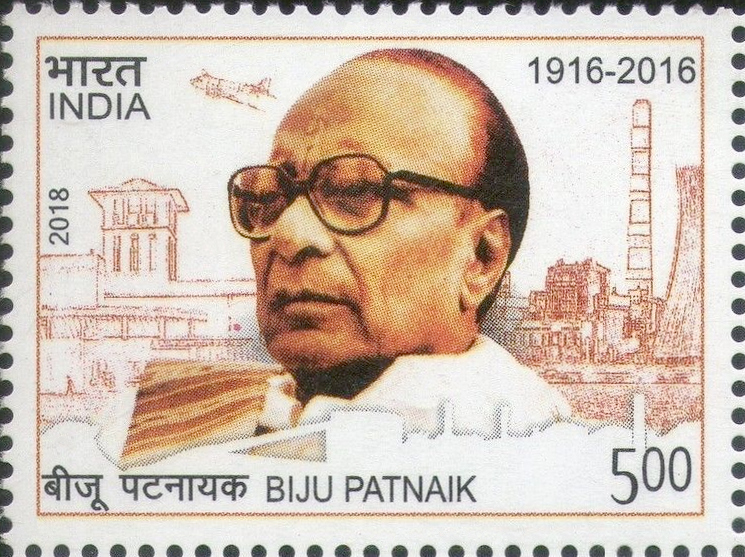
Bijayananda Patnaik (5 March 1916 – 17 April 1997), known as Biju Patnaik, was an Indian aviator, freedom fighter, industrialist and politician who was twice Chief Minister of Odisha. As a pilot he flew Indonesia’s leaders out of Dutch-held Java in 1947 and carried the first Indian soldiers to Kashmir. He was a man of large gestures, and the modern history of Odisha is unthinkable without him.
Quick Facts
| Full name | Bijayananda Patnaik |
| Born | 5 March 1916, Cuttack, Odisha |
| Died | 17 April 1997, New Delhi (aged 81) |
| Occupation | Pilot, industrialist, politician |
| Parties | Indian National Congress; Utkal Congress; Janata Party; Janata Dal |
| Offices | Chief Minister of Odisha (1961–1963, 1990–1995); Union Minister of Steel and Mines (1977–1979) |
| Honours | Bhoomi Putra and Bintang Jasa Utama (Indonesia) |
| Spouse | Gyan Patnaik |
| Children | Prem, Naveen and Gita |
Early Life
He was born in Cuttack, the son of Lakshminarayan Patnaik, a judicial officer and nationalist. At Ravenshaw College he was a champion athlete. As a student he cycled from Cuttack to Peshawar, some 4,500 kilometres. He left college to train as a pilot at the Delhi Flying Club and joined a private airline.
Pilot
During the Second World War he flew for the Royal Indian Air Force, evacuating British families from Rangoon as the Japanese advanced and flying supplies to China and the Soviet Union. At the same time he was secretly working for the freedom movement, carrying underground leaders such as Aruna Asaf Ali in his aircraft and dropping leaflets. He was arrested in 1943 and spent two years in prison.
After the war he founded Kalinga Airlines.
Indonesia, 1947
The Dutch were trying to retake their former colony from the new Indonesian republic. In July 1947 Jawaharlal Nehru asked Patnaik to bring out the republic’s leaders so that they could put their case to the world. He flew an old Dakota into Java with his wife, Gyan, also a pilot, landed on a makeshift airstrip under threat of being shot down, and flew the Prime Minister, Sutan Sjahrir, to India by way of Singapore. Indonesia made him an honorary citizen with the title Bhoomi Putra, son of the soil, and later gave him one of its highest awards.
Kashmir, 1947
On 27 October 1947, as raiders from Pakistan approached Srinagar, he piloted one of the first aircraft carrying Indian troops to the city’s airfield, not knowing whether it was already in enemy hands.
Industry
He set up some of the first modern industries in Odisha: a tube mill, textile mills and an iron works at Barbil. He pressed for the port at Paradip, which was begun during his first term.
Politics
- **Chief Minister, 1961–1963:** he led the Congress to victory and began an ambitious programme of industry, the port, an engineering college and an agricultural university. He resigned under the Kamaraj Plan.
- **Opposition:** he left the Congress in 1969 and was jailed during the Emergency.
- **Union minister:** Steel and Mines in the Janata government of 1977.
- **Chief Minister, 1990–1995:** he returned with a huge majority. He reserved a third of seats in local bodies for women, ahead of the rest of the country.
He was famously blunt, once telling people to beat up corrupt officials.
The Kalinga Prize
In 1952 he endowed the Kalinga Prize, awarded by UNESCO for the popularising of science.
Death and Family
He died in New Delhi in 1997. His coffin was draped with the flags of India, Russia and Indonesia. His younger son, Naveen Patnaik, founded the Biju Janata Dal in his name and was Chief Minister of Odisha for twenty-four years. His daughter was the writer Gita Mehta. The airport at Bhubaneswar is named after him.
Featured image: Biju Patnaik on a 2018 postage stamp of India. Photo by India Post, Government of India, licensed under Government Open Data License – India, via Wikimedia Commons.



