
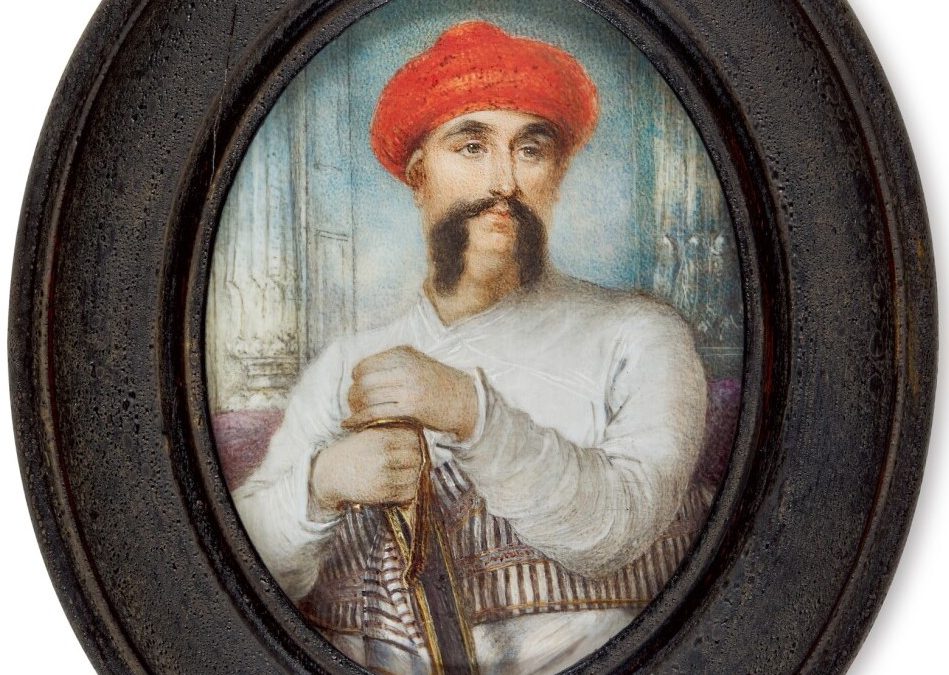
Asaf-ud-Daula (23 September 1748 – 21 September 1797) was the fourth Nawab of Awadh, ruling from 1775 to 1797. He moved the capital from Faizabad to Lucknow and turned a provincial town into one of the great cities of eighteenth-century India, a centre of architecture, poetry, music and cuisine. The Bara Imambara and the Rumi Darwaza, built during a famine to give work to the hungry, are his best-known monuments. His generosity became proverbial; his reign also saw Awadh fall further under the control of the East India Company.
Quick Facts
| Title | Nawab Wazir of Awadh |
| Born | 23 September 1748, Faizabad, Uttar Pradesh, India |
| Died | 21 September 1797 (aged 48), Lucknow |
| Reign | 26 January 1775 – 21 September 1797 |
| Father | Shuja-ud-Daula |
| Mother | Bahu Begum |
| Known for | Making Lucknow the capital; Bara Imambara; Rumi Darwaza |
| Burial | Bara Imambara, Lucknow |
Early Life
He was the eldest son of Shuja-ud-Daula, the Nawab who had fought the British at Buxar in 1764, and of Bahu Begum, a woman of great wealth and force of character. He was brought up at Faizabad and succeeded his father in January 1775.
Reign
Within months he shifted his court to Lucknow, partly to escape the influence of his mother and grandmother, who remained at Faizabad with much of the family treasure. Nobles, soldiers, merchants, craftsmen and artists followed, and the population of the city grew many times over.
At his accession the Company imposed a new treaty under which he ceded Benares and agreed to pay a heavy subsidy for the British troops stationed in Awadh. The payments soon fell into arrears. In 1781–82 the Governor-General, Warren Hastings, pressed him to recover the money from the estates and treasure of the two Begums at Faizabad, and their servants were imprisoned and ill-treated until it was handed over. The affair became one of the main charges in the impeachment of Hastings in London.
In 1784 a severe famine struck Awadh. The Nawab began the Bara Imambara, a vast hall for the mourning ceremonies of Muharram, to give employment to the destitute; the work continued for years. According to a well-known story, impoverished gentlefolk who were ashamed to be seen labouring were allowed to work at night. The central chamber, about fifty metres long, is one of the largest vaulted halls in the world built without beams, and the passages above it form the labyrinth known as the Bhool Bhulaiya. The complex includes the Asafi mosque and a stepwell, and nearby stands the Rumi Darwaza, a towering gateway that has become the symbol of the city. He also built palaces, gardens and bazaars.
His court attracted the Urdu poets Mir Taqi Mir and Sauda from declining Delhi, along with musicians, dancers and cooks, and set the refined manners for which Lucknow became known. European adventurers and artists also came, among them the soldier Claude Martin and the painters Johan Zoffany and Ozias Humphry. A saying of the city held that whoever does not receive from God receives from Asaf-ud-Daula.
Death and Legacy
He died on 21 September 1797 and was buried in the Imambara he had built. A disputed succession followed, and the Company used it to take half of Awadh in 1801. Administrators of the time judged him extravagant and careless of government. His lasting achievement is Lucknow itself: the city’s architecture, its Muharram observances and its culture of courtesy all date from his reign.
Frequently Asked Questions
When and where was Asaf-ud-Daula born?
Asaf-ud-Daula was born on 23 September 1748 in Faizabad, Uttar Pradesh, India.
When did Asaf-ud-Daula die?
Died: 21 September 1797 (aged 48), Lucknow.
What is Asaf-ud-Daula known for?
Known for: Making Lucknow the capital; Bara Imambara; Rumi Darwaza.
Featured image: Asaf-ud-Daula, miniature by Ozias Humphry, 1786. Photo by Ozias Humphry, in the public domain, via Wikimedia Commons.



