Mangalampalli Balamuralikrishna (6 July 1930 – 22 November 2016) was an Indian Carnatic vocalist, composer, multi-instrumentalist and playback singer. A child prodigy who never went through a regular school, he became one of the most admired and inventive musicians of south India, with a voice of three octaves, some four hundred compositions and several ragas of his own making.
Quick Facts
| Full name | Mangalampalli Balamuralikrishna |
| Born | 6 July 1930, Sankaraguptam, East Godavari district, Madras Presidency (now in Andhra Pradesh) |
| Died | 22 November 2016, Chennai (aged 86) |
| Occupation | Carnatic vocalist, composer, instrumentalist, playback singer |
| Instruments | Voice, viola, violin, mridangam, kanjira |
| Guru | Parupalli Ramakrishnayya Pantulu |
| Awards | Padma Shri (1971), Padma Vibhushan (1991), two National Film Awards, Chevalier of the Ordre des Arts et des Lettres (2005) |
| Spouse | Annapurna |
| Children | 6 |
Early Life
He was born into a family of musicians. His father, Pattabiramayya, played the flute, violin and veena and taught music; his mother, Suryakantamma, a veena player, died when he was an infant. Noticing the boy’s gift, his father placed him with Parupalli Ramakrishnayya Pantulu, a teacher in the direct line of disciples of the composer Tyagaraja.
The Prodigy
At eight he sang a full concert at a music festival in Vijayawada. It was meant to last half an hour and went on for more than two. A distinguished Harikatha performer in the audience added the prefix “Bala”, child, to his name Muralikrishna, and it stayed. He left school after a few months, since the headmaster said that music left him no time for it.
By his mid-teens he had composed a song in each of the seventy-two parent scales of the Carnatic system, a feat few mature composers had attempted.
Career
Performer
He gave some 25,000 concerts in India and abroad over seven decades. He was an accomplished player of the viola, which he helped introduce to Carnatic music, the violin, the mridangam and the kanjira, and sometimes accompanied other artists.
He sang in Telugu, Sanskrit, Kannada and Tamil with equal ease. He also took part in celebrated duets with Hindustani musicians, including Bhimsen Joshi, Hariprasad Chaurasia and Kishori Amonkar, and sang in the national integration song “Mile Sur Mera Tumhara”.
Composer and innovator
He composed about four hundred pieces in every form of Carnatic music. He created new ragas, some of them using only three or four notes, such as Mahati, Lavangi, Sumukham and Sarvashri, which purists questioned and audiences enjoyed, and he devised a new system of rhythm.
Films
He sang in and composed for films in Telugu, Kannada, Tamil and Malayalam, and acted as the sage Narada in the Telugu film Bhakta Prahlada (1967).
- National Film Award for Best Male Playback Singer for the Kannada film Hamsageethe (1975)
- National Film Award for Best Music Direction for Madhvacharya (1986)
Other work
He was a producer for All India Radio and the first principal of the government music college at Vijayawada. In later years he took an interest in music therapy.
Honours
- Padma Shri (1971) and Padma Vibhushan (1991)
- Sangeet Natak Akademi Award (1975) and Sangita Kalanidhi of the Madras Music Academy (1978)
- Chevalier of the French Ordre des Arts et des Lettres (2005)
- Several honorary doctorates
Personal Life
He and his wife, Annapurna, had three sons and three daughters. He lived in Chennai from the 1960s and died there in 2016.
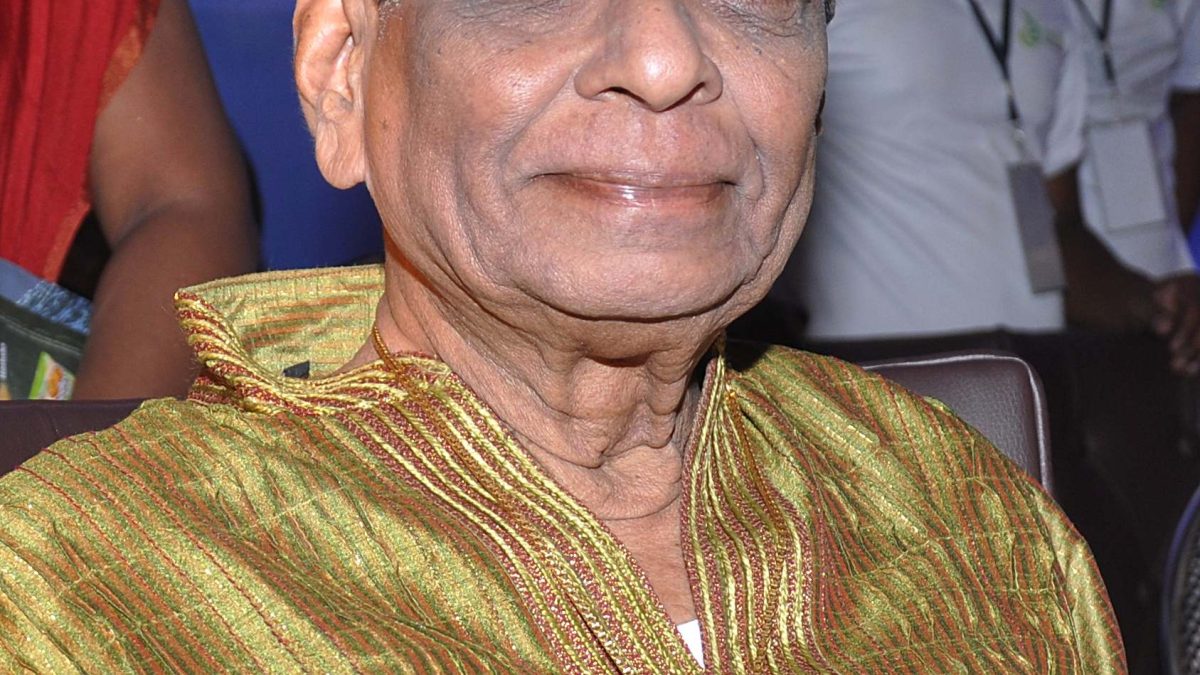
Featured image: M. Balamuralikrishna in August 2013. Photo by Fotokannan, licensed under CC BY-SA 4.0, via Wikimedia Commons.