Sir Dorabji Jamsetji Tata (27 August 1859 – 3 June 1932) was an Indian industrialist and philanthropist, the elder son of Jamsetji Tata. His father dreamed of a steel plant, a hydroelectric company and an institute of science for India, and died before any was built. Dorabji built all three. He financed India’s first Olympic teams, and at his death left his entire fortune to a trust that went on to create several of the country’s foremost institutions.
Quick Facts
| Full name | Dorabji Jamsetji Tata |
| Born | 27 August 1859, Bombay |
| Died | 3 June 1932, Bad Kissingen, Germany (aged 72) |
| Community | Parsi |
| Education | Gonville and Caius College, Cambridge; St Xavier’s College, Bombay (B.A., 1882) |
| Occupation | Industrialist, philanthropist |
| Known for | Founding Tata Steel (1907) and Tata Power (1910); the Sir Dorabji Tata Trust |
| Honours | Knighted 1910 |
| Spouse | Meherbai Bhabha (m. 1897; d. 1931) |
Early Life
He was born in Bombay, the elder of the two sons of Jamsetji Tata and his wife Hirabai. He was sent to a private tutor in England and entered Gonville and Caius College at Cambridge in 1877, where he distinguished himself at cricket, football and rowing. His father called him home after two years, and he took his degree from St Xavier’s College in Bombay in 1882.
His father first put him to work as a journalist on the Bombay Gazette, and then sent him to Pondicherry to see whether a mill could be set up there, and to Nagpur to learn the cotton business at the Empress Mills.
Marriage
On a visit to Mysore State he met Meherbai, daughter of H. J. Bhabha, the state’s inspector-general of education. They were married in 1897. She became a campaigner for women’s education and suffrage and a tennis player of tournament standard. They had no children.
Steel
Jamsetji Tata died in 1904. The steel project, on which he had spent years and large sums, had found no workable deposit of iron ore.
Dorabji went on with it. A letter from the geologist P. N. Bose drew the Tatas’ prospectors to the hills of Mayurbhanj, where they found rich ore. Dorabji himself toured central India by bullock cart with the American consultants. A site was chosen at the meeting of two rivers near the village of Sakchi.
London’s financiers declined to invest. In 1907 the shares were offered in Bombay, and Indians, from princes to clerks, subscribed the whole capital in about three weeks. The Tata Iron and Steel Company produced its first steel in 1912, and the town that grew around it was named Jamshedpur. A British railway official had said he would eat every pound of steel rail the Tatas made; in the First World War the company supplied rails for the campaigns in the Middle East.
Power and Science
- **The Tata Hydro-Electric Power Supply Company (1910):** water stored in lakes in the Western Ghats drove turbines that supplied Bombay’s mills with clean power
- **The Indian Institute of Science, Bangalore:** his father’s bequest, which he and his brother saw through to its opening in 1911
- **Other ventures:** cement, insurance, oil mills and a bank
He was knighted in 1910.
The Crisis of 1924
After the war steel prices collapsed and the company, which had expanded heavily, could not pay its wages. Dorabji pledged his entire personal fortune, including his wife’s jewellery and the Jubilee Diamond, a stone larger than the Koh-i-Noor that he had bought for her, to obtain a loan from the Imperial Bank. The company survived.
The Olympics
A lover of sport, he selected athletes at a meeting in Pune and paid to send a small Indian team to the Antwerp Olympics of 1920. He helped to form the Indian Olympic Association, became its first president in 1927, and financed the team to Paris in 1924. He was a member of the International Olympic Committee.
The Trusts
Lady Tata died of leukaemia in 1931. In her memory he endowed a trust for research into diseases of the blood. In 1932 he put all that he owned, his shares, lands and jewels, into the Sir Dorabji Tata Trust, to be used without distinction of place, nationality or creed.
He died in Germany on 3 June 1932, on his way to visit his wife’s grave, and is buried beside her at Brookwood in England.
Legacy
The trust founded the Tata Institute of Social Sciences, the Tata Memorial Hospital for cancer, the Tata Institute of Fundamental Research and the National Centre for the Performing Arts. It remains the largest shareholder, with its sister trusts, in the Tata group, later led by J. R. D. Tata and Ratan Tata.
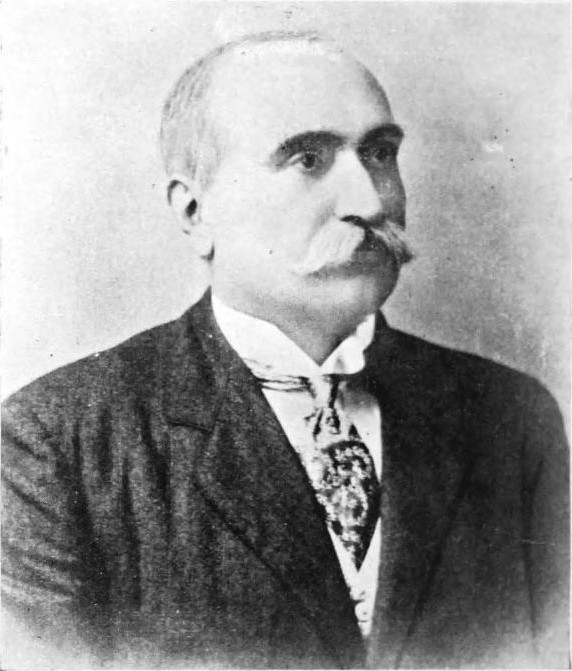
Featured image: Sir Dorabji Tata in 1912. Photo by an unknown photographer, in the public domain, via Wikimedia Commons.