Gorur Ramaswamy Iyengar Gopinath (born 13 November 1951), known as Captain Gopinath, is an Indian entrepreneur and former Army officer who founded Air Deccan, the country’s first low-cost airline, in 2003. Its cheap fares, some as low as one rupee, brought air travel within reach of millions of Indians who had never flown and forced the whole industry to change. His life inspired the Tamil film Soorarai Pottru.
Quick Facts
| Full name | Gorur Ramaswamy Iyengar Gopinath |
| Born | 13 November 1951, Gorur, Hassan district, Karnataka |
| Age | 74 |
| Education | Sainik School, Bijapur; National Defence Academy; Indian Military Academy |
| Occupation | Entrepreneur, author; former Army officer |
| Founded | Deccan Aviation (1997); Air Deccan (2003) |
| Known for | Pioneering low-cost air travel in India |
| Awards | Rolex Award for Enterprise (1996); Chevalier of the Legion of Honour, France (2007) |
| Spouse | Bhargavi Gopinath |
| Children | 2 |
Early Life
He was born at Gorur, a village on the Hemavati river in the Hassan district of Karnataka, into a large family. His father was a schoolteacher and farmer who taught him at home until the fifth class and told him that the village was his school. He won a place at the Sainik School at Bijapur and went on to the National Defence Academy.
Soldier
He was commissioned into the Army and served in the war of 1971 on the eastern front. He left the service at twenty-eight with the rank of captain, restless for something of his own.
Farmer
His family’s land had been submerged by a dam, and they were given a stretch of dry, uncultivated ground in exchange. He went to live on it in a tent, without electricity, and over some years turned it into a working farm. He took up silk-worm rearing by methods that avoided chemicals and cut costs, and in 1996 received a Rolex Award for Enterprise for it. He also tried his hand at a motorcycle dealership, a restaurant and a consultancy, and stood unsuccessfully for the state assembly.
Deccan Aviation
In 1997, with an Army friend, the helicopter pilot Captain K. J. Samuel, he started a helicopter charter company, Deccan Aviation, at a time when private operators were few. It took years to obtain the licences. The company flew for businesses, surveyors, rescue missions and tourists, and became the largest of its kind in the country.
Air Deccan
Flying over the countryside, he has written, he looked down on villages with television aerials on the roofs and asked himself why the people who could buy a television could not buy an air ticket. In India at the time flying was for the rich and for officials; fewer than one Indian in a hundred had been in an aeroplane.
Air Deccan began flying on 25 August 2003, with a turboprop service from Bangalore to Hubli.
- **Fares:** a few seats on every flight were sold for a rupee, plus taxes, and the rest at about half the fares of other airlines, rising as the flight filled
- **No frills:** no free meals, a single class, tickets sold over the internet and by telephone and, for people without credit cards, at petrol pumps and post offices
- **Small towns:** it flew to dozens of airports the other airlines ignored, some of them unused for years
- **Advertising:** the sides of the aircraft and the seat-backs were sold to advertisers
Its mascot was R. K. Laxman’s Common Man. Within four years it was flying to nearly seventy airports and carrying about a fifth of the country’s passengers. Other low-cost airlines followed, and the number of people flying in India multiplied several times in a decade.
Sale
The airline grew faster than its finances and its systems. It lost money, and delays and cancellations angered customers. In 2007 he sold a controlling stake to the liquor baron Vijay Mallya’s Kingfisher Airlines. The brand was renamed and moved away from low fares, and Kingfisher itself collapsed in 2012. Gopinath has said that the merger was a mistake for both.
A cargo airline that he started in 2009, Deccan 360, closed after two years. He later revived Air Deccan on a small scale for regional routes under a government scheme.
Politics and Writing
He contested the Lok Sabha elections of 2009 and 2014 from Bangalore and lost both. He writes newspaper columns on business and public affairs.
His autobiography, Simply Fly: A Deccan Odyssey (2009), was a bestseller. The Tamil film Soorarai Pottru (2020), with Suriya in a role based on him, won the National Film Award for Best Feature Film, and was remade in Hindi as Sarfira with Akshay Kumar.
Personal Life
He is married to Bhargavi, who started a bakery business in Bangalore to support the family in its lean years; they have two daughters.
The low-cost model he introduced is now the industry’s standard: the largest Indian airline of today is a budget carrier. The cartoonist whose character he borrowed is the subject of R. K. Laxman.
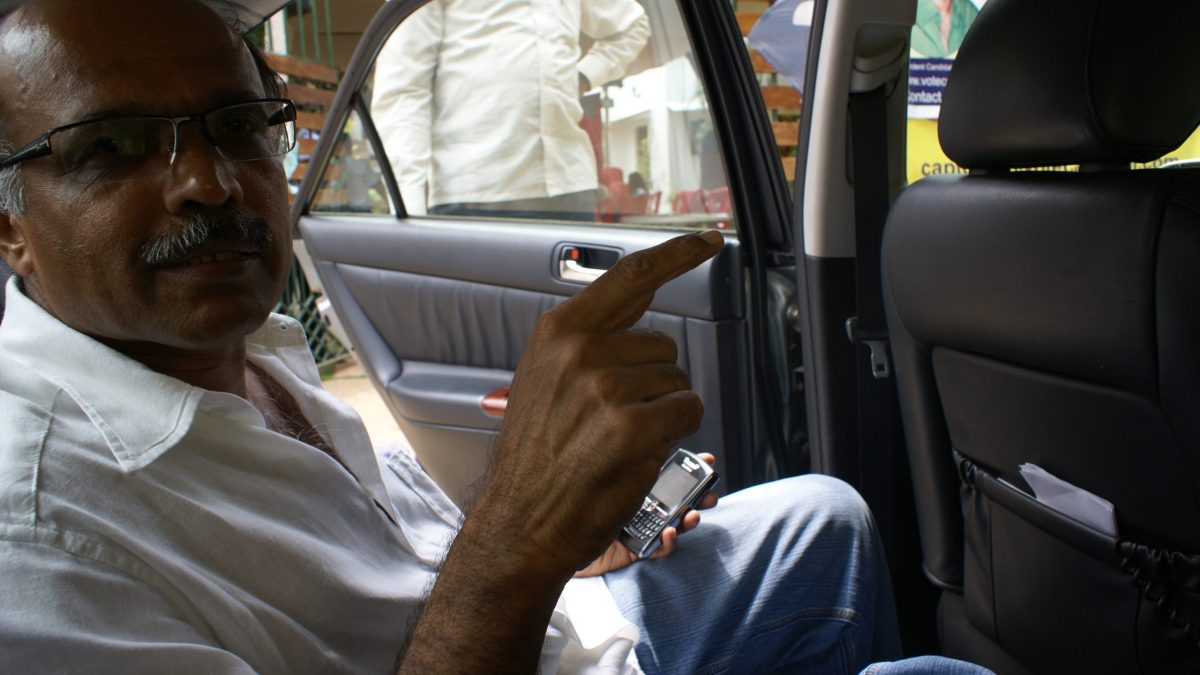
Featured image: Captain G. R. Gopinath during his election campaign in Bangalore, April 2009. Photo by Ranjit Bhaskar of Al Jazeera English, licensed under CC BY-SA 2.0, via Wikimedia Commons.