
Foreign portfolio investors have been steady sellers of Indian equities. On 13 October 2026 they sold shares worth Rs 1,305 crore, which was their 13th consecutive session of net selling, according to a market close report. Their outflows for the year so far have reached $32.52 billion. Domestic institutional investors, by contrast, bought shares worth Rs 2,439 crore on the same day.
The result is a market in which domestic money is absorbing foreign selling. The Sensex closed at 72,781.89 on 14 October, down 0.34%, and the Nifty at 22,622.70, down 0.44%, but analysts quoted in a market report described the near-term outlook as constructive but vulnerable to volatility, with domestic buying giving support. Without that support, the fall could have been larger.
The monthly pattern earlier in the year was heavy. An analysis of capital flows said that foreign portfolio investors withdrew $13.6 billion in March 2026 and $7.56 billion in April, and that the Reserve Bank of India sold $29.6 billion of foreign exchange in March, the highest in 13 months. Those figures, from a secondary source, indicate that pressure on the capital account began early in the year.
Several reasons are given for the current selling. Crude oil is near $107 a barrel, which raises India’s import bill and inflation. The rupee has been trading around 95 to the dollar, which reduces the return for foreign investors when converted back to dollars. The Reserve Bank has raised rates and shifted to a tighter stance. The sources reviewed did not give a detailed breakdown of the reasons behind individual selling decisions, so these factors are the context reported alongside the numbers, not proven causes.
There is a distinction between portfolio flows and direct investment. Foreign portfolio investors buy and sell shares and bonds on the market, and they can change their positions quickly, while foreign direct investment is longer-term. India recorded record gross FDI of about $94.8 billion in FY26, but net FDI was only $7.65 billion, which is covered in a separate article on IndiaX24.
Domestic institutions include mutual funds and insurance companies, which receive regular inflows from retail investors through systematic investment plans and policy premiums. That steady flow has allowed them to buy when foreign investors sell. The figure of Rs 2,439 crore on 13 October is a single-day number, and the pattern depends on continued inflows from households.
What would change the picture? A fall in crude prices, a more stable rupee or a clearer end to the conflict in West Asia would likely reduce the selling. The central bank’s measures against currency speculation are designed to stabilise the rupee, and the growth outlook is strong, with the IMF forecasting 7.0% for FY27, which can attract foreign money back.
The risk is that the selling continues. A long run of outflows can weigh on share prices and the rupee, and the two feed each other, because a falling currency encourages more selling. The weakness in the Nifty, which is at about 22,600, shows that the effect is already visible.
For investors, the figures show that foreign selling is a major force in the market at present, but that domestic buying is a stabilising factor. Readers should keep in mind that flows change quickly and that the numbers are as reported on the dates given.
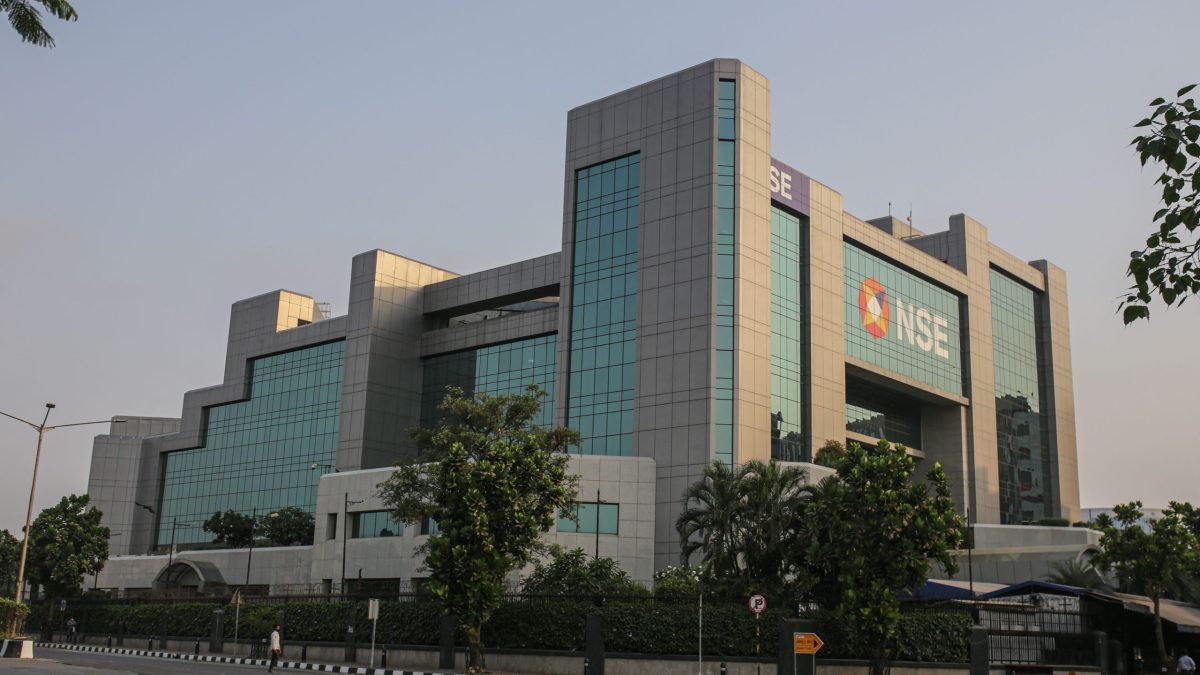
Featured image: The National Stock Exchange of India building in Mumbai (file photo). Photo by 312user, licensed under CC BY-SA 4.0, via Wikimedia Commons.



Leave a Reply