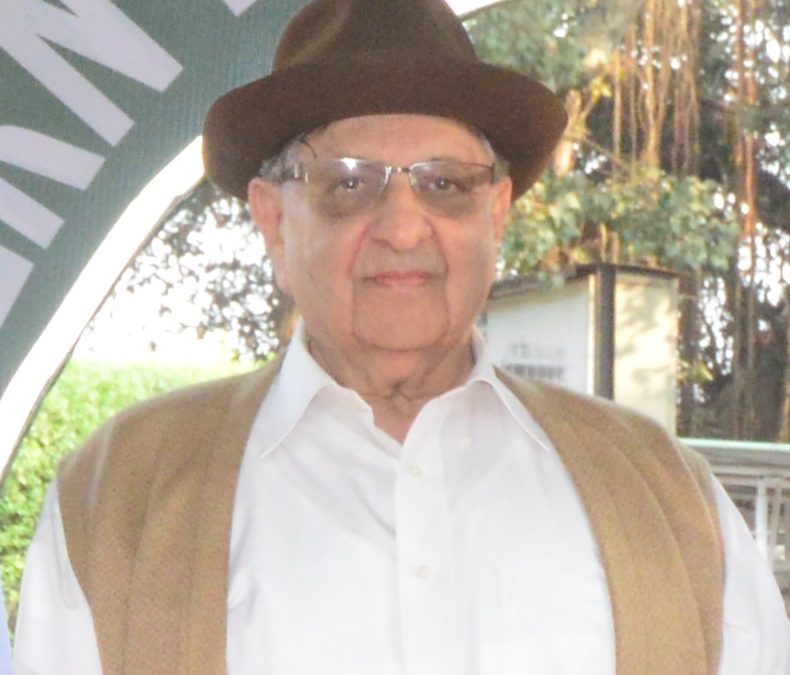
Cyrus Soli Poonawalla (born 11 May 1941) is an Indian businessman, the founder and chairman of the Serum Institute of India at Pune. He started it in 1966 to make serum from the horses of his family’s stud farm. It is now the largest manufacturer of vaccines in the world by number of doses, and its low prices have made immunisation affordable across the developing world. He is known as the vaccine king of India.
Quick Facts
| Full name | Cyrus Soli Poonawalla |
| Born | 11 May 1941, Pune, Maharashtra |
| Age | 85 |
| Community | Parsi |
| Education | The Bishop’s School, Pune; Brihan Maharashtra College of Commerce, Pune |
| Occupation | Businessman |
| Founded | Serum Institute of India (1966) |
| Awards | Padma Shri (2005), Padma Bhushan (2022) |
| Spouse | Villoo Poonawalla (d. 2010) |
| Children | Adar Poonawalla |
Early Life
He was born in Pune into a Parsi family that owned a stud farm and bred racehorses; the name means “of Poona”. He studied at the Bishop’s School and took a degree in commerce.
He saw early that horse racing had a limited future in a socialist India and looked for another business. As a young man he built a prototype sports car, modelled on a Jaguar, and found that he lacked the capital to manufacture it.
The Idea
The farm sent its retired horses to a government institute in Bombay, which used them to make serums: an animal is given small doses of a toxin, and the antibodies it produces are drawn from its blood. A vet there remarked to him that, with horses and land of his own, he could make serum himself. India then imported much of what it needed, at high prices, or went without.
Serum Institute
He founded the Serum Institute of India in 1966, with his brother, on about twelve acres of the farm, and hired scientists from the government institute. Within two years it was producing anti-tetanus serum, and soon after anti-snake-venom serum.
- **1970s:** tetanus vaccine and the combined vaccine against diphtheria, tetanus and whooping cough
- **1989:** measles vaccine, made on a human cell line
- **1990s:** rubella, combined measles-mumps-rubella and hepatitis B vaccines; the World Health Organization approved its products for purchase by United Nations agencies in 1994
- **2010:** a vaccine against meningitis A, developed for Africa in a partnership with international health bodies, at under half a dollar a dose; epidemics of the disease in the “meningitis belt” have nearly ended
- **Later:** vaccines against rotavirus, pneumonia, cervical cancer and malaria
His method was scale. By making enormous volumes with efficient processes he could sell at a fraction of Western prices and still profit. The institute supplies vaccines to about 170 countries, and it is estimated that about two-thirds of the world’s children receive at least one vaccine made by it.
Covid-19
In 2020 the institute, by then run by his son, agreed to manufacture the vaccine developed at Oxford University with AstraZeneca before it was known whether it worked, and put several hundred million dollars at risk. Sold in India as Covishield, it made up the greater part of the two billion and more doses given in the country’s vaccination campaign, and was exported widely.
Other Interests
The family’s holdings include a finance company, property and the stud farm, which he has kept up; his horses have won the Indian Derby and other classic races many times. He is among the richest men in India.
Recognition
- Padma Shri (2005)
- Padma Bhushan (2022)
- A doctorate from the University of Pune for a thesis on the manufacture of vaccines, and honorary degrees from universities abroad, among them Oxford
- Awards from international health organisations for his contribution to immunisation
He has given large sums to hospitals, schools and clean-city projects in Pune, and to vaccine research at Oxford.
Personal Life
His wife, Villoo, died in 2010. Their only child, Adar Poonawalla, joined the company in 2001 and has been its chief executive since 2011; Cyrus remains chairman of the group. He lives in Pune.
In the same years others were making India a supplier of affordable medicines to the world, among them Yusuf Hamied of Cipla and Kiran Mazumdar-Shaw of Biocon.
Featured image: Cyrus Poonawalla. Photo by Amarjeetkumarcompaniespride1, licensed under CC BY-SA 4.0, via Wikimedia Commons.