Brijmohan Lall Munjal (1 July 1923 – 1 November 2015) was an Indian industrialist, the founder of the Hero group. A refugee from what became Pakistan, he began with his brothers by trading in bicycle parts, built Hero Cycles into the largest bicycle manufacturer in the world, and then, in partnership with Honda of Japan, created Hero Honda, which became the world’s largest maker of two-wheelers. He put a bicycle and then a motorcycle within reach of the ordinary Indian family.
Quick Facts
| Full name | Brijmohan Lall Munjal |
| Born | 1 July 1923, Kamalia, Punjab (now in Pakistan) |
| Died | 1 November 2015, New Delhi (aged 92) |
| Occupation | Industrialist |
| Founded | Hero Cycles (1956); Hero Honda Motors (1984) |
| Awards | Padma Bhushan (2005) |
| Spouse | Santosh Munjal |
| Children | Raman Kant (d. 1991), Suman Kant, Pawan Kant and Sunil Kant Munjal, and a daughter |
Early Life
He was born at Kamalia, a small town in the canal colonies of western Punjab, one of the sons of a grain trader. He had a few years of schooling and worked for a time as a clerk in an army ordnance factory.
In 1944 he and his brothers, Dayanand, Satyanand and Om Prakash, moved to Amritsar and began trading in bicycle components. Partition in 1947 cut them off from their home and from their suppliers. They moved to Ludhiana.
Hero Cycles
Bicycles in India were then assembled largely from imported parts. The brothers started to make what they had been selling: forks first, then handlebars and other components. In 1956, with a loan from the Punjab government, they set up Hero Cycles to manufacture complete bicycles. In the first year the factory made a few hundred.
- they made nearly every part themselves or bought it from small firms set up nearby by relatives and former employees, to whom they gave help and assured orders
- they kept almost no stock, receiving parts and sending out finished cycles each day, years before such methods were spoken of in India
- dealers were treated as members of the family; the brothers knew them by name, attended their weddings and stood by them in bad times
By 1975 Hero was the largest bicycle maker in India, and in 1986 it was recognised as the largest in the world.
Hero Honda
In the early 1980s the government opened the motorcycle industry to foreign collaboration. Honda, looking for a partner, chose the Munjals for their production skills and their network of dealers. Hero Honda Motors was formed in 1984, and its factory at Dharuhera in Haryana began production the next year.
Its first motorcycle, the CD 100, had a four-stroke engine at a time when Indian motorcycles and scooters were two-strokes that used much more fuel. It was sold with the line “Fill it, shut it, forget it”. The Splendor, launched in 1994, became the best-selling motorcycle in the world.
The Indian market, which had been one of scooters, turned to motorcycles. In 2001 Hero Honda became the largest manufacturer of two-wheelers in the world by volume, a position it has held since.
Parting with Honda
The two partners’ interests diverged as Honda built up its own wholly owned company in India. In 2010 they agreed to separate; the Munjals bought Honda’s share, and in 2011 the company was renamed Hero MotoCorp. Munjal, then in his late eighties, remained chairman, with his son Pawan Munjal running the company.
Methods and Beliefs
He was a courteous, soft-spoken man who answered his own telephone, remembered the names of workers and vendors, and was regarded with affection across the industry. He believed that a business should be built on relationships that last for generations.
Philanthropy
In Ludhiana and elsewhere he founded a large hospital and medical college named after his brother Dayanand, schools, and an educational foundation named after his late son. A university at Gurugram bears his own name.
Honours
- Padma Bhushan (2005)
- Lifetime achievement awards from the country’s leading business bodies and publications
Personal Life
He married Santosh; they had four sons, the eldest of whom died in 1991, and a daughter. He died in New Delhi on 1 November 2015, aged ninety-two. In 2016 the family divided the group’s businesses among its branches.
Comparable figures in the making of India’s two-wheeler industry include Rahul Bajaj.
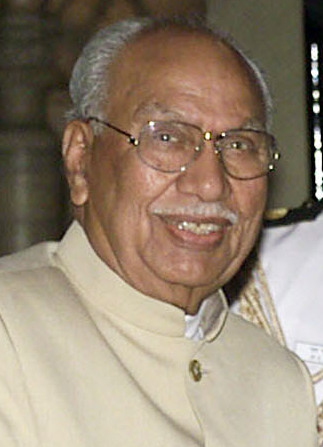
Featured image: Brijmohan Lall Munjal in March 2005. Photo by the President’s Secretariat, licensed under Government Open Data License – India, via Wikimedia Commons.