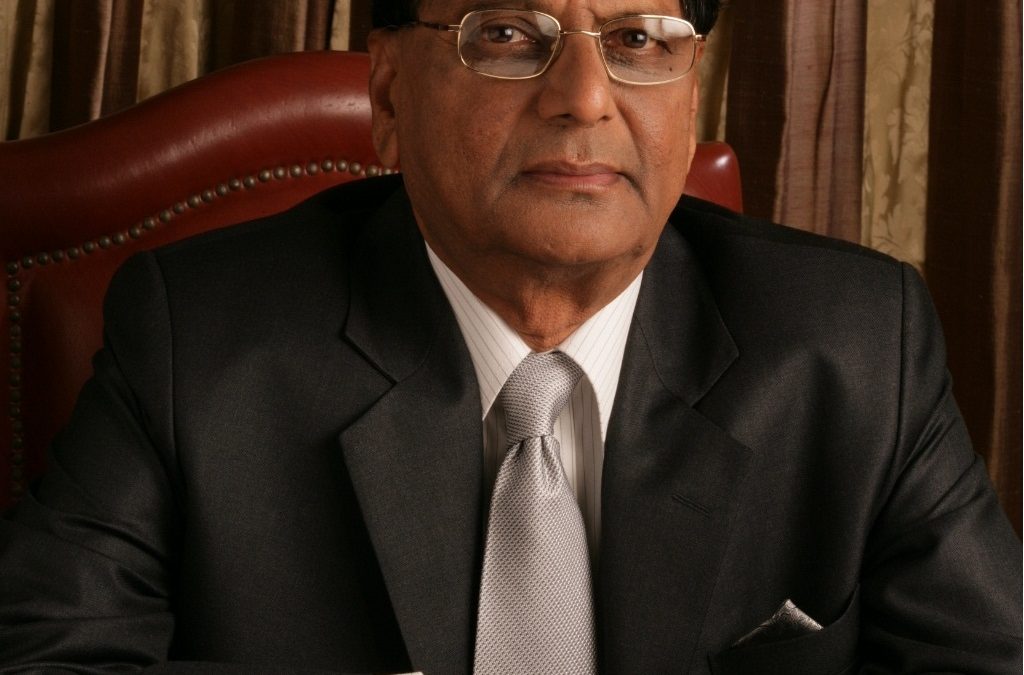
Kallam Anji Reddy (1 February 1939 – 15 March 2013) was an Indian scientist and entrepreneur, the founder of Dr. Reddy’s Laboratories. Starting in Hyderabad in 1984 with a small loan, he built one of the largest pharmaceutical companies in India, brought down the price of important medicines, and was the first in the Indian industry to invest in the discovery of new drugs. His company was the first drug maker from Asia outside Japan to be listed on the New York Stock Exchange.
Quick Facts
| Full name | Kallam Anji Reddy |
| Born | 1 February 1939, Tadepalli, Guntur district, Andhra Pradesh |
| Died | 15 March 2013, Hyderabad (aged 74) |
| Education | Andhra Christian College, Guntur (B.Sc.); University Department of Chemical Technology, Bombay (B.Tech. in pharmaceuticals); National Chemical Laboratory, Pune (Ph.D. in chemical engineering, 1969) |
| Occupation | Scientist, entrepreneur |
| Founded | Dr. Reddy’s Laboratories (1984); Naandi Foundation (1998) |
| Awards | Padma Shri (2001), Padma Bhushan (2011) |
| Spouse | Samrajyam Reddy |
| Children | Satish Reddy and a daughter |
Early Life
He was born in the village of Tadepalli, on the bank of the Krishna opposite Vijayawada, the son of a turmeric farmer who also prepared herbal remedies for villagers and gave them away. He went to a Telugu-medium school and to college in Guntur, studied pharmaceutical technology in Bombay, and took a doctorate at the National Chemical Laboratory in Pune.
Public Sector
He joined the state-owned Indian Drugs and Pharmaceuticals Limited at Hyderabad in 1969, where a generation of Indian drug chemists learnt to manufacture bulk drugs with Soviet help. He left after six years, convinced that he could do it better on his own. He was a partner in two small companies making bulk drugs before starting his own.
Dr. Reddy’s
He founded Dr. Reddy’s Laboratories in 1984 with a capital of about twenty-five lakh rupees, most of it borrowed. The Patents Act of 1970 allowed Indian firms to make any drug by a process of their own, and he was a brilliant process chemist.
- **Bulk drugs:** his first product was the blood-pressure drug methyldopa, which he made well enough to sell to the multinational that had originated it
- **Finished medicines:** in the late 1980s he launched the antibiotic norfloxacin at a fraction of the prevailing price, and then the ulcer drug omeprazole. Their success forced prices down across the market.
- **Exports:** the company sold to Russia and other markets and then, in the late 1990s, to the United States
He liked to say that the price of a drug should bear some relation to what a patient can afford.
Drug Discovery
In 1993, when no Indian company did basic research, he set up a foundation for the discovery of new medicines. Within a few years its scientists had produced candidate drugs for diabetes that were licensed to the Danish firm Novo Nordisk, the first time an Indian company had licensed a new molecule to a multinational. The compounds did not, in the end, reach the market, and the cost of the research was heavy; but the example was followed across the industry.
New York
The company’s shares were listed on the New York Stock Exchange in April 2001. In the same year it won, in the American courts, the right to sell a generic form of an antidepressant with a period of exclusive sales, the first Indian firm to do so. In 2006 it bought a large German generics company.
Philanthropy
- **The Naandi Foundation (1998),** set up with other Hyderabad industrialists, which runs midday-meal kitchens for schoolchildren, safe-water plants in villages and programmes for girls’ education and for tribal farmers
- **Dr. Reddy’s Foundation,** which trains young people from poor families for work
- an institute of life sciences in Hyderabad
He held that business had a duty to society beyond its shareholders and gave a large part of his time to these bodies in his later years.
Recognition
- Padma Shri (2001)
- Padma Bhushan (2011)
- Awards from the Indian chemical and pharmaceutical industries
His memoir, An Unfinished Agenda, was published after his death.
Death
He died of cancer in Hyderabad on 15 March 2013. The company is led by his son, Satish Reddy, and his son-in-law, G. V. Prasad.
With Yusuf Hamied of Cipla he stands among the makers of an industry that supplies a large share of the world’s generic medicines, and of a city, Hyderabad, that became its capital.
Featured image: K. Anji Reddy. Photo by Tashif, licensed under CC BY-SA 3.0, via Wikimedia Commons.