
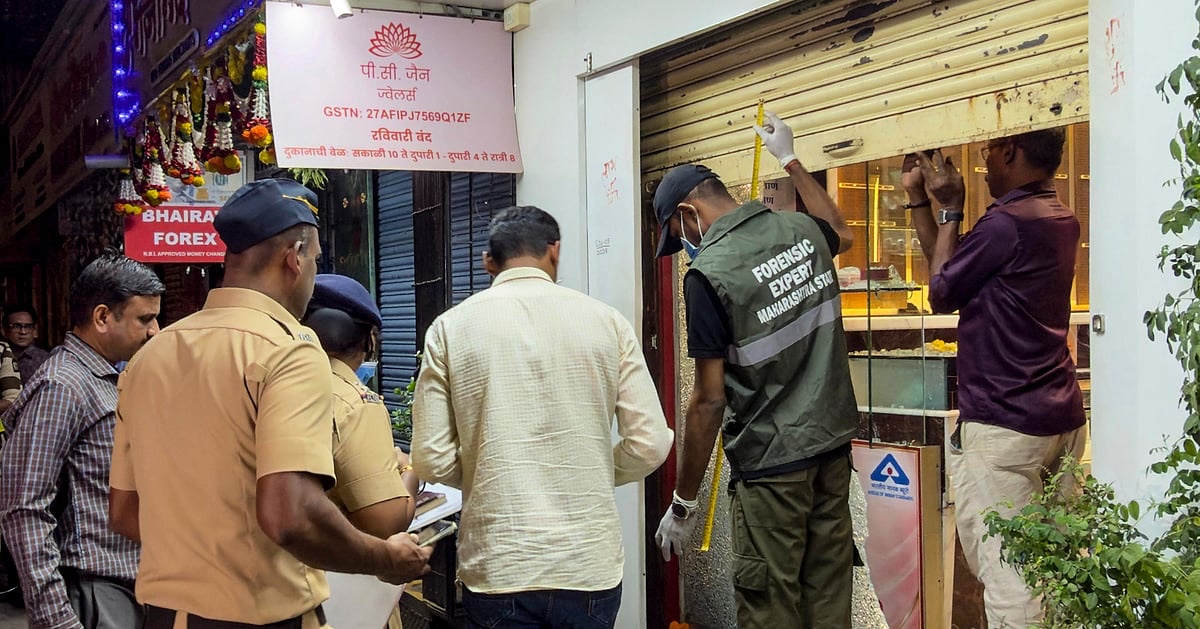
A firing incident outside a jewellery store in Mumbai's Mahim area is suspected to be linked to a ₹10 crore extortion attempt, police said on Thursday, 26 November 2026, citing preliminary investigations. According to The Hindu, the owner of PC Jain Jewellers had received repeated threatening messages over the previous month, but assumed they were spam and ignored them. One message allegedly warned him that even Z-Plus security cover would not save him. No one was hurt in the shooting, but the case raises familiar questions about how to respond to extortion threats before they turn violent.
The attack happened on the evening of Wednesday, 25 November. Police said two helmeted people on a motorcycle fired at the store in Mahim and fled towards Bandra. The Hindu's report on the incident gives the location as outside P.C. Jain Jewellery Shop on L.J. Road, near the Jagruti Society and Shobha Hotel junction, at about 7:35 p.m. The two arrived on the motorcycle, got off and opened fire from the footpath before fleeing. The shop owner and employees escaped unharmed. A forensic team examined the scene, and Deputy Commissioner of Police (Zone V) Mahendra Pandit confirmed that no one was injured, saying the motive was being ascertained. Additional Commissioner of Police Vikram Deshmane, Pandit and officials from Mahim police station reached the spot.
Reports differ on how many rounds were fired. One Hindu report says the two helmeted men fired three rounds, while another, written earlier, says two rounds were fired before the pair fled and abandoned the motorcycle. This difference is typical of early reporting on an incident and does not change the broad picture, but it shows why the forensic findings will matter. Police recovered a Bajaj Pulsar motorcycle near Mahim Causeway on Thursday, which they believe was used by the accused, and took it into custody for a panchnama, the formal written record of observations or seizures made in the presence of independent witnesses.
The extortion link comes from what police found in the shop owner's phone. According to The Hindu, the owner, Bharat Jain, had been receiving threats through WhatsApp messages and phone calls for about a month. Police found that he received threatening communications on three separate occasions before the firing. On 18 October he got a call from an unknown number; when he did not respond, a threatening message was sent in the evening warning that he would be shot. On 24 October another message read, in Hindi, "Ready rakhna, chamatkar hoga", which roughly means "be ready, something will happen". The final threat, on 31 October, reportedly included a direct demand for ₹10 crore together with a death threat.
That last message, as quoted by police, warned him that even if he had Z-Plus security, one of the highest levels of protection given to individuals facing severe threats, "paisa tujhe dena hoga", meaning he would have to pay the money, or face fatal consequences. The threats came from unknown mobile numbers, and because of that the owner initially dismissed them as spam and did not lodge a police complaint. Investigators suspect the firing was intended to intimidate him and pressure him into paying. Police are scanning CCTV footage from surrounding areas and using technical surveillance to identify and trace the two assailants.
What does the case tell us? The first lesson is about how people respond to threats. The owner's decision to treat the messages as spam is understandable, since scam and spam messages are common, but the three threats were specific, escalating and included a demand for a fixed amount. Police generally urge anyone who receives a threat with a demand to report it promptly, because early reports allow officers to trace numbers, protect the person and, in some cases, prevent an attack. In this case, a complaint on 18 October or 31 October might have given the police a month to act before the firing. That is a judgment made with hindsight, and it is not a criticism of the owner, who did not know that the messages were serious.
The second lesson concerns what extortion by firing is designed to do. Shots fired at a shop without hitting anyone are typically meant to frighten rather than to kill, and to show that the sender can reach the target. The Hindu's report says investigators suspect the firing was intended to intimidate and pressure the owner into paying. If that is right, the attackers wanted to convert a threat that had been ignored into one that could not be, and the next step, in a typical pattern, would be a renewed demand. That is why police attention will focus on the phone numbers used and on any link between the messages and the shooters.
There are open questions. Police have not publicly identified the sender of the messages, the shooters or any group behind them, and the Hindu's reports do not name a suspect. The motive is described as suspected, not established, and in the second report officials said it was still being ascertained. The number of rounds fired is reported differently. The motorcycle may yield forensic evidence, such as fingerprints or ownership records, but it was abandoned, and the riders wore helmets, which complicates identification from CCTV footage. Readers should therefore treat the extortion link as a working theory by the police, not a finding.
For Mumbai's jewellery trade, the incident is a reminder of how exposed high-value retail premises can be. A store like PC Jain Jewellers on a busy road such as L.J. Road is visible and accessible, and extortionists rely on that. Traders' bodies often ask police for more patrolling and for quick registration of complaints, and the case will probably add to those demands. For ordinary shop owners and professionals, the advice is straightforward: keep copies of any threatening messages and call details, report them to the police at once, and do not assume that a message from an unknown number is harmless merely because it is anonymous.
What happens next? Police will keep tracing the motorcycle's history, examine the CCTV footage and the phone numbers used, and try to identify the two men who fired. If they succeed, the arrest could answer whether the same people sent the three messages, and who instructed them. If not, the case could remain unsolved for some time, and the shop owner will have to decide on security measures. Either way, the sequence from 18 October to 25 November, as police describe it, is a warning about what can follow when a threat is ignored, and about the importance of treating a demand for ₹10 crore, however anonymous, as a crime to report.



Leave a Reply