
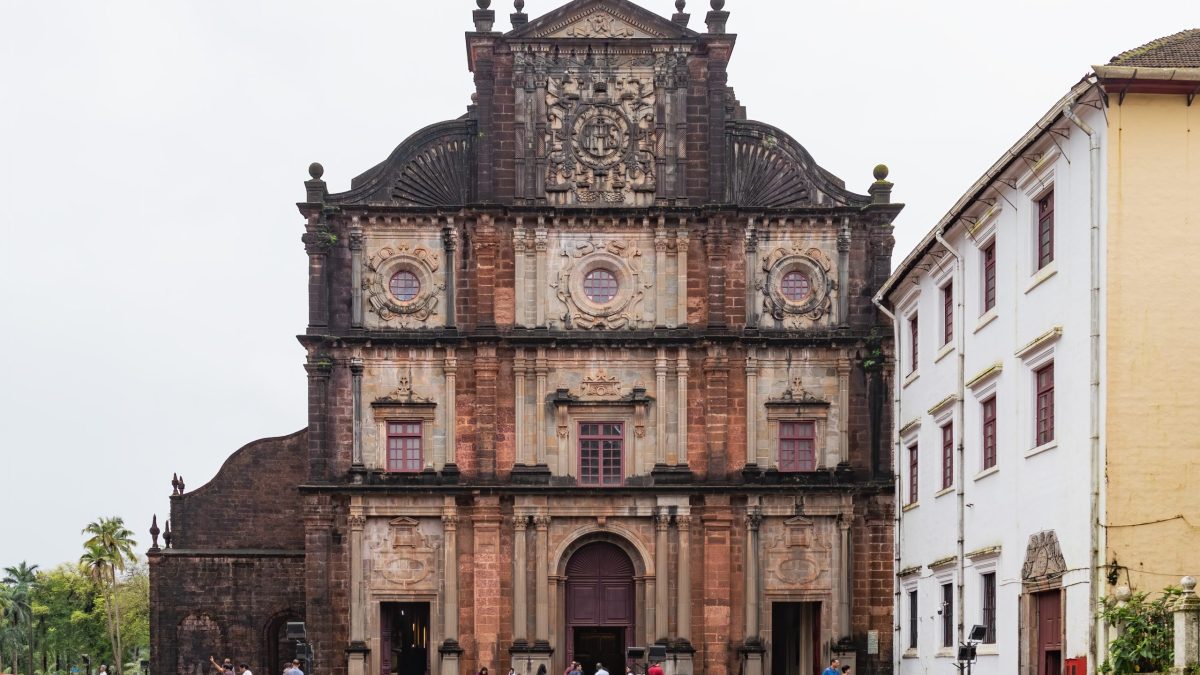
India became independent in 1947, but Goa did not. The Portuguese, who had arrived more than four centuries earlier, stayed on for another fourteen years, until the Indian armed forces ended their rule in December 1961.
Portuguese India
Afonso de Albuquerque captured Goa from the Sultan of Bijapur in 1510. It became the capital of Portugal’s empire in Asia. By the twentieth century Portugal held Goa, Daman and Diu on the west coast and the enclaves of Dadra and Nagar Haveli.
The freedom movement
- 1946: The socialist leader Ram Manohar Lohia defied a ban on public meetings at Margao on 18 June, now observed as Goa Revolution Day.
- 1954: Volunteers freed Dadra and Nagar Haveli.
- 1955: Unarmed satyagrahis crossing into Goa were fired upon by Portuguese police, and more than twenty were killed.
Goan nationalists such as T. B. Cunha, Purushottam Kakodkar and Mohan Ranade were jailed, some of them in Portugal.
Why diplomacy failed
France handed over Pondicherry and its other settlements peacefully in 1954. Portugal, under the dictator António Salazar, refused to discuss the matter, declaring that Goa was not a colony but a province of Portugal. Jawaharlal Nehru, who was committed to peaceful methods, waited for years. In November 1961 Portuguese troops fired on an Indian passenger ship and fishing boats near Anjediva island. The government decided to act.
Operation Vijay
- 18 December 1961: The Army entered Goa from the north and east, while the Navy and Air Force struck Portuguese positions. Daman and Diu were attacked at the same time.
- The Portuguese: about 3,500 troops, heavily outnumbered. Salazar ordered them to fight to the last man.
- 19 December: The Governor-General, Manuel António Vassalo e Silva, ignored that order and surrendered.
The operation lasted about 36 hours. A few dozen soldiers died on the two sides together. Major General K. P. Candeth became military governor.
The world’s reaction
Western countries criticised India for using force, and a resolution against it in the United Nations Security Council was vetoed by the Soviet Union. Most Asian and African countries supported India. Portugal recognised Indian sovereignty only in 1974, after its own dictatorship fell.
After liberation
- 1962: Goa, Daman and Diu became a Union Territory.
- 1967: In an opinion poll, the only one of its kind in India, Goans voted against merging with Maharashtra.
- 30 May 1987: Goa became India’s 25th state. Daman and Diu remained a Union Territory.
- 1992: Konkani was added to the Eighth Schedule of the Constitution.
19 December is observed as Goa Liberation Day.
Image: The Basilica of Bom Jesus in Old Goa, built during Portuguese rule. Photo by iMahesh, licensed under CC BY-SA 4.0, via Wikimedia Commons.



