
The 2026 Nobel Prize in Physics was awarded to Francis Halzen of the University of Wisconsin–Madison, for decisive contributions to the IceCube Neutrino Observatory. The prize was announced on 6 October. Each Nobel Prize this year carries 12 million Swedish kronor, and the prizes will be presented in Stockholm and Oslo on 10 December.
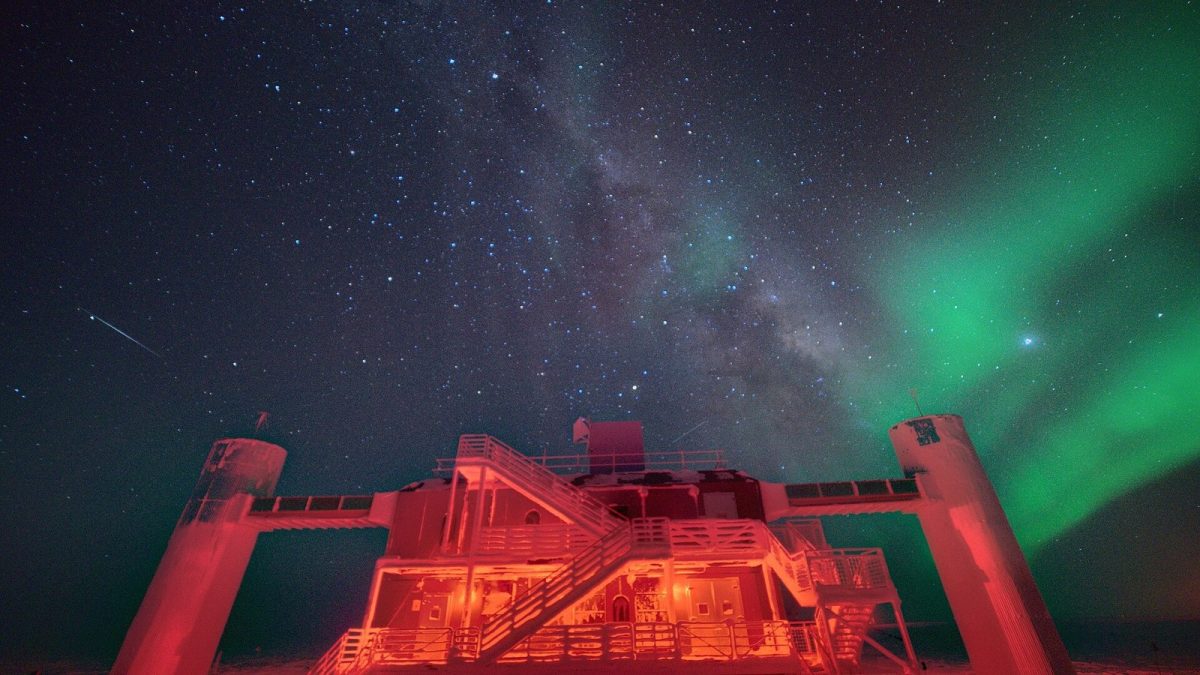
IceCube is a detector spread across a cubic kilometre of ice at the South Pole, threaded with thousands of light sensors. Neutrinos are particles with almost no mass that rarely interact with matter. When one does collide with an atomic nucleus in the ice, it produces a faint flash of light that the sensors record.
Halzen’s team completed the detector in 2011 and went on to find high-energy neutrinos that come from beyond the solar system. In 2018 the collaboration traced one such neutrino to a blazar, the bright core of a distant galaxy. In 2023 it produced a map of the Milky Way made with neutrinos, the first map of the galaxy made with something other than light.
Neutrinos travel straight from their source and pass through matter, so they carry information from places that light cannot escape. Astronomers use them to study the most violent events in the universe, including the sources of cosmic rays.
The 2026 chemistry prize went to Henri Kagan and Kenso Soai for work on reactions that produce only one mirror-image form of a molecule, and the medicine prize to the pioneers of optogenetics.
Sources: Science News: A look at the Nobel Prizes for science; NobelPrize.org: Physics 2026.
Featured image: The IceCube Lab at the South Pole under the aurora (cropped). Photo by John Hardin, licensed under CC BY 4.0, via Wikimedia Commons.




Leave a Reply