Acharya Sir Prafulla Chandra Ray (2 August 1861 – 16 June 1944) was an Indian chemist, teacher, industrialist and philanthropist, regarded as the father of chemical science in modern India. He built the country’s first research school in chemistry at Presidency College, Calcutta, founded Bengal Chemical and Pharmaceutical Works, its first pharmaceutical company, and wrote a pioneering history of chemistry in ancient and medieval India. He lived with great simplicity and gave away almost everything he earned.
Quick Facts
| Full name | Prafulla Chandra Ray |
| Born | 2 August 1861, Raruli-Katipara, Jessore district, Bengal (now in Bangladesh) |
| Died | 16 June 1944 (aged 82), Calcutta, India |
| Field | Chemistry |
| Known for | Mercurous nitrite; Bengal Chemical and Pharmaceutical Works; A History of Hindu Chemistry |
| Education | University of Edinburgh (B.Sc., D.Sc.) |
| Institutions | Presidency College; University College of Science, Calcutta |
| Honours | Knighthood (1919) |
Early Life
Ray was born into a landowning family in a village in eastern Bengal. His father, a cultured man with a large library, moved the family to Calcutta for the children’s schooling. A long illness in his early teens kept Prafulla at home, where he read widely in English and Bengali and taught himself Latin. He studied at the Metropolitan Institution and attended science lectures at Presidency College. In 1882 he won a Gilchrist scholarship to the University of Edinburgh, where he took his doctorate in inorganic chemistry in 1887.
Career
Despite his qualifications, he waited a year for a post and was then placed in the lower, provincial grade of the education service, at a fraction of a European’s salary. He joined Presidency College in 1889. In a poorly equipped laboratory he began research on nitrites, and in 1896 he announced the preparation of a new stable compound, mercurous nitrite, which made his name abroad. More than a hundred papers followed.
His greater achievement was his students. He trained and inspired the first generation of Indian research chemists and was a mentor to physicists such as Meghnad Saha and Satyendra Nath Bose. In 1916 he moved to the new University College of Science as its first Palit Professor of Chemistry. From 1921 he gave his entire salary to the university for chemical research.
Convinced that educated young Bengalis needed industry more than clerkships, he began making chemicals and medicines in his own lodgings in 1892 with a capital of a few hundred rupees. Bengal Chemical and Pharmaceutical Works became a company in 1901 and grew into a large manufacturer of acids, drugs and household products, proving that Indians could run a science-based industry.
His two-volume A History of Hindu Chemistry (1902 and 1909), based on Sanskrit manuscripts, showed that India had a long tradition of metallurgy, medicine and chemical practice, and suggested that it had declined when manual work came to be despised by the learned.
Public Work
Ray was a nationalist who admired Mahatma Gandhi and promoted the spinning wheel and khadi. He organised large-scale relief during the Khulna famine of 1921 and the North Bengal floods of 1922, raising funds and directing volunteers from the science college.
Personal Life and Legacy
He never married and lived for decades in a single room at the college, surrounded by students. His autobiography, Life and Experiences of a Bengali Chemist, appeared in 1932. He died in that room on 16 June 1944. In 2011 the Royal Society of Chemistry honoured his work with its first Chemical Landmark plaque outside Europe.
Frequently Asked Questions
When and where was Prafulla Chandra Ray born?
Prafulla Chandra Ray was born on 2 August 1861 in Raruli-Katipara, Jessore district, Bengal (now in Bangladesh).
When did Prafulla Chandra Ray die?
Died: 16 June 1944 (aged 82), Calcutta, India.
What is Prafulla Chandra Ray known for?
Known for: Mercurous nitrite; Bengal Chemical and Pharmaceutical Works; A History of Hindu Chemistry.
What honours has Prafulla Chandra Ray received?
Knighthood (1919).
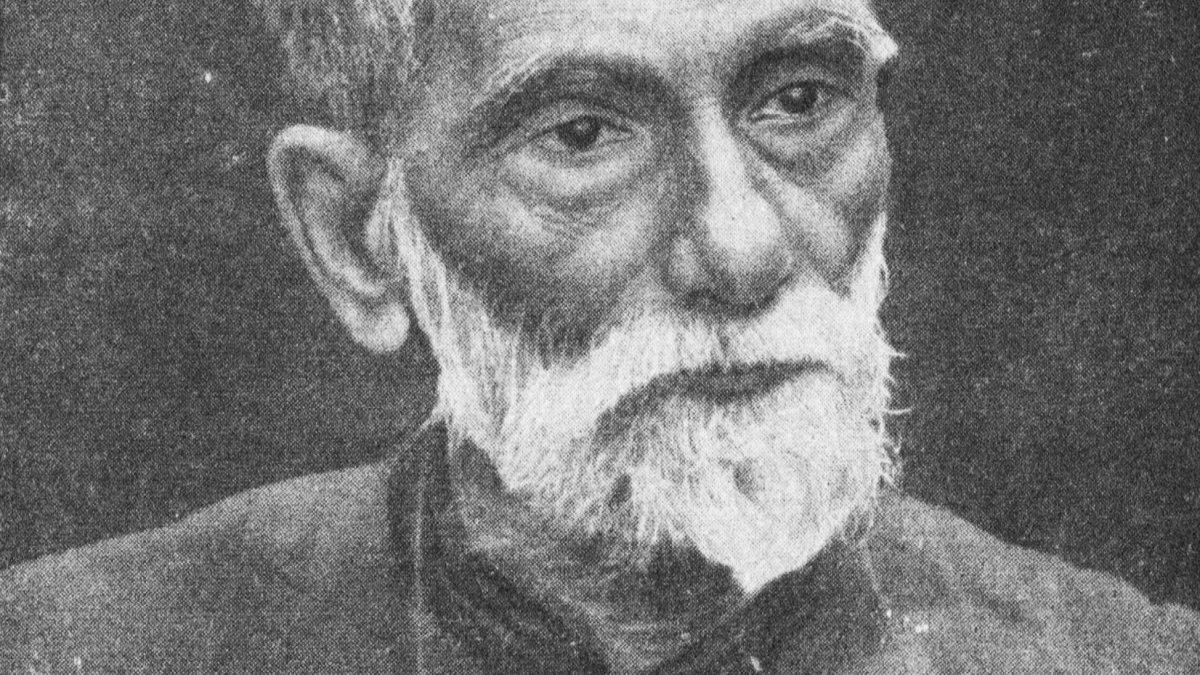
Featured image: Prafulla Chandra Ray, from his autobiography, 1937. Photo by an unknown photographer, in the public domain, via Wikimedia Commons.