Mylswamy Annadurai (born 2 July 1958) is an Indian space scientist who spent thirty-six years at the Indian Space Research Organisation. He was the project director of Chandrayaan-1, India’s first mission to the Moon, and the programme director of the Mars Orbiter Mission, Mangalyaan, and retired in 2018 as director of the ISRO Satellite Centre in Bengaluru. Educated in a Tamil-medium village school, he is known as the “Moon Man of India” and is a popular speaker and writer on science in Tamil.
Quick Facts
| Full name | Mylswamy Annadurai |
| Born | 2 July 1958, Kothavadi, near Pollachi, Coimbatore district, Tamil Nadu |
| Age | 68 |
| Occupation | Space scientist |
| Organisation | Indian Space Research Organisation (1982–2018) |
| Known for | Chandrayaan-1; Mars Orbiter Mission |
| Positions | Director, ISRO Satellite Centre, Bengaluru (2015–2018) |
| Education | Government College of Technology, Coimbatore (B.E.); PSG College of Technology (M.E.) |
| Awards | Padma Shri (2016) |
Early Life
Annadurai was born at Kothavadi, a village near Pollachi. His father was a schoolteacher, and named his son after the Dravidian leader C. N. Annadurai. The boy studied in Tamil at the village’s government school, part of the time in a cattle shed that served as a classroom, and has said that he first heard of rockets from a radio announcement about ISRO’s early launches.
He took a degree in electronics and communication engineering at the Government College of Technology in Coimbatore in 1980 and a master’s degree at PSG College of Technology in 1982, and joined ISRO the same year.
Career at ISRO
Satellites
He began at the satellite centre in Bengaluru designing software to simulate and control spacecraft. Through the 1990s he was spacecraft operations manager and then mission director for a series of remote-sensing and communication satellites, including several of the INSAT series, responsible for manoeuvring them into position after launch and keeping them working.
Chandrayaan-1
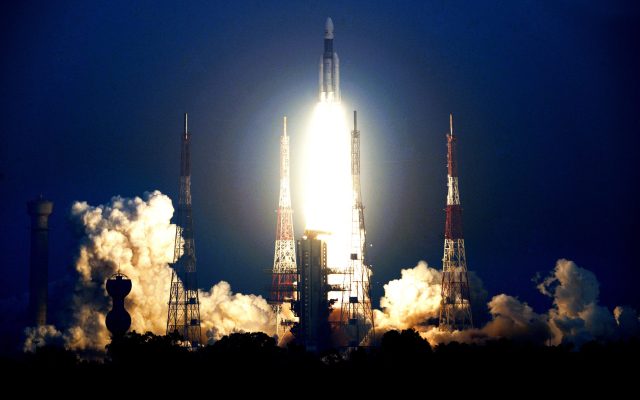
In 2004 he was appointed project director of Chandrayaan-1. The spacecraft, carrying eleven instruments, five Indian and six from other countries, was launched from Sriharikota on 22 October 2008 and entered orbit around the Moon the following month. On 14 November it released a probe that struck the surface near the south pole, carrying the Indian flag. Data from an American instrument on board gave the first clear evidence of water molecules on the lunar surface. The mission was built for about four hundred crore rupees, a small fraction of the cost of comparable missions elsewhere.
He led the early work on Chandrayaan-2 as well, before taking charge of ISRO’s programmes for small satellites and remote sensing.
Mars Orbiter Mission
As programme director he oversaw the Mars Orbiter Mission, approved in 2012 and launched on 5 November 2013. Lacking a rocket powerful enough to send it directly, the team raised the spacecraft’s orbit around the Earth in stages before slinging it towards Mars. It entered Martian orbit on 24 September 2014. India became the first country to succeed at Mars on its first attempt, and the fourth space agency to reach the planet, at a cost of about 450 crore rupees.
Director
From 2015 to 2018 he was director of the ISRO Satellite Centre, now the U. R. Rao Satellite Centre, where the pace of satellite production was raised sharply and navigation, communication and Earth-observation spacecraft were built.
After ISRO
He retired at the end of July 2018. He has been vice-president of the Tamil Nadu State Council for Science and Technology and chairman of the National Design and Research Forum, and has advised start-ups in the space sector.
Writing and Outreach
He writes regularly in Tamil; a long-running newspaper column on science, later a book, was titled Kaiyaruge Nila, “The Moon Within Reach”. His career appears in Tamil Nadu school textbooks as an example to students from government schools, and he has argued consistently that learning in one’s mother tongue is no handicap in science.
Honours
He received the Padma Shri in 2016, the Karnataka Rajyotsava Award, and honorary doctorates from several universities.
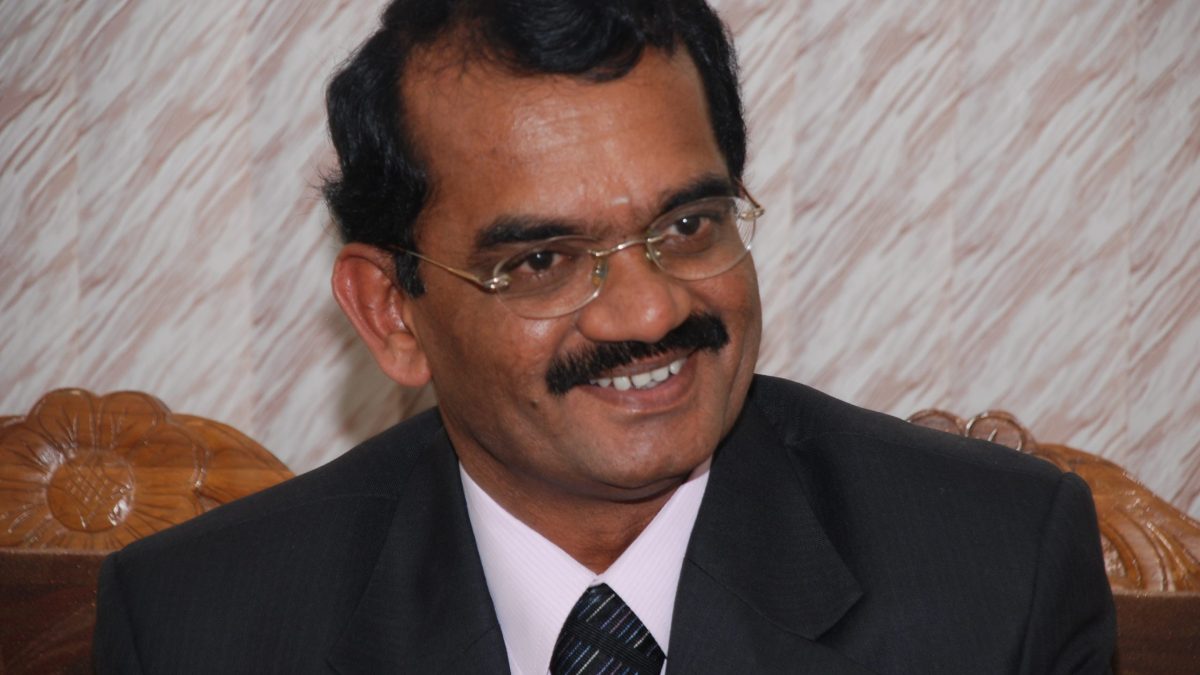
Featured image: Mylswamy Annadurai in March 2009. Photo by Ram 121, in the public domain, via Wikimedia Commons.