
The Tamil Nadu Victory Party now has 109 members in the 234-member Assembly after winning the Madurantakam and Dharapuram by-elections on 9 October 2026. The majority mark is 118, so the party is nine short of governing on its own strength. Its numbers have moved in small steps. TVK won 108 seats in May, fell to 107 when Chief Minister Vijay vacated the Tiruchirappalli East seat, and went up to 109 with the two by-election wins. The party’s journey to a majority depends on defections from the opposition and on by-elections in five other vacant seats. The numbers are small enough that each seat matters, and the next few months of Tamil Nadu politics will turn on how the remaining nine are found. Allies are counted separately in this tally, so the government’s working strength in the House is higher than the 109 seats held by TVK itself.
The argument that TVK is on its way to an independent majority is based on the pattern of the past months. Six AIADMK legislators, including the two who have now been re-elected, resigned from the Assembly and joined TVK after the government was formed, and the party has won back the seats of both who have faced voters. The party’s allies add to its numbers: Congress has five seats, the Left parties four, the VCK two and the IUML two, according to the May figures reported by the South First. That gives the government a comfortable working majority with allies. Five seats are vacant, at Tiruchirappalli East, Perundurai, Ambasamudram, Viralimalai and Karur, and if TVK wins all five it would reach 114, still short of 118 but much closer.
The counter-argument is that the path to 118 is not guaranteed. The by-elections for the five vacant seats have been delayed by legal proceedings, so there is no date for them. Winning all five would still leave the party four seats short, and it would need more defections to cross the line. The AIADMK general secretary, Edappadi K. Palaniswami, has accused TVK of trying to secure an independent majority by inducing opposition legislators to join it, and the DMK has called the movement of legislators horse trading. The delay is itself a political fact: until the courts clear the way, five constituencies have no representative in the Assembly. Defections also carry a political cost: in Dharapuram the winner’s vote fell by 14,259 from May, and her margin over the DMK was 9,471 votes.
The question of numbers matters for how the state is governed. A government that depends on allies has to negotiate on policy and on seats in the cabinet, while one with its own majority can act alone. For the opposition, every defection weakens its claim to be an alternative, and for voters it raises the question of whether a mandate given to one party can be transferred to another.
TVK is closer to a majority than it was in May, but it is still nine seats short. The party has moved from 108 to 109 over five months, so the pace is slow. The five vacant seats and any further defections will decide whether it gets there.
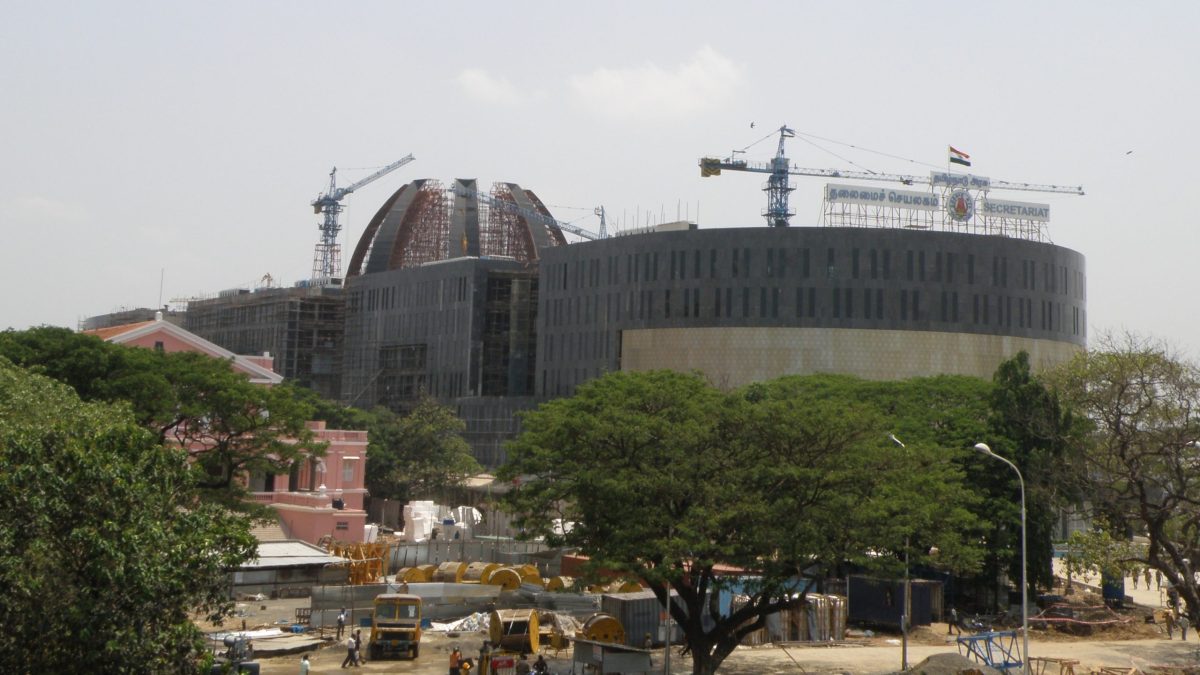
Featured image: The Tamil Nadu Legislative Assembly-Secretariat complex in Chennai (file photo). Photo: Prateek Karandikar, CC BY-SA 4.0, via Wikimedia Commons.


Leave a Reply