
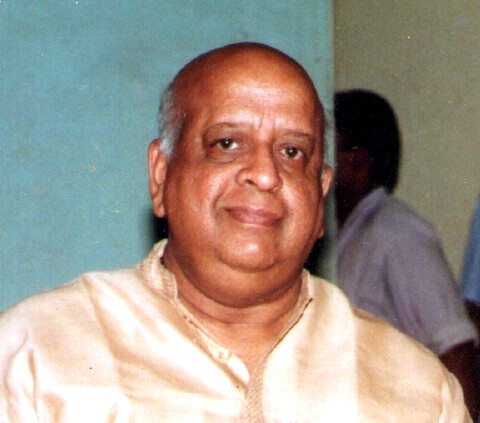
Tirunellai Narayana Iyer Seshan (15 December 1932 – 10 November 2019) was an Indian civil servant who was the tenth Chief Election Commissioner of India, from 12 December 1990 to 11 December 1996. He took an office that had been regarded as a quiet formality and, using powers that had always been in the Constitution, forced parties, candidates and governments to obey the rules. Indian elections have been conducted differently ever since.
Quick Facts
| Full name | Tirunellai Narayana Iyer Seshan |
| Born | 15 December 1932, Thirunellai, Palakkad, Kerala |
| Died | 10 November 2019, Chennai (aged 86) |
| Education | Madras Christian College (B.Sc. in physics); Harvard University (master’s in public administration) |
| Service | Indian Administrative Service (1955 batch, Tamil Nadu cadre) |
| Offices | Chief Election Commissioner (1990–1996); Cabinet Secretary (1989) |
| Awards | Ramon Magsaysay Award (1996) |
| Spouse | Jayalakshmi Seshan |
Early Life
He was born in a village on the edge of Palakkad in Kerala, the youngest of six children of a lawyer. He studied physics at Madras Christian College and taught there for three years as a demonstrator. E. Sreedharan, later the builder of the Delhi Metro, was a schoolfellow; see E. Sreedharan.
Civil Servant
He passed the police service examination, did not join, and stood first in the Indian Administrative Service examination of 1955. He served in Tamil Nadu, as collector of Madurai and director of transport, and in Delhi in the departments of atomic energy and space.
As Secretary for Environment and Forests in the mid-1980s he opposed the Tehri and Sardar Sarovar dams on environmental grounds. He was in charge of the Prime Minister’s security under Rajiv Gandhi, then Defence Secretary, and in 1989 Cabinet Secretary, the head of the civil service. The next government removed him to the Planning Commission.
Chief Election Commissioner
He was appointed in December 1990. He began by listing a hundred or so malpractices common in Indian elections and set about each.
- **The model code of conduct:** an agreed set of rules for parties in power that had never been enforced. He enforced it: no new schemes or transfers of officials after an election was announced, no use of government vehicles and staff for campaigning.
- **Money and noise:** limits on spending were checked by observers; walls could not be painted without the owner’s consent, loudspeakers were restricted, and candidates had to file accounts
- **Violence:** central police forces were deployed, polls were held in phases so that they could be moved around, and polling was cancelled where booths were captured
- **Voter identity cards:** he demanded that every voter be given a photo identity card, and threatened to hold no elections until the government agreed
He cancelled or postponed elections, including in Punjab in 1991 and several by-elections, reprimanded ministers and governors, and in 1993 ordered a halt to all elections until the government accepted his authority over officials on election duty. The Supreme Court largely upheld him.
Politicians of every party detested him. To cut him down, the government in 1993 added two more commissioners and made the Commission decide by majority. He fought the change in court and lost. The public, for the most part, was delighted; turnout rose, and the general election of 1996 was the most orderly the country had seen.
He liked to say that he ate politicians for breakfast.
After the Commission
He received the Ramon Magsaysay Award for government service in 1996. He stood for President of India in 1997 and was heavily defeated by K. R. Narayanan, and lost a Lok Sabha election at Gandhinagar in 1999 to L. K. Advani. He taught at a management institute in Chennai and lived quietly.
Personal Life
He married Jayalakshmi in 1959. They had no children. She died in 2018; he died in Chennai on 10 November 2019.
Legacy
Every Chief Election Commissioner since has worked with the tools he sharpened. In 2022, hearing the case that led it to lay down a new way of appointing commissioners, the Supreme Court remarked that the country needed a man of his kind in the post.
Featured image: T. N. Seshan in 1994. Photo by Rishabh Tatiraju, licensed under CC BY-SA 3.0, via Wikimedia Commons.



