
The Supreme Court on Thursday, 15 October 2026, dismissed an appeal by the Tamil Nadu government and held that a person who converts from the Hindu social order to Islam cannot claim backward-class reservation solely because of the backwardness associated with the earlier status, according to ThePrint, The Wire and Organiser. The bench was made up of Justices Prashant Kumar Mishra and Shree Chandrashekhar.
The case arose from a government order. Tamil Nadu issued an order on 9 March 2024 that would have allowed persons converting to Islam to claim reservation under the Backward Class (Muslim) category, and the Madras High Court quashed it, according to ThePrint. The Supreme Court dismissed the state’s appeal against the High Court’s order.
The petitioner in the case, Sameer Ahamed, converted to Islam in 2015 and sought a community certificate in the ‘Muslim Lebbai’ community for reservation eligibility, according to ThePrint. Tamil Nadu argued that it had the authority to grant such certificates on the basis of backward-class status reports.
The bench set out principles in its judgment. It said that ‘a person who converts from a Hindu social order to a non-Hindu social order cannot claim affirmative action under Article 16(4) of the Constitution merely on the basis of the social backwardness associated with his pre-conversion status’, according to ThePrint. Article 16(4) allows the state to make reservations in public employment for backward classes.
The Organiser quotes a broader statement of the court: no statutory benefit, protection, reservation or other entitlement under Article 16(4) whose enjoyment depends on a particular Hindu social order can be claimed merely on the basis of earlier membership after the person has converted to Islam, Christianity or any other non-Hindu social order. It also quotes the bench as saying that backwardness suffered in the antecedent social order cannot by itself be carried forward to confer the status of a backward class in the region to which the person has converted.
On scheduled castes, a search summary of the judgment says that the court held that a person who professes a religion other than Hinduism, Sikhism or Buddhism cannot be believed to be a member of a scheduled caste. The summary also quotes the bench as saying that the government order ‘creates an artificial route’ by which a person moves from a pre-conversion backward social order into a notified Muslim backward class without establishing the necessary social and legal link. IndiaX24 has not seen the full judgment and attributes these passages to the reports.
The ruling reinforces that reservation benefits require an independent, fact-specific determination and cannot be transferred automatically across religious conversions, according to ThePrint’s account. It does not say that persons born into Muslim communities cannot be listed as backward classes in their own right, a distinction that the reports reviewed make by focusing on conversion.
The political reaction was swift. The BJP described the judgment as ‘historic’ and said it was a ‘massive blow to Congress’ appeasement politics’, according to a headline carried by Inkl. The reports reviewed do not carry reactions from the Congress, the Tamil Nadu government or Muslim organisations, so their views are not reported here.
The reports reviewed do not say how many people could be affected or whether other states have similar orders. IndiaX24 will report on reactions and any follow-up by the Tamil Nadu government.
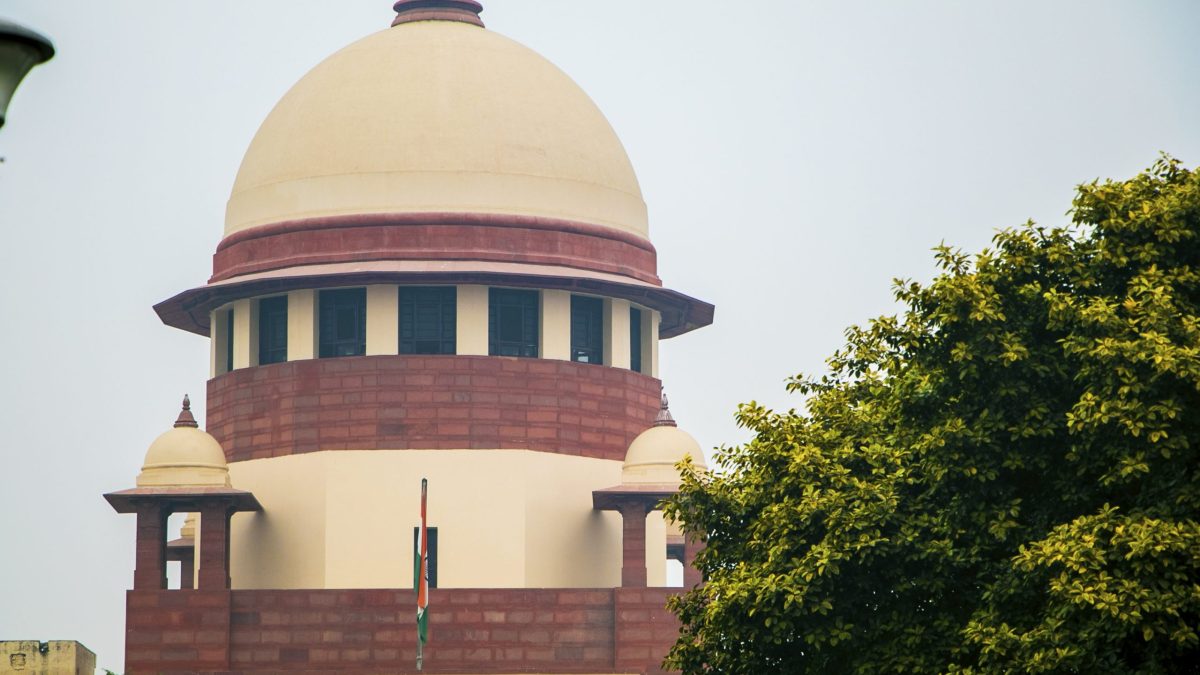
Image: The Supreme Court of India building in New Delhi (file photo). Photo by Subhashish Panigrahi, licensed under CC BY-SA 4.0, via Wikimedia Commons.




Leave a Reply