
Voting for 12 Rajya Sabha seats is scheduled for 16 October 2026, from 9 am to 4 pm, with counting starting at 5 pm the same day, according to a seat-math report by International News and Views. The seats are 10 from Uttar Pradesh, one from Uttarakhand and one by-election in West Bengal. The notification was issued on 29 September, the last date for nominations was 6 October, scrutiny was on 7 October and the last date for withdrawal was 9 October.
Ten members from the two states reach the end of their terms on 25 November 2026. From Uttar Pradesh, the retiring members listed are Hardeep Singh Puri, a Union minister, and Arun Singh, Geeta alias Chandraprabha, Neeraj Shekhar, Brij Lal, B. L. Verma, who is a Union Minister of State, and Seema Dwivedi, all of the BJP, as well as Ram Gopal Yadav of the Samajwadi Party and Ramji Gautam of the Bahujan Samaj Party. From Uttarakhand, Naresh Bansal of the BJP is retiring. A separate report says that one Uttar Pradesh seat is already vacant after a resignation, so the ten Uttar Pradesh seats include that vacancy, according to the way that report counts them.
The West Bengal by-election was needed because Rajya Sabha member Rukmini Mallik, known by the professional name Koel Mallick, resigned on 16 July 2026. The winner will serve the remainder of her term, which runs to April 2032. The by-election is the 12th seat in the count for the day.
Rajya Sabha members are elected by the members of state legislative assemblies through a system of single transferable votes, so the numbers in each assembly decide the result. The report gives the quota for a seat in Uttar Pradesh as 37 first-preference votes, in Uttarakhand as 36 and in West Bengal as 148, since the by-election is for a single seat that needs a simple majority of the 294-member assembly. These numbers are the report’s own calculations, and the official quota is set by the returning officer.
The party strengths in the Uttar Pradesh Assembly show who is placed to win. The report lists the BJP with 256 members, the Samajwadi Party with 101, Apna Dal (Sonelal) with 13, the Rashtriya Lok Dal with 9, the Suheldev Bharatiya Samaj Party with 6, the Nishad Party with 5, the Congress with 2 and the Jansatta Dal (Loktantrik) with 2. On a quota of 37, the BJP’s 256 votes are enough for about six seats on their own, and the Samajwadi Party’s 101 for about two, which is IndiaX24’s own division of the numbers and does not count the allies, who are listed separately, or any cross-voting.
Another report on the same elections notes that parties had not announced their full candidate lists when it was published. The sources reviewed for this article do not name the candidates who filed nominations, so the contest cannot be described in more detail here. If the number of candidates is no larger than the number of seats, the election is declared unopposed after the withdrawal date, as happened to 26 of the 37 seats in the March round, according to Wikipedia.
The Rajya Sabha elections of 2026 are held in several rounds. Wikipedia lists a round on 16 March for 37 seats, a round on 18 June for 24 seats, by-elections in July and this round in October, and a separate IndiaX24 article covers the cycle as a whole. The voting is by open ballot, in which party members show their ballot to a party agent, according to the same source.
Why does the Rajya Sabha count matter? The upper house is where the government needs a majority to pass ordinary legislation, and constitutional amendments need two-thirds of members present and voting in both houses. A defeat in the Lok Sabha on a constitutional amendment, which IndiaX24 reports separately, showed how important these margins are.
The result of the vote will be known the same evening, and the process is formally complete by 19 October according to the report, so the party tallies given in the sources reviewed here will change once the new members are declared elected.
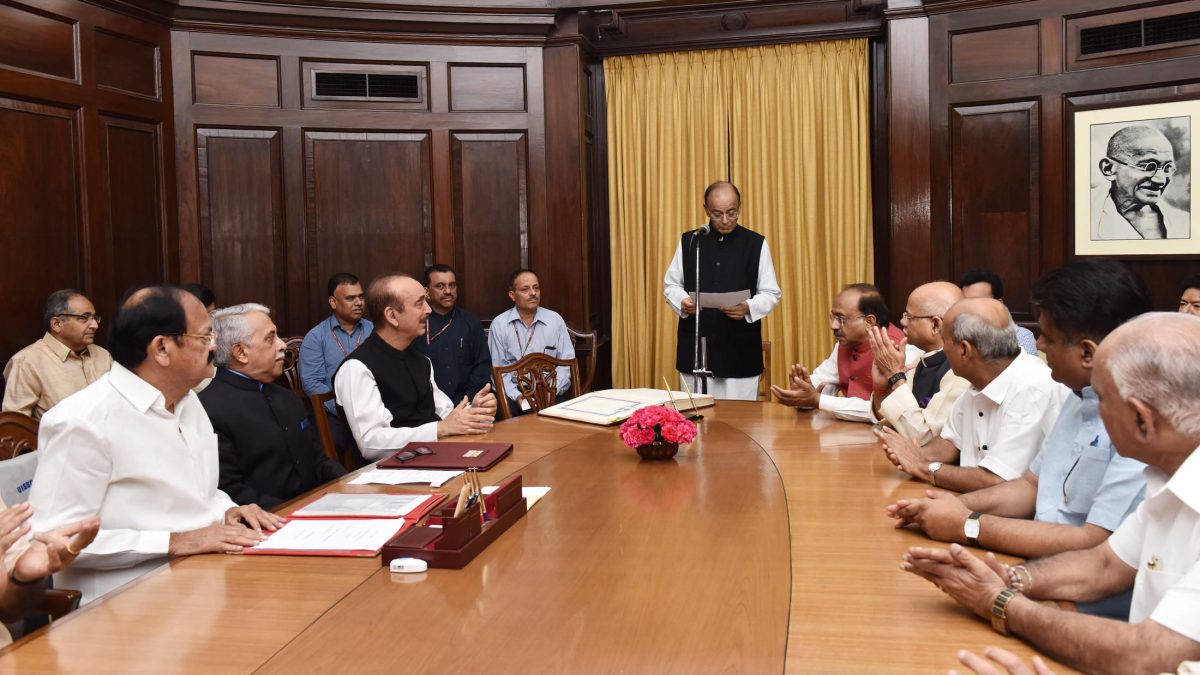
Featured image: A Rajya Sabha member taking oath at Parliament House, New Delhi, April 2018 (file photo). Photo by Vice President’s Secretariat, licensed under Government Open Data License – India, via Wikimedia Commons.




Leave a Reply