
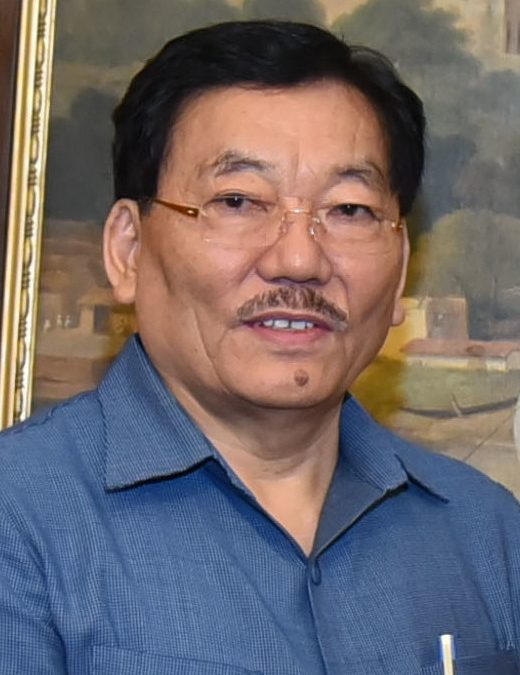
Pawan Kumar Chamling (born 22 September 1950) is an Indian politician who was Chief Minister of Sikkim for five consecutive terms, from 12 December 1994 to 27 May 2019. His tenure of more than twenty-four years is the longest of any chief minister in the history of independent India. The founder of the Sikkim Democratic Front, he is best known outside his state for making Sikkim the first in India to farm entirely without chemical fertilisers and pesticides.
Quick Facts
| Full name | Pawan Kumar Chamling |
| Born | 22 September 1950, Yangang, South Sikkim |
| Age | 76 |
| State | Sikkim |
| Community | Rai (Kirat) |
| Party | Sikkim Democratic Front (founder, 1993) |
| Office | Chief Minister of Sikkim (1994–2019) |
| Record | Longest-serving chief minister of an Indian state |
| Pen name | Kiran (as a Nepali-language poet) |
| Awards | Bhanu Puraskar; several international awards for environmental policy |
Early Life
He was born at Yangang in the south of Sikkim, then a Himalayan kingdom under Indian protection, into a farming family of the Rai community. He left school after the matriculation class. He worked on the family’s land, served briefly as a police constable, and became a small government contractor. He also wrote poetry in Nepali.
Sikkim became the twenty-second state of India in 1975.
Career
Beginnings
He was elected president of his village council in 1982 and to the Sikkim legislative assembly from Damthang in 1985, as a member of the ruling party of Chief Minister Nar Bahadur Bhandari. He became a minister in 1989. He grew critical of Bhandari’s style of rule and was dropped from the cabinet in 1992 and expelled from the party.
A story from this time is often told. Forbidden to speak in the assembly, he walked in with a lit candle and said he was searching for democracy in the House.
The Sikkim Democratic Front
He founded the Sikkim Democratic Front on 4 March 1993, appealing to the poor, to the backward communities and to those shut out by the old order. It won the election of December 1994, and he was sworn in as Chief Minister on 12 December.
Twenty-four years
The Front won again in 1999, 2004, 2009, when it took every one of the thirty-two seats, and 2014. In April 2018 he passed the record of Jyoti Basu of West Bengal as the longest-serving chief minister in the country.
- **Organic farming:** in 2003 he announced that Sikkim would give up chemical fertilisers and pesticides. Their sale was phased out, farmers were trained and certified, and in January 2016 the state was declared fully organic. The policy won a United Nations-backed award in 2018.
- **Environment:** bans on plastic bags, on grazing in forests and on the killing of wildlife, and large tree-planting campaigns
- **Welfare:** Sikkim rose to near the top of Indian states in income per head, literacy and sanitation, and was the first to be declared free of open defecation
- **Infrastructure:** hydroelectric projects, roads and an airport at Pakyong
His critics accused him of running a one-party state and of corruption.
Defeat
In 2019 a party founded by a former colleague, Prem Singh Tamang, defeated the Front by seventeen seats to fifteen. Within months nearly all his legislators had left him, most of them for the Bharatiya Janata Party, and he sat in the assembly as his party’s only member. In the election of 2024 he lost both the seats he contested, and the Front won a single seat.
Writer
He writes poetry and prose in Nepali under the name Kiran, has published several volumes, and has received the Bhanu Puraskar, a leading award for Nepali literature.
Personal Life
He has been married twice and has several children. He is known for rising early, for long working days and for a reserved public manner.
Among Sikkim’s other famous names are the footballer Bhaichung Bhutia, who entered the state’s politics as his opponent, and the mountain at its heart, described in Khangchendzonga National Park.
Featured image: Pawan Kumar Chamling, then Chief Minister of Sikkim, in June 2016. Photo by the Prime Minister’s Office, licensed under Government Open Data License – India, via Wikimedia Commons.



