
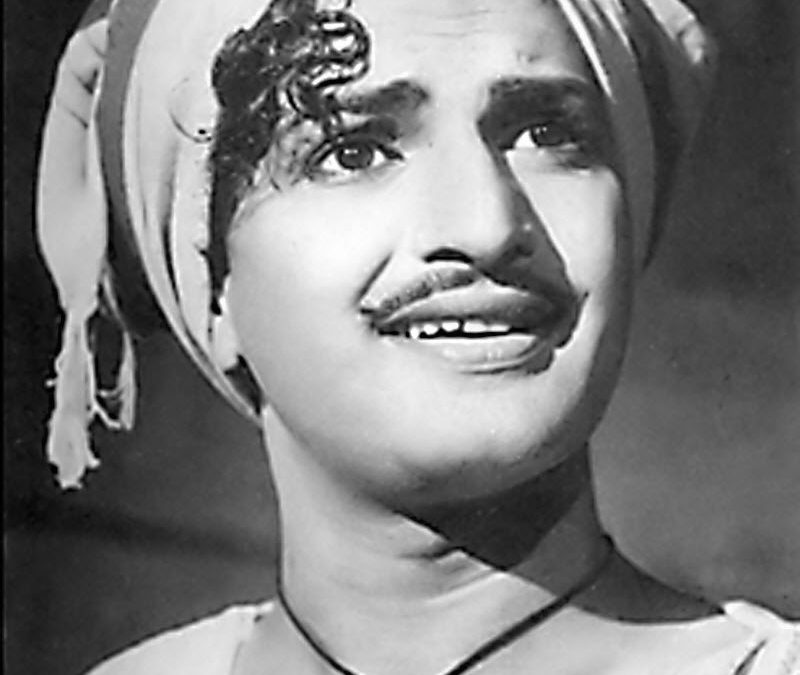
Nandamuri Taraka Rama Rao (28 May 1923 – 18 January 1996), known as NTR, was an Indian actor, film-maker and politician. One of the greatest stars of Telugu cinema, worshipped for his portrayals of Krishna and Rama, he founded the Telugu Desam Party in 1982 and defeated the Congress in Andhra Pradesh within nine months. He was Chief Minister three times.
Quick Facts
| Full name | Nandamuri Taraka Rama Rao |
| Born | 28 May 1923, Nimmakuru, Krishna district, Madras Presidency (now in Andhra Pradesh) |
| Died | 18 January 1996, Hyderabad (aged 72) |
| Occupation | Actor, producer, director, politician |
| Films | About 300, including Pathala Bhairavi, Maya Bazaar, Lava Kusa, Daana Veera Soora Karna |
| Party | Telugu Desam Party (founder, 1982) |
| Offices | Chief Minister of Andhra Pradesh (1983–1984, 1984–1989, 1994–1995) |
| Awards | Padma Shri (1968); three National Film Awards |
| Spouse | Basavatarakam (died 1985); Lakshmi Parvathi (m. 1993) |
Early Life
He was born into a farming family at Nimmakuru in the Krishna delta and was adopted by an uncle. He studied at Vijayawada and at the Andhra-Christian College in Guntur, where he acted in plays. He passed the civil service examination and worked for a few weeks as a sub-registrar before leaving for the film studios of Madras.
Film Career
His first film was Mana Desam (1949). The folklore fantasy Pathala Bhairavi (1951) made him a star. He went on to act in about three hundred films over three decades.
- **Mythological roles:** he played Krishna in Maya Bazaar (1957) and in many later films, and Rama in Lava Kusa (1963). In many Telugu homes his picture was hung among the gods. He also took pleasure in playing the villains of the epics, Ravana and Duryodhana, with sympathy.
- **Social films:** as the upright hero of family and village dramas
- **As director:** in Daana Veera Soora Karna (1977) he directed himself in three roles
He won National Film Awards as a producer and director and received the Padma Shri in 1968.
Politics
The Telugu Desam
On 29 March 1982, angered by the Congress high command’s habit of changing Andhra Pradesh’s chief ministers at will, he announced a new party to restore “the self-respect of the Telugu people”. He toured the state in a converted van, the Chaitanya Ratham, sleeping in it and bathing by the roadside. In the election of January 1983 the Telugu Desam Party won a large majority.
Chief Minister
- **Welfare:** rice at two rupees a kilogram for the poor, midday meals for schoolchildren and subsidised clothing
- **Reform:** he abolished the hereditary village offices, replaced the old revenue districts with smaller mandals, and gave women equal rights to inherit property
- **Style:** he wore saffron, kept strange hours and ran the government much as he had run a film set
The 1984 coup
In August 1984, while he was recovering from heart surgery in the United States, the Governor dismissed him and installed a defector. He returned, paraded his legislators before the President in Delhi and toured the country in a wheelchair. After a month of protest he was reinstated, and he won a fresh election.
National role
He was chairman of the National Front, the alliance that formed the central government in 1989, though his own party lost the state that year. He returned with a sweeping victory in 1994.
The fall
In 1993 he had married his biographer, Lakshmi Parvathi. Her growing influence alarmed his family. In August 1995 his son-in-law, N. Chandrababu Naidu, took most of the party’s legislators away and replaced him as Chief Minister. He died of a heart attack in January 1996.
Family
With his first wife, Basavatarakam, he had eight sons and four daughters. Among them are the actor and politician Nandamuri Balakrishna and the politician Daggubati Purandeswari; the actor Jr NTR is a grandson. The cancer hospital he founded in Hyderabad bears his first wife’s name.
Featured image: N. T. Rama Rao in a still from the film Daasi, 1952. Photo by an unknown photographer, in the public domain, via Wikimedia Commons.



