
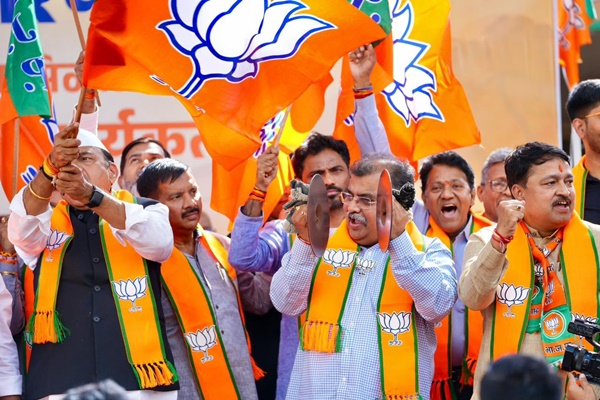
Maharashtra votes on 23 October 2026 for five seats in its Legislative Council, all from graduates’ and teachers’ constituencies. The seats are the Aurangabad Division, Pune Division and Nagpur Division graduates’ constituencies, and the Amravati Division and Pune Division teachers’ constituencies. Counting is on 27 October, and the Election Commission has said the process will be completed by 31 October. The electorate for such seats is made up of registered graduates and teachers in each division, a much smaller and better-informed group than the general voter list. The BJP has named Dr Smita Yogesh Jadhav for Pune Division graduates, Sudhakar Vitthalrao Kohle for Nagpur Division graduates and Kaustubh Muralidhar Gawde for Pune Division teachers, and the Congress has also named candidates for three constituencies.
The argument that the contest matters is based on the structure of the election. The Council is the upper house of the state legislature, and graduates’ and teachers’ seats are filled by educated voters registered in each division, which makes them a measure of the mood among a particular section of society that is different from the general electorate. The schedule has run to time: notification was on 29 September, the last date for nominations was 6 October, scrutiny on 7 October and the last date for withdrawals on 9 October. The ruling Mahayuti alliance has the advantage of power, and in the previous round for local authority and other seats in June it won 16 of 17 seats according to Drishti IAS, with several of them unopposed according to India TV’s headline, so it enters the contest with momentum.
The counter-argument is that both alliances have had trouble managing their own ranks. Reports said that aspirants from both the Mahayuti and the opposition Maha Vikas Aghadi filed nominations against the official candidates, and that the constituents of each alliance had staked claims to each other’s seats. The June result also came from a single report and followed a different type of electorate, so it does not predict the outcome in graduates’ and teachers’ seats, where candidates’ personal networks and organisations of teachers matter more than party symbols. The size of the electorate has not been published widely, which makes forecasts uncertain.
The results will matter to the state because the Council’s strength affects how easily the government can pass legislation, and because the seats are an early test before the local and national contests that follow. For the BJP, three of the five seats are being contested by its own nominees, so a good result would be seen as an endorsement. For the opposition, even one or two wins would show that it can still compete.
Polling takes place on 23 October and the result will be known on 27 October. The three BJP nominees, Smita Jadhav, Sudhakar Kohle and Kaustubh Gawde, will be watched most closely, along with the Congress candidates in three constituencies. Both alliances are watching for the effect of rebels, which could decide close contests. Counting on 27 October will show whether the rebels made a difference.

Leave a Reply