
Two big questions in Indian politics are linked in law: how many seats each state should get in the Lok Sabha, and when women will get a third of the seats in legislatures. This explainer sets out how they are connected, using facts from reports on the Constitution (131st Amendment) Bill, 2026, which was defeated in the Lok Sabha on 17 April.
The starting point is the 106th Constitutional Amendment of 2023, which provided for 33% reservation for women in the Lok Sabha and state assemblies. According to Drishti IAS, it linked the implementation to delimitation after the next Census, through Article 334A. Delimitation is the redrawing of constituency boundaries and the reallocation of seats between states on the basis of population.
The allocation of seats between states has been frozen since 1976 by the 42nd Amendment, so a state’s share of Lok Sabha seats has not changed with its population for decades. The 131st Amendment Bill proposed to end the freeze and to carry out delimitation on the basis of the 2011 Census, which would bring the principle of one person, one vote, one value, as Drishti IAS describes the government’s argument.
Wikipedia says that the bill proposed to raise the maximum size of the Lok Sabha to 850 seats, with up to 815 from states and up to 35 from union territories. The article gives the present number as 550, but the current elected strength is normally given as 543, so that figure should be treated with caution, and the bill’s own text should be consulted for the numbers.
The reason for the linkage is practical. Reserving a third of seats for women while keeping the same number of seats would mean that existing members lose their seats, and increasing the size of the house makes room for the new women members without removing anyone. The sources reviewed do not set out this rationale in those words, so it is IndiaX24’s explanation of why the two proposals were joined.
The southern states’ objection is about the basis of the reallocation. If seats are redistributed according to population, states that have slowed their population growth, mainly in the south, would gain fewer seats than states with faster growth. Drishti IAS reports that these states argued it would penalise effective population control, and they asked for women’s reservation to be completely separated from delimitation.
On the vote, the bill received 298 votes in favour and 230 against, which fell short of the 352 required. The government then withdrew two linked bills, the Delimitation Bill and the Union Territories Laws (Amendment) Bill, so no delimitation law is pending in the sources reviewed.
What happens next? The 2027 Census is to include the first caste enumeration since 1931, with the head count to be carried out from 9 to 28 February 2027, and provisional results expected late in 2027 and a final report in late 2028, according to Wikipedia. Under the 106th Amendment as it stands, women’s reservation follows a delimitation based on that Census, so under the existing arrangement the reservation follows that process, and Drishti IAS gives 2034 as the approximate date of implementation.
The defeat leaves the two questions open: whether the seat freeze will be lifted, on what basis seats would be shared, and how soon women’s reservation will begin to apply. All the parties in the debate say they support women’s reservation in principle, and the dispute is about how it is carried out.
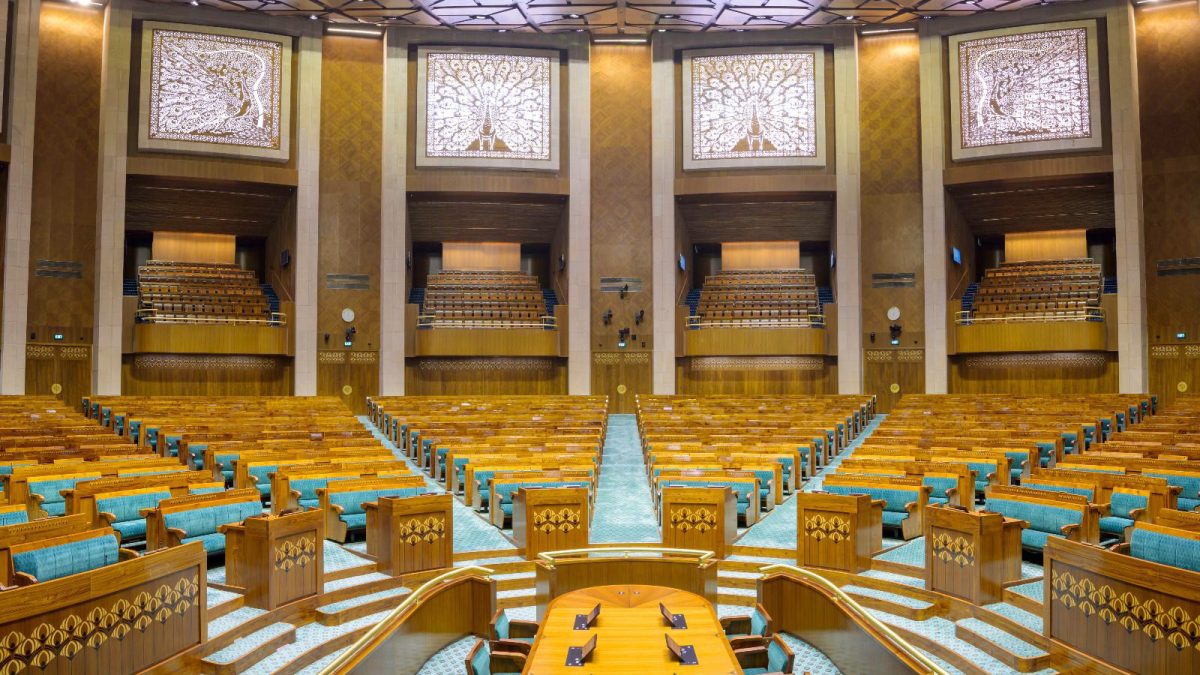
Featured image: An inside view of the Lok Sabha chamber in the new Parliament building (file photo). Photo by Ministry of Parliamentary Affairs, licensed under Government Open Data License – India, via Wikimedia Commons.




Leave a Reply