
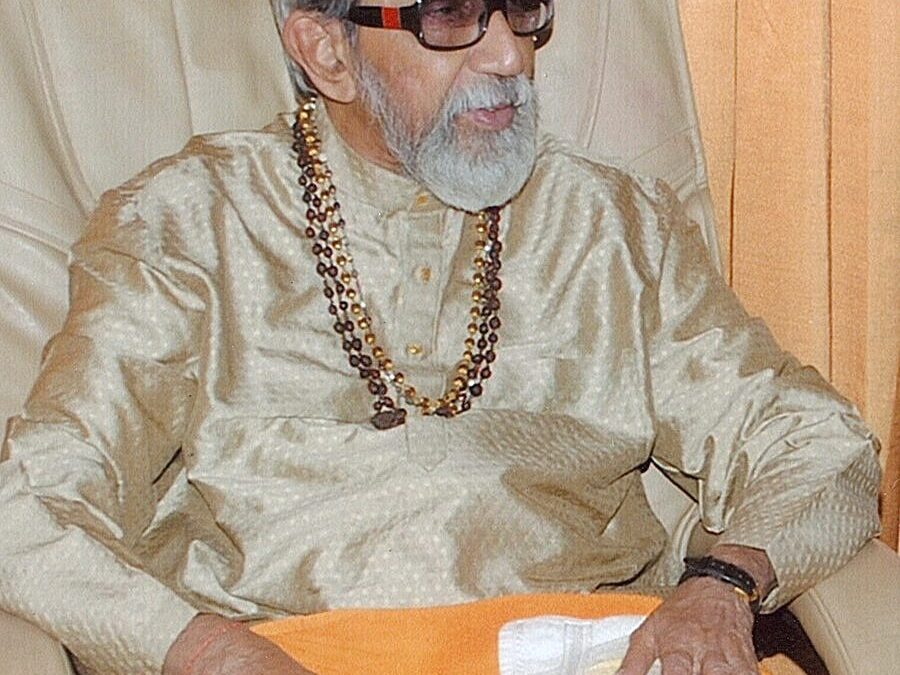
Bal Keshav Thackeray (23 January 1926 – 17 November 2012), known to his followers as Balasaheb, was an Indian cartoonist and politician who founded the Shiv Sena. Beginning as the champion of Marathi-speaking people in Bombay and later of an aggressive Hindu nationalism, he controlled the city’s streets for four decades without ever holding an elected office. He was among the most powerful and most controversial figures in the politics of western India.
Quick Facts
| Full name | Bal Keshav Thackeray |
| Born | 23 January 1926, Pune |
| Died | 17 November 2012, Mumbai (aged 86) |
| Occupation | Cartoonist, editor, politician |
| Founded | Shiv Sena (1966); the weekly Marmik (1960); the daily Saamana (1989) |
| Spouse | Meena Thackeray (died 1995) |
| Children | Bindumadhav, Jaidev and Uddhav |
Early Life
He was born in Pune, the son of Keshav Sitaram Thackeray, known as Prabodhankar, a writer and social reformer who campaigned against caste and superstition and was a leader of the movement for a united Marathi-speaking state. The family settled in Bombay.
Cartoonist
He joined the Free Press Journal as a cartoonist in the late 1940s, where he worked alongside R. K. Laxman, and his drawings were also printed abroad. In 1960, the year the state of Maharashtra was created, he and his brother started a Marathi cartoon weekly, Marmik. It ran lists of the names of senior officers in Bombay’s companies, most of them not Maharashtrians, under headings that told readers to draw their own conclusions.
The Shiv Sena
On 19 June 1966 he founded the Shiv Sena, “the army of Shivaji”. Its first demand was jobs for Marathi-speaking “sons of the soil”, and its first targets were migrants from south India, followed by the communist trade unions of the mill districts. It built a network of neighbourhood branches that settled disputes and found work for young men, and it used intimidation and violence freely. The party won control of the Bombay municipal corporation.
Hindutva
In the 1980s he turned the party to Hindu nationalism and allied it with the Bharatiya Janata Party. After the demolition of the Babri mosque in December 1992, riots in Bombay killed some nine hundred people, most of them Muslims. The Srikrishna Commission, which inquired into them, held that he had directed his followers like a veteran general. He was never tried.
Power
The Sena–BJP alliance won the Maharashtra election of 1995. He did not take office, saying he would run the government by “remote control”. In its term Bombay was renamed Mumbai. In 1999 the Election Commission barred him from voting or contesting for six years for seeking votes in the name of religion.
He expressed admiration for Hitler, opposed cricket matches with Pakistan, and at different times attacked south Indians, Gujaratis, Muslims and migrants from Bihar and Uttar Pradesh. He was also on warm terms with film stars, industrialists and politicians of every party.
Succession
He chose his son Uddhav to lead the party. His nephew Raj, who resembled him more closely in manner, left in 2006 to form a rival party.
Death
He died in Mumbai on 17 November 2012. The city shut down, and several hundred thousand people attended the funeral at Shivaji Park, which was conducted with state honours.
Personal Life
He married Meena, who died in 1995; his eldest son, Bindumadhav, was killed in a road accident the following year. He lived at Matoshree, a house in Bandra, wore saffron robes and dark glasses in later life, and addressed a vast rally at Shivaji Park every Dussehra.
Ten years after his death his party split in two, between Uddhav and Eknath Shinde, each claiming to be his true heir.
Featured image: Bal Thackeray in March 2010. Photo by Shivraj1980, licensed under CC BY-SA 4.0, via Wikimedia Commons.



