
Zeenat Aman, born Zeenat Khan on 19 November 1951 in Bombay, is an Indian actress and model who mainly works in Hindi films. She was one of the highest-paid and most glamorous actresses of the 1970s and is cited in the media as a fashion icon. Aman played a significant role in redefining the portrayal of women in Indian cinema through leading characters who embodied modernity, individuality and self-assurance, with a Western-influenced sense of style.
Her father, Amanullah Khan, was a Pathan Muslim and screenwriter who worked on films such as Mughal-e-Azam (1960) and Pakeezah (1972), often writing under the pen name “Aman”, which she later adopted as her screen name. Her mother, Scinda (Vardhini) Heinz, was a Maharashtrian Hindu. She is the cousin of the actor Raza Murad and the niece of the actor Murad. Her paternal grandmother, Akhtar Jahan Begum, was a first cousin of Hamidullah Khan, the last Nawab of Bhopal. Her parents divorced when she was young, and her father died when she was 13. She finished school at St. Joseph’s Convent in Panchgani and attended the University of Southern California in Los Angeles on student aid but did not graduate.
In 1970 she was runner-up, or “First Princess”, at the Femina Miss India pageant and then won the Miss Asia Pacific International title, becoming the first person to hold both titles at once. She started acting the same year with The Evil Within (1970), opposite Dev Anand, which was commercially unsuccessful, and followed it with Hulchul and Hungama (both 1971), which were flops.
Dev Anand then cast her as Jasbir/Janice in his 1971 musical drama Hare Rama Hare Krishna, after the actress Zaheeda turned the role down. The film was a critical and commercial success and her breakthrough. It won her the Filmfare Award for Best Supporting Actress and the Bengal Film Journalists’ Association Award for Best Actress (Hindi). The first issue of the magazine Cine Blitz in the 1970s carried her on its cover.
In 1973 she starred in Heera Panna with Dev Anand again, and in Nasir Hussain’s Yaadon Ki Baaraat as Sunita, opposite Vijay Arora. The film scholar Kaushik Bhaumik called it “the first quintessential Bollywood film”, and her performance in the song “Chura Liya Hai Tumne Jo Dil Ko” made her known as the “girl in white carrying a guitar”. In 1974 she appeared in Manoj Kumar’s Roti Kapada Aur Makaan as Sheetal, and in Shammi Kapoor’s Manoranjan and in Ajanabee. In 1975 she was in Warrant and Chori Mera Kaam, both successes.
In 1977 she played a princess in Dharam Veer with Dharmendra, Jeetendra and Neetu Singh, the second-highest-grossing Hindi film of the year, and then in Chhailla Babu and Hum Kisise Kum Naheen, the third-highest-grossing. She played Roma in the action film Don (1978) and was nominated for the Filmfare Award for Best Actress for the controversial Satyam Shivam Sundaram (1978). In the early 1980s she led Abdullah, Alibaba Aur 40 Chor, Qurbani, Dostana and Insaf Ka Tarazu (all 1980), the last of which brought another Best Actress nomination, and appeared in Laawaris (1981), Teesri Aankh (1982), Mahaan (1983) and Pukar (1983).
After marrying the actor Mazhar Khan in 1985 she acted less often. After the courtroom drama Gawaahi (1989) she took a break to focus on her marriage, which lasted until his death in 1998. She returned with a minor part in Bhopal Express in 1999 and then appeared in Boom (2003) and in independent films such as Ugly Aur Pagli (2008), Chaurahen (2012), Strings of Passion (2014) and Dil Toh Deewana Hai (2016), and had a cameo in the war film Panipat (2019). Her influence on the image of the Hindi film heroine has outlasted her peak years.
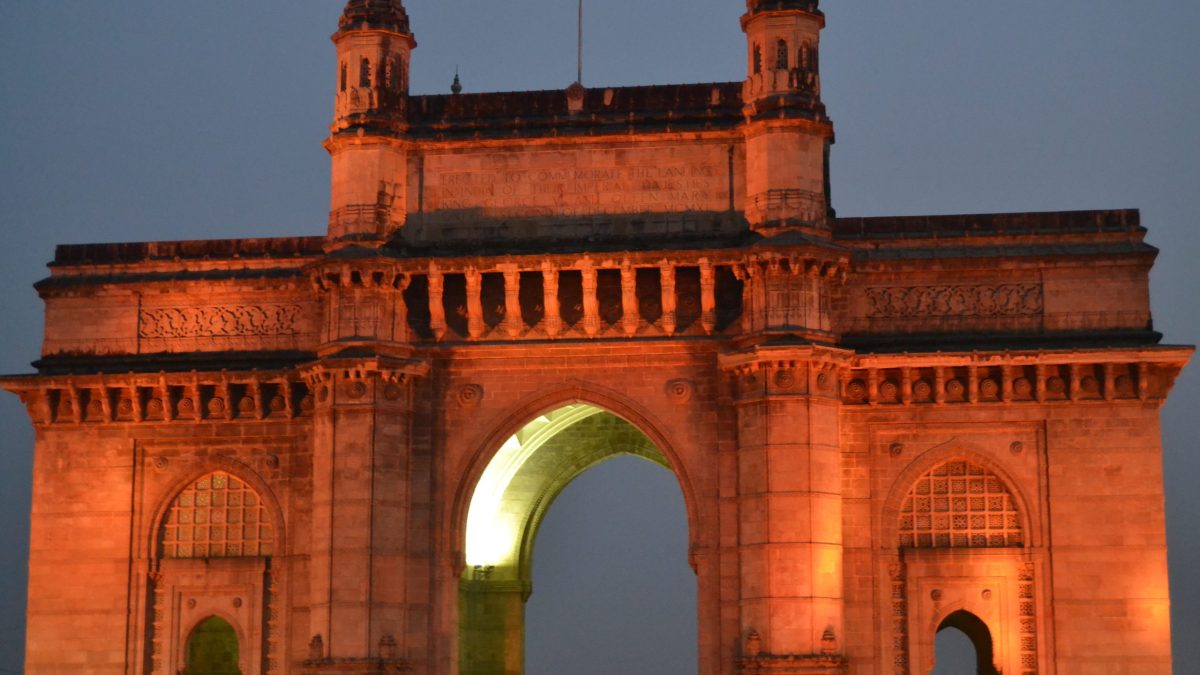
Featured image: The Gateway of India in Mumbai, the city where Zeenat Aman was born (file photo, 2016; not a photo of Zeenat Aman). Photo by SriSriChinmaya, licensed under CC BY-SA 4.0, via Wikimedia Commons.



