
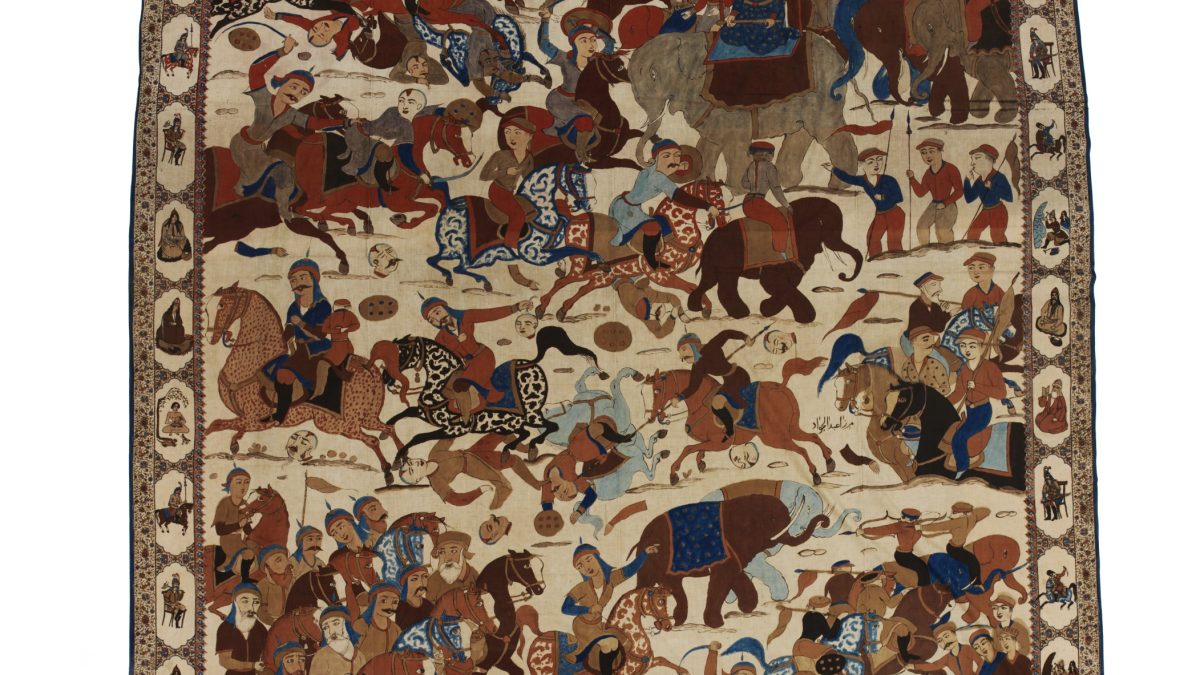
On 24 February 1739, at Karnal, about 110 kilometres north of Delhi, the army of the Persian ruler Nadir Shah defeated that of the Mughal emperor Muhammad Shah. The fighting lasted about three hours. The consequences, the sack of Delhi and the stripping of two centuries of Mughal treasure, showed the world that the empire was finished as a military power.
Nadir Shah
Nadir, a Turkoman of humble origins from Khorasan, had risen as a soldier during the collapse of the Safavid dynasty. He drove the Afghans and Ottomans out of Persia, deposed the last Safavid, and took the throne himself in 1736. He was the most formidable commander in Asia.
His reason for invading, as he put it, was that the Mughals had sheltered Afghan fugitives and insulted his envoys. His real object was the wealth of Hindustan, needed to pay for his wars. He took Kandahar in 1738, then Kabul, crossed the Khyber, and occupied Lahore.
The Mughal empire
Muhammad Shah, on the throne since 1719, was fond of music, poetry and pleasure. His court was divided between rival nobles: Nizam-ul-Mulk, the elderly viceroy of the Deccan; Saadat Khan, governor of Awadh; and Khan Dauran, the paymaster-general. The Marathas had raided the outskirts of Delhi two years before. No serious preparation was made until Nadir was past Lahore.
The battle
The emperor moved out with an immense host, swollen by servants and camp followers to several hundred thousand, and entrenched at Karnal. Nadir had about 55,000 fighting men: disciplined cavalry, musketeers armed with heavy long-range guns, and swivel guns mounted on camels.
On 24 February Saadat Khan, who had just arrived, learnt that Persian horsemen were plundering his baggage and rode out impetuously to attack them. Khan Dauran went to support him. The emperor and the Nizam stayed in their lines. Nadir drew the two Mughal divisions on with a feigned retreat into the fire of his musketeers and camel guns. The Mughal nobles, fighting from elephants, made easy targets. Khan Dauran was mortally wounded, Saadat Khan was captured, and their troops were destroyed. Most of the Mughal army never fought.
The surrender
Surrounded and short of food, Muhammad Shah went to Nadir’s camp. An indemnity was being negotiated when, it is said, Saadat Khan, angry at being passed over for a post, told Nadir that the sum was a trifle beside what Delhi contained. Nadir marched to the capital with the emperor as his prisoner.
The massacre
Nadir entered Delhi on 20 March. The next day a rumour spread that he had been killed, and mobs attacked his soldiers. On the morning of 22 March he went to the Sunehri mosque in Chandni Chowk, drew his sword, and ordered a general massacre. For about six hours his troops killed in the streets around Chandni Chowk and Dariba. Estimates of the dead range from 20,000 to 30,000. The emperor’s plea ended it.
The plunder
Delhi was then systematically stripped. Nadir took the accumulated treasure of the Mughal emperors, valued at some 700 million rupees, including:
- the Peacock Throne of Shah Jahan
- the Koh-i-Noor and Darya-i-Noor diamonds
- thousands of elephants, horses and camels, and hundreds of craftsmen
He also annexed the provinces west of the Indus. So great was the haul that he remitted taxes in Persia for three years. He left Delhi in May, having replaced the crown on Muhammad Shah’s head.
The consequences
The emperor kept his title, but the empire’s prestige was gone. Its governors in Bengal, Awadh and the Deccan acted as independent rulers. The Marathas pushed north, the Afghans under Ahmad Shah Abdali, one of Nadir’s officers, invaded repeatedly from 1748, and the European trading companies drew their own conclusions about how little force was needed to win in India.
Image: The Battle of Karnal between Nadir Shah and the Mughal army, in a nineteenth-century depiction. Photo by an unknown artist, in the public domain, via Wikimedia Commons.




Leave a Reply