
A large research project of the Indian Council of Medical Research is testing a simple idea: that people who come to public health facilities for conditions such as diabetes or hypertension should also be checked for depression, anxiety and substance use. The study, called ICMR-MINDS, is described in a protocol paper in PLOS ONE, and it is being carried out in seven states.
The stated aim is to develop and implement a service delivery model that results in at least 70% coverage of screening, linkage to care and management of common mental disorders and substance use disorders among people seeking care for non-communicable diseases at public health facilities. The design is a mixed-methods, single-arm, quasi-experimental interrupted time series study with three phases: formative research, model optimisation and full implementation with evaluation.
The sites are in seven states, each led by an institution. These are Assam (AIIMS Guwahati), Madhya Pradesh (AIIMS Bhopal), Gujarat (the Gujarat Institute of Mental Health in Ahmedabad), Haryana (AIIMS New Delhi), Karnataka (St John’s Medical College in Bengaluru), Odisha (AIIMS Bhubaneswar) and Punjab (PGIMER Chandigarh). The districts are Kamrup, Vidisha, Gandhinagar, Faridabad, Bengaluru Rural, Khordha and Mohali.
The study looked at 567 health facilities, 81 in each district. Its participants are healthcare workers at different levels of the system and adults aged 18 and above who seek care for chronic physical illnesses. The screening tools are based on the WHO’s mhGAP guidance, the nine-item Patient Health Questionnaire for depression, the seven-item scale for generalised anxiety and screeners for substance use, all translated locally and validated before use.
The intervention has several parts: integrated screening and assessment tools, treatment guidelines and care pathways, a digital platform or mobile application, training for healthcare providers and patient education. The idea is to make mental health care part of routine care for people already in the health system, instead of a separate service that few patients reach.
The timeline is clear. The study runs from 1 February 2024 to 31 January 2027, enrolment is due to be completed in October 2026 and results are expected in January 2027. The primary outcomes will be the proportion of people screened for mental and substance use disorders, the proportion referred and linked to care, and the proportion who start evidence-based treatment.
The project has received recognition. A search summary reports that it won a gold award for innovation by use of AI and other new-age technologies at the 29th National Conference on e-Governance held in Jaipur on 1 and 2 July 2026. The sources reviewed do not describe how AI is used in the project.
Why does this matter? People with chronic diseases such as diabetes have a higher chance of depression, and untreated depression can make it harder to control the physical condition. The ICMR-INDIAB study found that 11.4% of Indians have diabetes, so the potential group is very large. The health ministry’s Tele-MANAS helpline, covered in a separate article, reaches people who call in, whereas this model tries to reach people who are already at a facility.
Because the results are not out, it is too early to say whether the model will meet its 70% target. The findings in January 2027 will show whether the approach can be taken to other states.
The study is a test of whether mental health screening can be built into everyday primary care in India at the scale of districts.
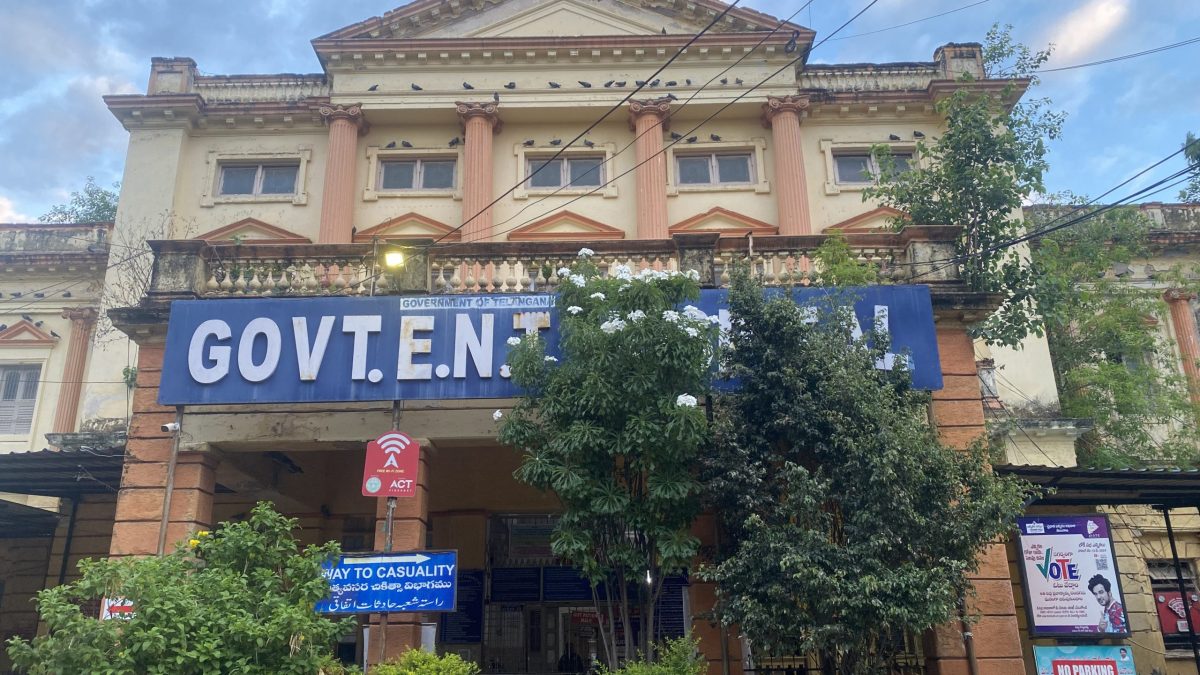
Featured image: The outpatient building of a government hospital (file photo; a stand-in image for a public health facility). Photo by Mouryan, licensed under CC BY-SA 4.0, via Wikimedia Commons.



Leave a Reply