
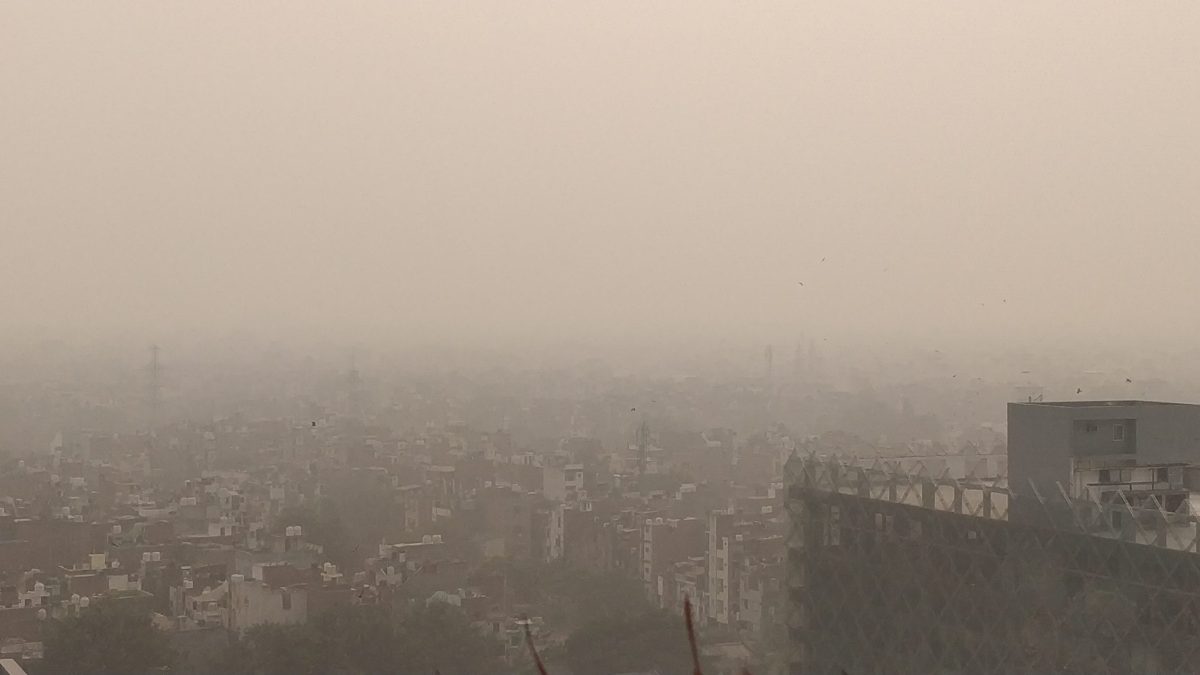
Delhi’s air quality slipped into the unhealthy range in the middle of October 2026. A report said the city recorded an Air Quality Index of 157 on Tuesday, 13 October, prompting health concerns, and a real-time tracker listed an index of about 159 to 160 on 14 October, with fine particles, known as PM2.5, at around 70 micrograms per cubic metre.
The readings differ by source because there are two scales in use. India’s Central Pollution Control Board classifies an index of 101 to 200 as moderate, while the US index used by international trackers rates the same range as unhealthy for sensitive groups or the general public, so a value of 157 can be described by different labels. A tracker listing for 13 October also showed a day’s best reading of 150 and a worst of 212, which means that conditions varied through the day and across stations. The figures here are from news and tracker pages and not from the official bulletin.
The timing is typical. October marks the start of the more severe pollution season in Delhi, when crop residue smoke, vehicle and industrial emissions, dust and waste burning combine with cooler, calmer air that traps pollutants near the ground. Smoke from stubble burning comes and goes, while the base load from vehicles, industry, dust and waste burning is there throughout the year, according to one of the sources.
What does it do to health? A health article published on 6 October and updated on 15 October says that there is no single air quality threshold for respiratory symptoms, and that responses vary by age, health conditions, sensitivity and the length of exposure. It adds that PM2.5 and other pollutants can irritate the airways even below the “severe” category, particularly in people with asthma, allergies, COPD or other respiratory conditions. A search summary also mentioned a study in Nature linking long-term PM2.5 exposure to a higher risk of lung cancer even in non-smokers, which readers should check at the source.
Fine particles are the main concern because they are small enough to travel deep into the lungs. In the short term they can cause coughing and a scratchy throat, as one report put it, and they can aggravate existing conditions, so people with lung or heart disease, older adults and children need to take more care. The sources reviewed do not give specific hospital data for this October.
The air quality management system has defined steps. The Graded Response Action Plan, run by the Commission for Air Quality Management for Delhi-NCR, has stages linked to the city’s average AQI, and restrictions are tightened as air quality worsens. The sources reviewed for this article do not report that any stage had been triggered by 14 October, so none is claimed here.
What can people do? Common advice from doctors includes checking the local AQI before going out, avoiding outdoor exercise when it is high, wearing a well-fitted mask such as an N95 outdoors on bad days, keeping windows closed when the air is poor and keeping asthma and COPD medicines at hand. People with symptoms such as breathlessness or a persistent cough should see a doctor. This advice is general and is not drawn from a single source.
The data on Delhi in mid-October show only the beginning of the season, and the following weeks are traditionally worse.
Readers can follow the official CPCB bulletin for the exact daily figures. The numbers above show that Delhi has entered its pollution season, and that the risk is greatest for people who already have lung problems.
Featured image: Hazy air over Delhi (file photo, 2019). Photo by Prami.ap90, licensed under CC BY-SA 4.0, via Wikimedia Commons.

Leave a Reply