
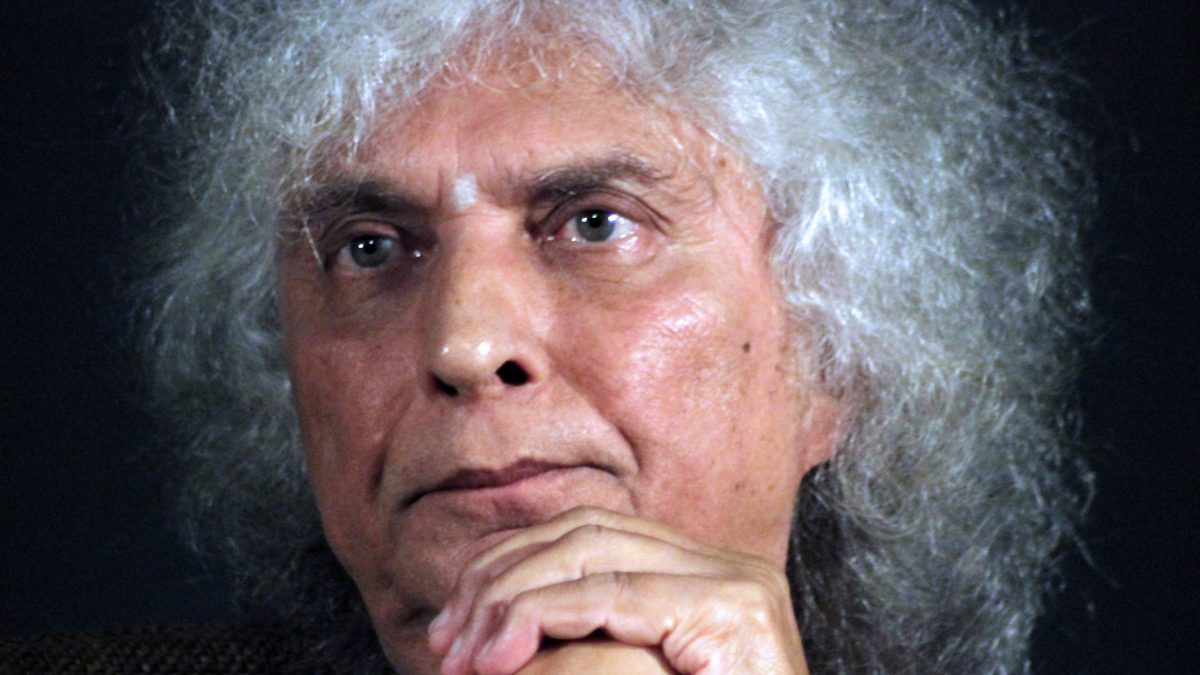
Pandit Shivkumar Sharma (13 January 1938 – 10 May 2022) was an Indian classical musician who made the santoor, a hundred-stringed hammered dulcimer from the Kashmir valley, into a solo instrument of Hindustani classical music. He performed around the world for more than sixty years and, with the flautist Hariprasad Chaurasia, composed music for Hindi films under the name Shiv–Hari. He received the Padma Vibhushan in 2001.
Quick Facts
| Full name | Shivkumar Sharma |
| Born | 13 January 1938, Jammu, Jammu and Kashmir, India |
| Died | 10 May 2022, Mumbai (aged 84) |
| Instrument | Santoor |
| Genre | Hindustani classical music |
| Father | Pandit Uma Dutt Sharma |
| Spouse | Manorama Sharma |
| Children | 2 (Rahul and Rohit) |
| Honours | Padma Shri (1991), Padma Vibhushan (2001) |
Early Life
Sharma was born into a Dogra family in Jammu. His father, Uma Dutt Sharma, a vocalist and radio musician, began teaching him singing and the tabla at five. When the boy was thirteen his father gave him a santoor, then used only to accompany Sufi music in Kashmir, and told him his task was to bring it to the classical stage.
Career
He gave his first major santoor recital in Bombay in 1955. Critics doubted that an instrument whose notes die away quickly could play the long, gliding phrases of a raga. Over years he changed its tuning, the number and arrangement of its strings and the way it is held and struck, and developed a technique of sliding the mallets to sustain the sound.
The album Call of the Valley (1967), with Chaurasia and the guitarist Brij Bhushan Kabra, told the day of a Kashmiri shepherd through ragas and became one of the most successful Indian classical records ever. He often performed with Zakir Hussain on tabla.
He had played the santoor in the background score of Jhanak Jhanak Payal Baaje (1955) and the tabla in the song “Mo Se Chhal Kiye Jaye” in Guide. As Shiv–Hari, he and Chaurasia composed the songs of Yash Chopra‘s Silsila (1981), Faasle, Vijay, Chandni (1989), Lamhe (1991) and Darr (1993).
Personal Life and Death
He married Manorama, and their son Rahul Sharma is a leading santoor player who performed alongside him from 1996. He died of a heart attack in Mumbai on 10 May 2022 and was cremated with state honours. His autobiography is titled Journey with a Hundred Strings.
Awards and Honours
Frequently Asked Questions
When and where was Shivkumar Sharma born?
Shivkumar Sharma was born on 13 January 1938 in Jammu, Jammu and Kashmir, India.
When did Shivkumar Sharma die?
Died: 10 May 2022, Mumbai (aged 84).
What honours has Shivkumar Sharma received?
Padma Shri (1991), Padma Vibhushan (2001).
Featured image: Pandit Shivkumar Sharma, photographed in Bhopal, July 2016. Photo by Suyash Dwivedi, licensed under CC BY-SA 4.0, via Wikimedia Commons.



