
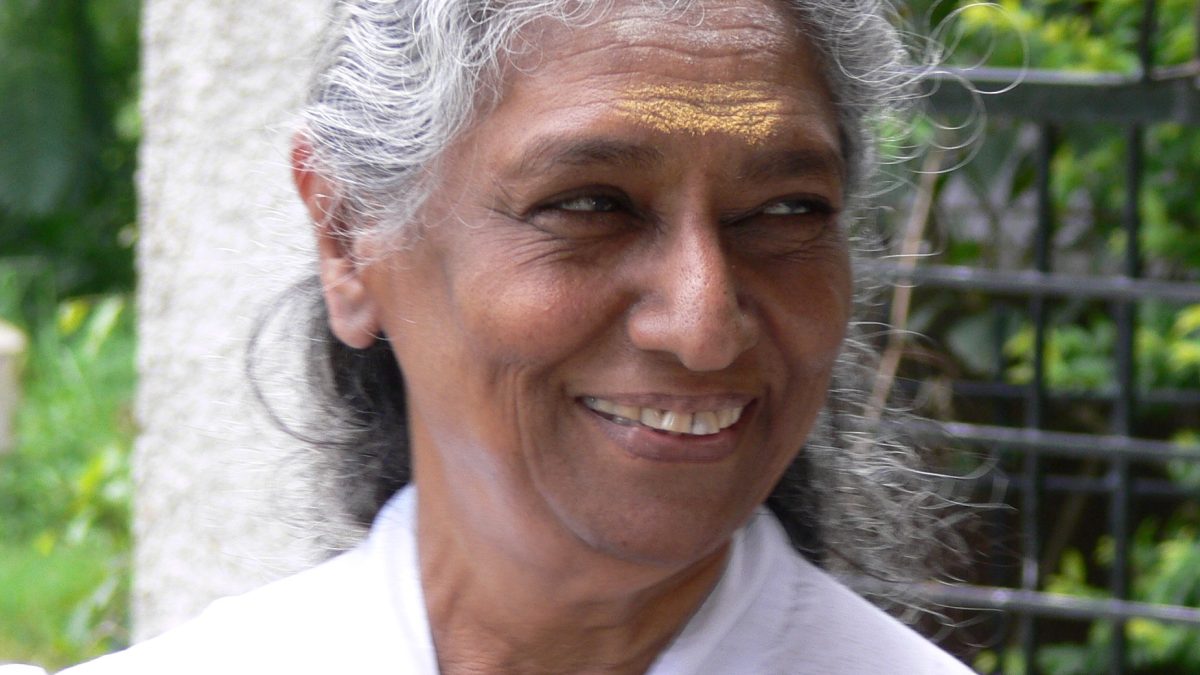
Sishtla Janaki (born 23 April 1938), known as S. Janaki and to her admirers as Janakiamma, is an Indian playback singer whose career lasted sixty years. She recorded tens of thousands of songs in Tamil, Telugu, Kannada, Malayalam, Hindi and more than a dozen other languages, won four National Film Awards for Best Female Playback Singer and more than thirty state awards, and is celebrated for a voice that could pass from a child’s to an old woman’s, from classical ornament to folk song, within a single film.
Quick Facts
| Full name | Sishtla Janaki |
| Born | 23 April 1938, Pallapatla, Guntur district, Andhra Pradesh |
| Age | 88 |
| Occupation | Playback singer |
| Years active | 1957–2017 |
| Languages | Tamil, Telugu, Kannada, Malayalam, Hindi and others |
| Awards | National Film Award for Best Female Playback Singer (four times); Kalaimamani; state awards of Tamil Nadu, Kerala, Andhra Pradesh, Karnataka and Odisha |
| Spouse | V. Ramaprasad (d. 1997) |
| Children | 1 son |
Early Life
Janaki was born in a village in the Repalle area of Guntur district, the daughter of a schoolteacher and Ayurvedic doctor. She sang from early childhood and had her first lessons from a nadaswaram player, Paidiswamy. She had little formal training in classical music, a fact that later astonished musicians who heard her sing difficult compositions. In 1956 she won second prize in a singing competition held by All India Radio. An uncle took her to Madras, where she was taken on as a staff singer by AVM Studios.
Career
Beginnings
Her first film song was for the Tamil film Vidhiyin Vilayattu in 1957, and within a year she had sung in six languages. The song that made her name was “Singara Velane Deva” in Konjum Salangai (1962), in which her voice follows and answers the nadaswaram of the great Karukurichi Arunachalam through rapid classical passages.
Four industries
In the 1960s and 1970s she was the leading female voice in Kannada and Malayalam films, where her pronunciation was held up as a model although neither was her mother tongue, and sang constantly in Telugu. In Tamil her great period began with Ilaiyaraaja‘s first film, Annakili (1976), and its song “Machana Partheengala”. For the next two decades she was his first-choice singer, and their work together, with S. P. Balasubrahmanyam as her most frequent duet partner, forms the core of the Tamil film music of the time. She later sang for A. R. Rahman.
Range
She was famous for singing in voices not her own: a small boy, a teenage girl, a drunk, a grandmother. Composers wrote such songs because they knew she could do them in a single take. She also wrote lyrics, and composed the music for a Telugu film.
National Awards
She won the National Film Award four times, in four different languages or decades:
- “Senthoora Poove” from the Tamil film 16 Vayathinile (1977);
- “Ettumanoorambalathil” from the Malayalam film Oppol (1980);
- “Vennello Godari Andam” from the Telugu film Sitaara (1984);
- “Inji Iduppazhagi” from the Tamil film Thevar Magan (1992).
The Padma Bhushan
In 2013 the government announced the Padma Bhushan for her. She declined it, saying that the honour had come too late after fifty-five years of work and that artists from the South had not been given their due.
Retirement
She announced in 2016 that a Malayalam lullaby would be her last recording, and gave her final public concert at Mysuru in October 2017, at seventy-nine.
Personal Life
She married V. Ramaprasad in 1959; he managed her career until his death in 1997. She has a son, and lived for many years in Chennai and later in Hyderabad. Singers of every later generation in the South, including K. S. Chithra, have called her their teacher by example.
Featured image: S. Janaki in Pune, 2007. Photo by an unknown photographer, licensed under CC BY-SA 3.0, via Wikimedia Commons.



