
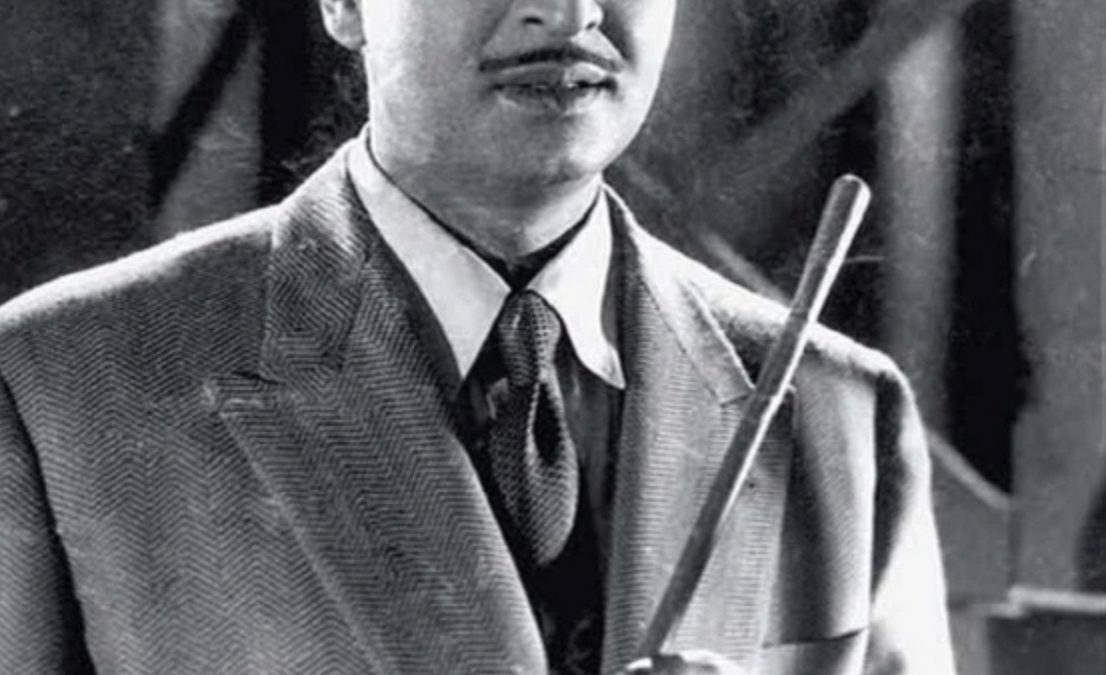
Pran Krishan Sikand (12 February 1920 – 12 July 2013), known as Pran, was an Indian film actor, the most celebrated villain in the history of Hindi cinema and later one of its best-loved character actors. In a career of six decades he appeared in more than three hundred and fifty films. He played evil with such style and conviction that for a generation parents in north India stopped naming their sons Pran. He received the Dadasaheb Phalke Award for 2012.
Quick Facts
| Full name | Pran Krishan Sikand |
| Born | 12 February 1920, Delhi |
| Died | 12 July 2013, Mumbai (aged 93) |
| Occupation | Actor |
| Years active | 1940–2007 |
| Notable films | Khandaan, Ziddi, Madhumati, Jis Desh Mein Ganga Behti Hai, Ram Aur Shyam, Upkar, Johny Mera Naam, Victoria No. 203, Zanjeer, Don, Amar Akbar Anthony |
| Awards | Three Filmfare Awards for Best Supporting Actor; Padma Bhushan (2001); Dadasaheb Phalke Award (2012) |
| Spouse | Shukla Sikand |
| Children | 3 |
Early Life
He was born in Ballimaran, in the old city of Delhi, into a well-to-do Punjabi family. His father was a government civil contractor who built roads and bridges, and the family moved from town to town. He finished school at Rampur and went to Lahore to learn photography as an apprentice in a studio.
Lahore
One evening in 1939 a film writer noticed him at a betel-leaf shop and offered him a part. He played the villain in the Punjabi film Yamla Jat (1940), and then the hero of Khandaan (1942), opposite the singer and actress Noor Jehan. He disliked playing heroes, he said, because he felt foolish running round trees. He acted in more than twenty films in Lahore.
Starting Again
In August 1947 he was in Indore with his wife and infant son when Partition made it impossible to go back. He arrived in Bombay with little money and was out of work for eight months, working for a time in a hotel. The writer Saadat Hasan Manto and the actor Shyam helped him to a part in Ziddi (1948), and he never lacked work again.
The Villain
Through the 1950s and 1960s he was the first choice for the bad man, opposite every leading hero: Dilip Kumar in Azaad, Madhumati and Ram Aur Shyam; Raj Kapoor in Jis Desh Mein Ganga Behti Hai, as the bandit Raka; Dev Anand in Munimji and Jab Pyar Kisi Se Hota Hai.
He gave each villain his own walk, dress, way of holding a cigarette and turn of phrase, and kept albums of his make-up and wigs so as never to repeat one. He was paid more than most of the heroes he menaced, and his name appeared last in the credits, set apart: “…and Pran”.
The Turn
In Manoj Kumar’s Upkar (1967) he played Malang Chacha, a crippled, cynical and good-hearted war veteran, and sang the philosophical song “Kasme vaade pyar wafa”. The audience accepted him at once in a sympathetic part, and he won a Filmfare Award.
In Zanjeer (1973) he was Sher Khan, the Pathan gambler who becomes the hero’s loyal friend; it was he who recommended the little-known Amitabh Bachchan for the lead. He appeared with Bachchan in more than a dozen films, among them Don and Amar Akbar Anthony.
He went on working until he was past eighty.
A Matter of Principle
In 1973 he refused the Filmfare Award for Best Supporting Actor for Be-Imaan, because the award for music that year had gone to the same film and not, as he thought it should, to Pakeezah.
The Man
Off the screen he was, by universal report, the gentlest and most generous of men, who quietly helped colleagues in difficulty. He loved Urdu poetry, football and dogs, and for some years owned a football club in Bombay.
Honours
- Filmfare Awards for Upkar, Aansoo Ban Gaye Phool and Be-Imaan
- Padma Bhushan (2001)
- A magazine’s title of “Villain of the Millennium” in 2000
- Dadasaheb Phalke Award for 2012; he was too ill to travel, and the minister brought it to his home
His authorised biography is called …and Pran.
Personal Life
He married Shukla Ahluwalia in 1945; they had two sons and a daughter. He died in a Mumbai hospital on 12 July 2013, aged ninety-three.
Featured image: Pran in the film Yamla Jat, 1940. Photo by an unknown photographer, in the public domain, via Wikimedia Commons.



