
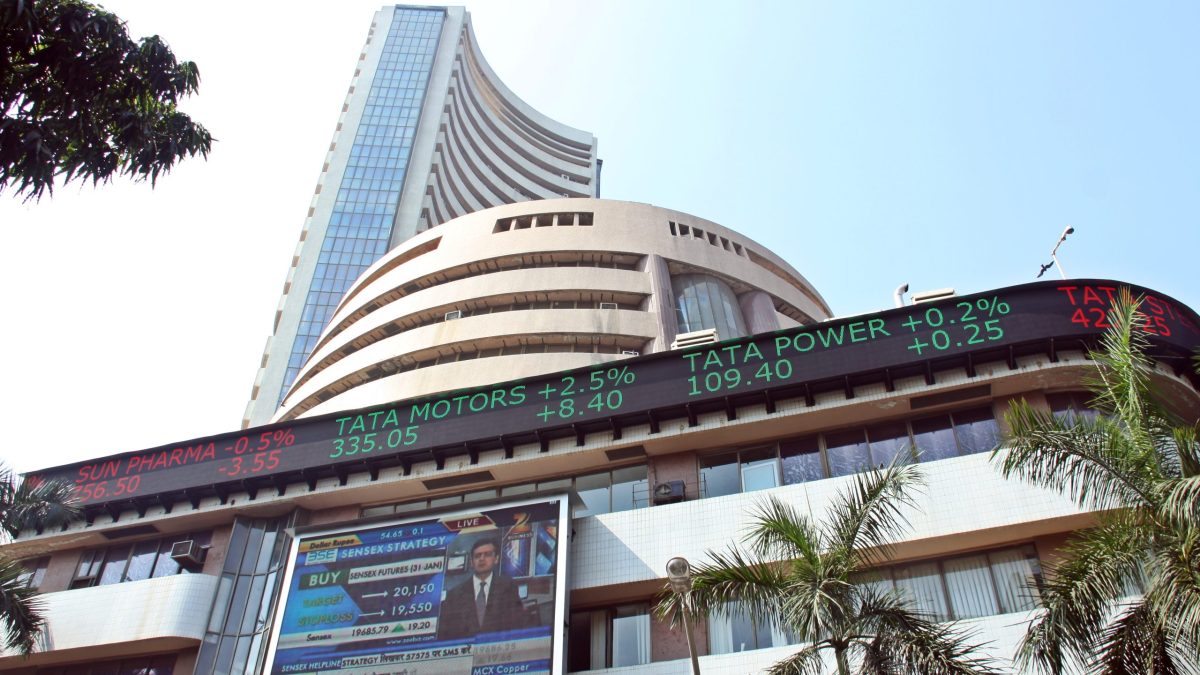
Indian equity benchmarks ended an eight-week losing streak, the longest in about 25 years, in the week of the Reserve Bank's rate decision, according to a weekly recap by Kotak Neo. The Nifty 50 gained 98.50 points, or 0.44 percent, to close at 22,520.45 and the Sensex gained 562.63 points, or 0.78 percent, to 72,472.33. The market had come off a hard September, when the Nifty fell 6.1 percent, its worst month since March. It then rallied about 3 percent over the following week to 74,729.27 on the Sensex on 16 October, before falling 876.37 points to 73,852.90 on 19 October and a further 143.21 points to 73,709.69 on 21 October. The question for investors is whether the streak's end marks a bottom or a pause.
The argument that the market has turned begins with the recovery from the low. From the weekly close of 72,472.33 to the 16 October close of 74,729.27, the Sensex rose about 3.1 percent, and the Nifty went from 22,520.45 to 23,146, about 2.8 percent. The IT index jumped about 4 percent on 16 October, led by Tech Mahindra, and rose 2.88 percent on 21 October ahead of the Infosys results. Corporate results have been mixed but not weak, with ICICI Bank reporting a 22.3 percent profit rise and HDFC Bank 4.7 percent. The rupee also firmed, rising about 0.44 percent to 94.45 on 21 October on hopes of an India-US trade deal, and the Sensex closed on that day 480 points above its intraday low.
The argument that the recovery is fragile is made by the falls that followed it. On 19 October, 2,925 shares declined against 1,163 that advanced, and on 21 October only 11 of the 30 Sensex stocks closed higher, with the BSE SmallCap Select index down 2.29 percent. The Nifty slipped below its 20-day moving average, and analysts watch support between 22,600 and 22,650. Foreign investors have sold almost $30 billion of Indian equities this year, Brent crude is above $110, and the Reserve Bank has started raising rates, all of which weigh on valuations. The Sensex swung 1,452.74 points between its high and low on 21 October, which shows how nervous the trading was.
The direction of the market matters because millions of households hold equities through mutual funds and pension schemes, and because a weak market makes it harder for companies to raise money. The Jio Platforms listing on 28 October, the largest public offer in India, will test whether investors are willing to buy at these levels, and the rest of the results season will decide whether earnings can offset the pressure from oil and foreign selling. Heavyweights such as HDFC Bank, ICICI Bank, Reliance and Infosys carry a large share of both indices, so their results have an outsized effect on the benchmarks. The Nifty PSU Bank index, which rose 2.5 percent on 19 October, was the only major sector gain that day, a reminder that gains and losses are spread unevenly.
The end of a record losing streak is a good sign, but two falls in three sessions show that conviction is low. Oil and foreign flows will set the next move.
Featured image: The BSE building on Dalal Street, Mumbai (file photo). Photo: BSEINDIA, CC BY-SA 3.0, via Wikimedia Commons.

Leave a Reply