Om Prakash Jindal (7 August 1930 – 31 March 2005) was an Indian industrialist and politician, the founder of the Jindal group. The son of a farmer, with a few years of schooling, he began by making buckets and steel pipes at Hisar and built one of the largest steel and power businesses in India. He was a member of the Haryana assembly three times and of the Lok Sabha, and was the state’s Power Minister when he died in a helicopter crash.
Quick Facts
| Full name | Om Prakash Jindal |
| Born | 7 August 1930, Nalwa, Hisar district, Haryana |
| Died | 31 March 2005, near Saharanpur, Uttar Pradesh (aged 74) |
| Occupation | Industrialist, politician |
| Founded | The Jindal group (1952) |
| Party | Indian National Congress |
| Offices | Member of the Haryana Legislative Assembly for Hisar (three terms); Member of the Lok Sabha for Kurukshetra (1996–1998); Minister of Power, Haryana (2005) |
| Spouse | Savitri Jindal |
| Children | Prithviraj, Sajjan, Ratan and Naveen Jindal, and daughters |
Early Life
He was born in the village of Nalwa, near Hisar, into a farming family. He left school early. He was fascinated by machines and, as a boy, took apart and reassembled whatever came his way.
As a young man he worked in eastern India. The story he told was that he noticed that the steel pipes lying by a roadside were stamped “Made in England”, and asked himself why such a simple thing could not be made in India.
Beginnings
In 1952 he started a small factory near Calcutta making pipe bends and sockets, and soon afterwards a unit at Hisar making buckets. He designed and built much of the machinery himself. In 1964 he set up a pipe factory at Hisar under the name Jindal India, and in 1970 a company to make steel strip for it.
He had a rare feel for plant and process. He would buy second-hand or discarded equipment, modify it and get from it an output its makers had not thought possible, at a fraction of the cost of a new plant.
The Group
From pipes he moved backwards into the steel from which they were made.
- **Stainless steel,** at Hisar, which became the largest producer in the country
- **Welded and seamless pipes** for oil, gas and water, exported widely
- **Sponge iron and steel at Raigarh,** in what is now Chhattisgarh, using coal from the company’s own mines, with power plants alongside
- **A large steel works at Vijayanagar** in Karnataka, begun in the 1990s
As his four sons came of age he gave each a business to run. The eldest, Prithviraj, took the pipe company; Sajjan Jindal the steel works in the south and west, now JSW; Ratan the stainless steel; and the youngest, Naveen, the steel and power company in central India. The arrangement, settled in his lifetime, spared the family the disputes that divided other houses.
Politics
He was elected to the Haryana assembly from Hisar in 1991, to the Lok Sabha from Kurukshetra in 1996, and to the assembly again in 2000 and 2005. After the Congress won Haryana in March 2005 he was made Minister of Power.
In his constituency he was known for hospitals, schools and wells built at his own expense, and for the fact that anyone could walk into his house with a request.
Death
On 31 March 2005, a few weeks after taking office, he was killed when the helicopter in which he was travelling from Chandigarh to Delhi crashed near Saharanpur. The state’s agriculture minister died with him.
Family
His wife, Savitri Jindal, who had not been in public life, was elected to his assembly seat, served as a minister, and became chairperson of the group. She has for years been ranked as the richest woman in India. His son Naveen Jindal, a member of Parliament, won the court case that established the right of every citizen to fly the national flag.
Legacy
A university at Sonipat, a school for girls at Hisar and hospitals in Haryana carry his name or his mother’s. He is remembered in the industry as a self-taught engineer who could look at a rolling mill and see how to make it do more, and as one of the men who made India self-sufficient in steel pipe and stainless steel.
Others who rose from small beginnings in north India in the same years include Brijmohan Lall Munjal.
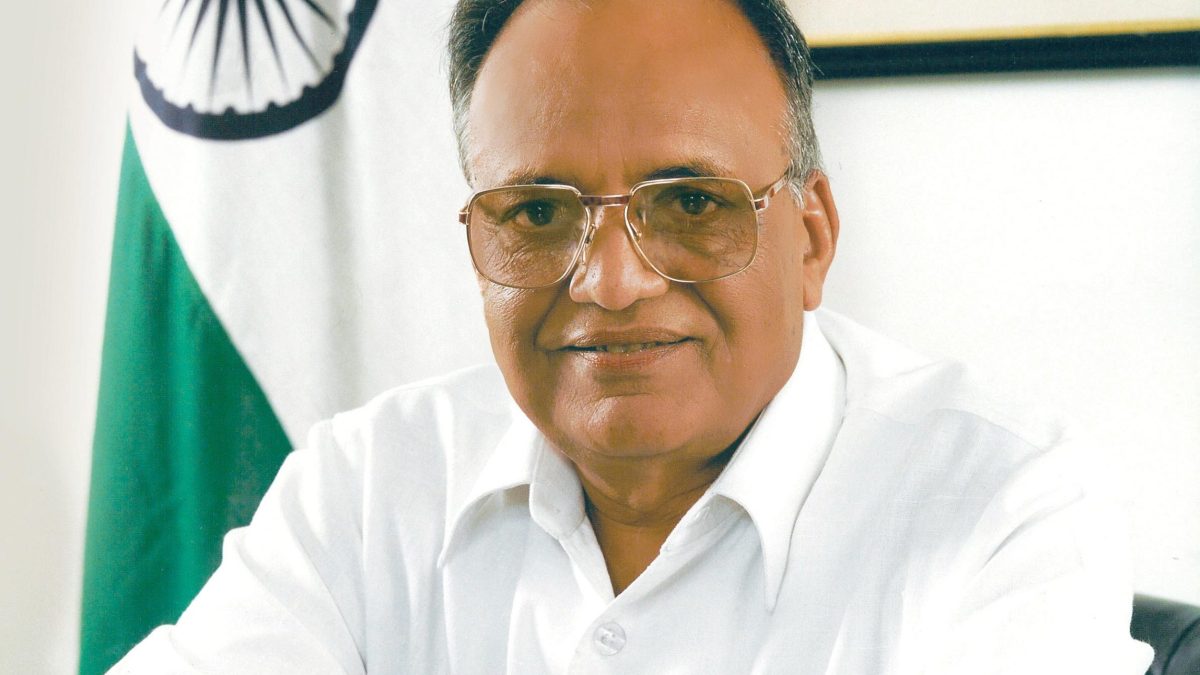
Featured image: O. P. Jindal in August 2001. Photo by Sarvajanik Puralekh, licensed under CC BY-SA 2.0, via Wikimedia Commons.