
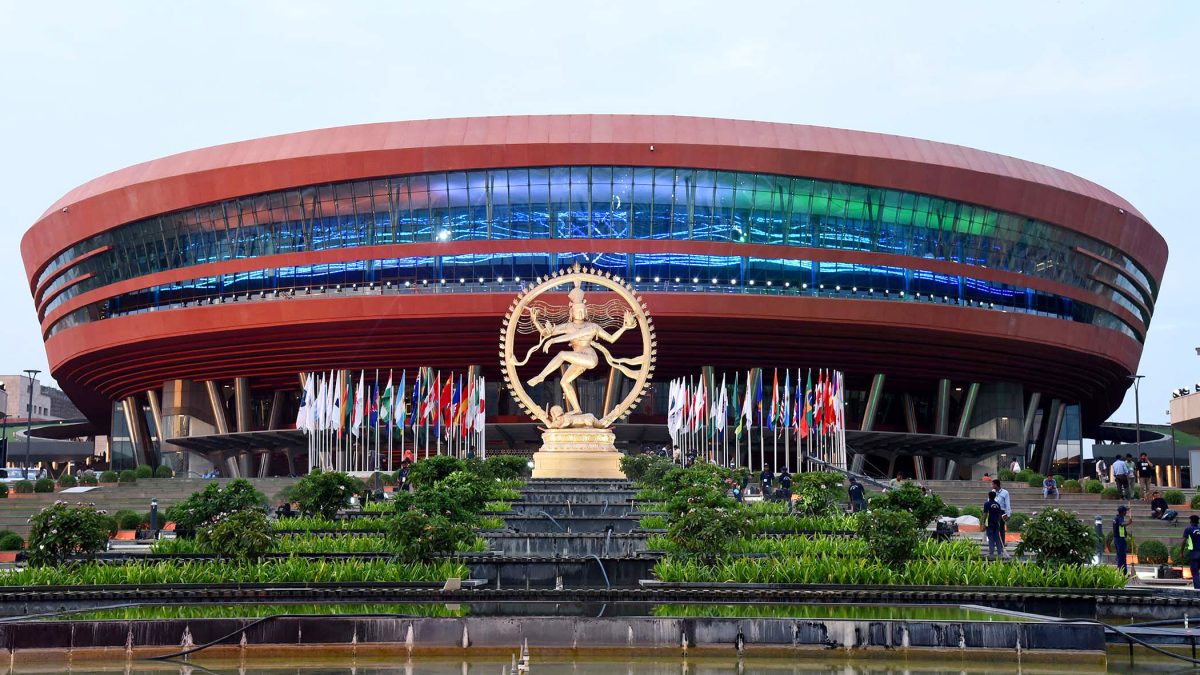
The Emerging Science, Technology and Innovation Conclave, ESTIC-2026, is due to be inaugurated by Prime Minister Narendra Modi in New Delhi on 27 October and will run for three days. The theme is “Creative Minds, Catalyzing Science and Empowering Technologies.” About 1,800 attendees are expected, with seven plenary speakers, 26 invited speakers, 12 keynote speakers and 72 panellists, and the line-up reportedly includes three Nobel laureates. A curtain-raiser event was held in Bengaluru on 13 October. The Council of Scientific and Industrial Research is the main organiser this year, and Science and Technology Minister Jitendra Singh is steering the conclave.
The argument that the conclave is a serious effort to set a technology agenda is supported by its structure. It has twelve thematic areas, each coordinated by a government body: advanced manufacturing by CSIR, energy by the Department of Atomic Energy, synthetic biology by the Department of Biotechnology, ocean science by the Ministry of Earth Sciences, intelligent networks and quantum communication by the Department of Telecommunications, semiconductors by DRDO, agritech by ICAR, generative and autonomous AI by MeitY, robotics by the Department of Science and Technology, preventive medicine by ICMR and AYUSH, and space science by the Department of Space. The semiconductor session is led by DRDO, whose Director General for electronics, Dr B K Das, has set out staged goals: self-reliance in mature 28 nm fabrication and domestic production of 10 percent of domestic chip demand by 2030, accelerator and AI devices by 2035, and progress toward 2 nm by 2047.
The counter-argument is that a roadmap is not the same as production. The nodes the DRDO talk cites as current, 100 nm, 28 nm and 14 nm, are some distance from the 2 nm technology that is at the frontier, and the target for 2047 is more than two decades away. Dr Das himself said that a product is not fully indigenous if a critical component, even one that is 5 percent of it, depends on imports, which sets a very demanding standard. The conclave is also a government event, and its outputs are recommendations compiled into a document for the minister, which means that its effect depends on what the ministries then do. The programme is built around talks, panels and technical sessions.
The conclave matters because it brings several ministries and departments into one room around shared themes, a “whole of government, whole of the nation” approach that has often been missing in science policy. Semiconductors and quantum communication are strategic technologies, and the government has been trying to build domestic capability in them. For the country, success will be measured by whether the roadmap produces fabrication capacity, and by whether talent stays in India. The space economy is another focus: Jitendra Singh has said it could grow from 9 billion dollars to 40 billion dollars in ten years.
ESTIC-2026 gives the government a platform to present its plans, and DRDO’s chip roadmap is the most concrete part. The three days of sessions will show how much has been done and how much remains.
Featured image: Bharat Mandapam, New Delhi (file photo). Photo: Ministry of Culture, GODL-India, via Wikimedia Commons.

Leave a Reply