
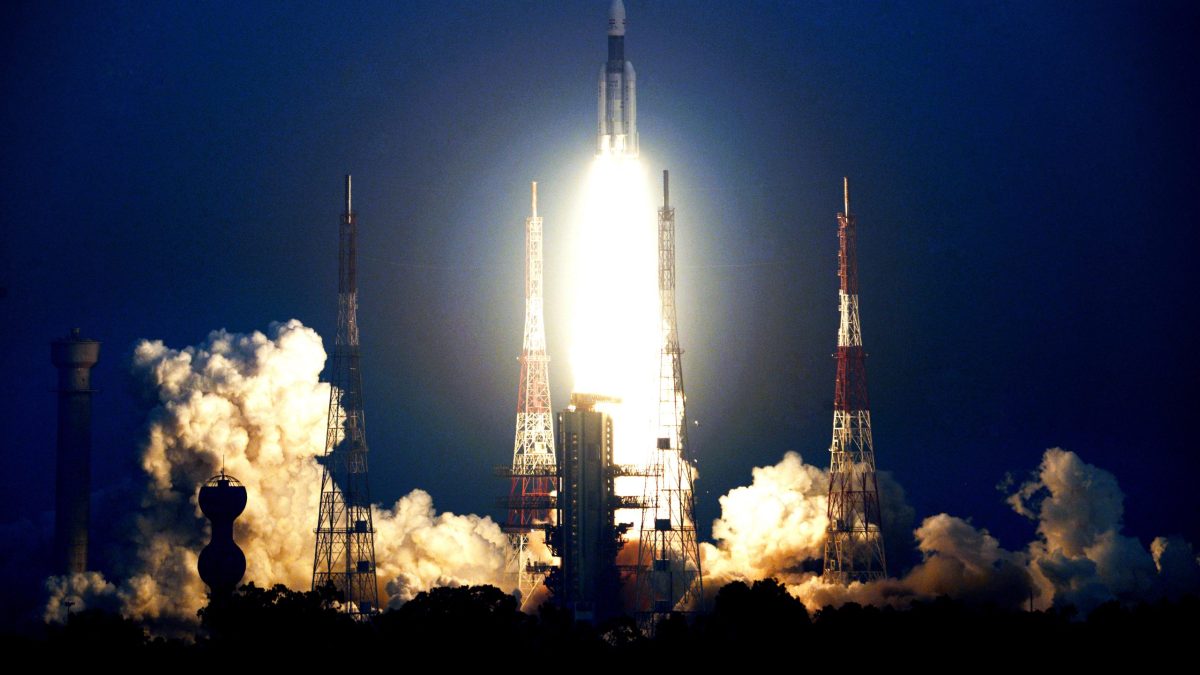
Gaganyaan G1 is the first uncrewed test flight of India’s human spaceflight programme, and it has been delayed many times. According to Wikipedia, it is planned for the fourth quarter of 2026 on the human-rated LVM3 rocket, called HLVM3, from the Satish Dhawan Space Centre, and ISRO chairman V. Narayanan gave the quarter in June 2026. A report on ISRO’s upcoming missions says the chairman stated in September 2026 that the flight would take place within calendar year 2026, but that the exact date was not confirmed.
The purpose is to show that the crew module and service module perform in low Earth orbit. The flight will carry Vyommitra, a half-humanoid robot that will simulate the conditions of an astronaut and provide data on the life-support and environmental systems. The reports give an initial orbit of 170 by 408 kilometres, with the orbit made circular on the third orbit, and they do not state how long the mission will last.
The delays are long. The mission was first scheduled for December 2020, then December 2021, with COVID-19 cited as a cause of the second. Later dates included early 2025, December 2024, February 2025, the fourth quarter of 2025 and the second half of 2026 before the present target of the fourth quarter of 2026. The list in the source is not fully in order, so it shows the pattern of slippage more than a clear timeline.
Recent milestones are listed. A crew module air drop test was successful on 10 April 2026, and the integration of Vyommitra began on 28 April 2026. Wikipedia also says that the vehicle and the HLVM3 were completely integrated and tested by mid-December 2025, and the other report says that crew module integration and parachute qualification tests have been completed.
What comes after G1? The plan is for further uncrewed flights and then a crewed one. The ISRO missions report says that Gaganyaan G2 and G3 are expected in 2027 after G1, and that the first crewed flight, H1, has no firm date as of October 2026, after an earlier target of early 2027, and depends on the results of the uncrewed test. Wikipedia says that the next flight will follow four further abort tests.
The programme matters for national prestige and for technology. A crewed mission needs a launch vehicle rated for humans, an escape system for the crew, a capsule that can return safely and life-support systems, and each of them is tested separately before flight. The robot flight is a test of the whole sequence from launch to splashdown, without risk to people.
Why is it taking time? The sources do not give reasons for each delay beyond the mention of COVID-19, and ISRO has said that safety tests must be completed before each step. The report on upcoming missions says the schedule depends on technical progress and mandatory safety assessments, and that dates could slip, so the quarter should be treated as a target.
There is a link to other news on IndiaX24. India’s space sector has also seen concern from ISRO employees about privatisation, which IndiaX24 reported, and a profile of Shubhanshu Shukla, who flew on Axiom-4, covers the other human spaceflight route that India has used.
For now the status is that the hardware tests are largely complete, the robot has been integrated and the launch date is not public, so readers should watch for an ISRO announcement later in the quarter.
Featured image: The launch of a GSLV Mk III from Sriharikota, the rocket family on which the human-rated version is based (file photo; not the Gaganyaan mission). Photo by Indian Space Research Organisation, licensed under Government Open Data License – India, via Wikimedia Commons.

Leave a Reply